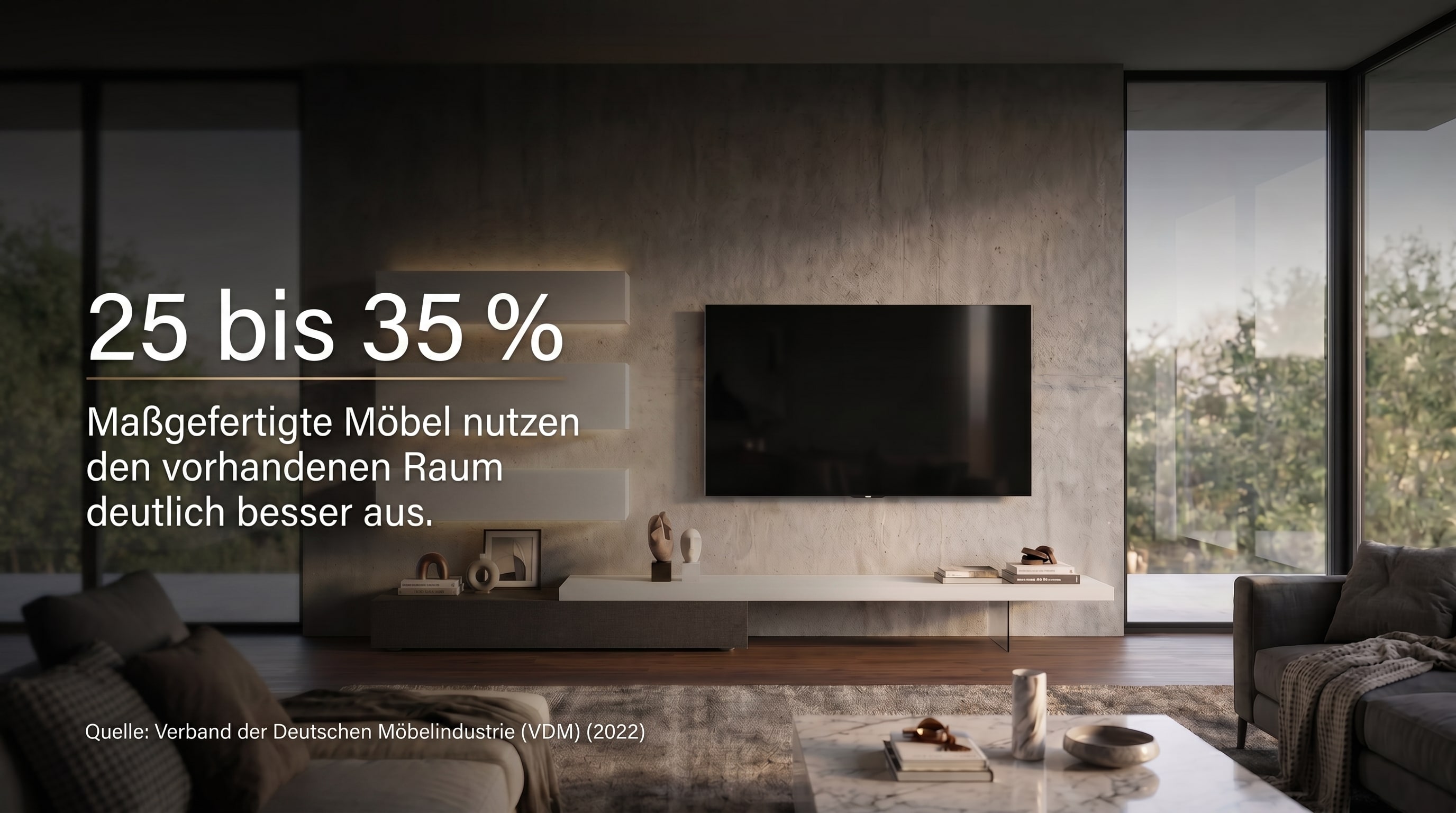











1. Planning Custom Living Room Furniture: Invisibly Uniting Acoustics and Technology
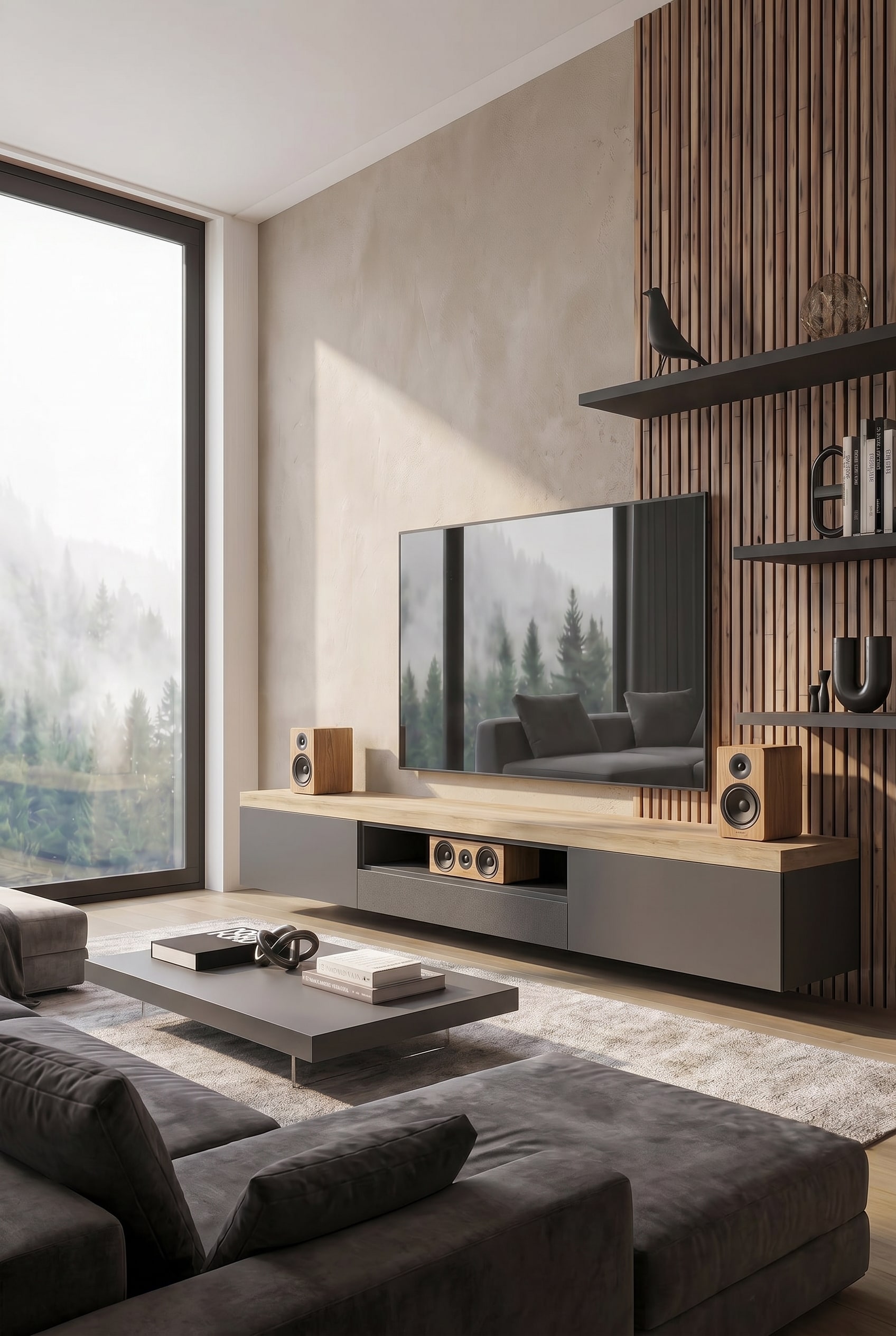
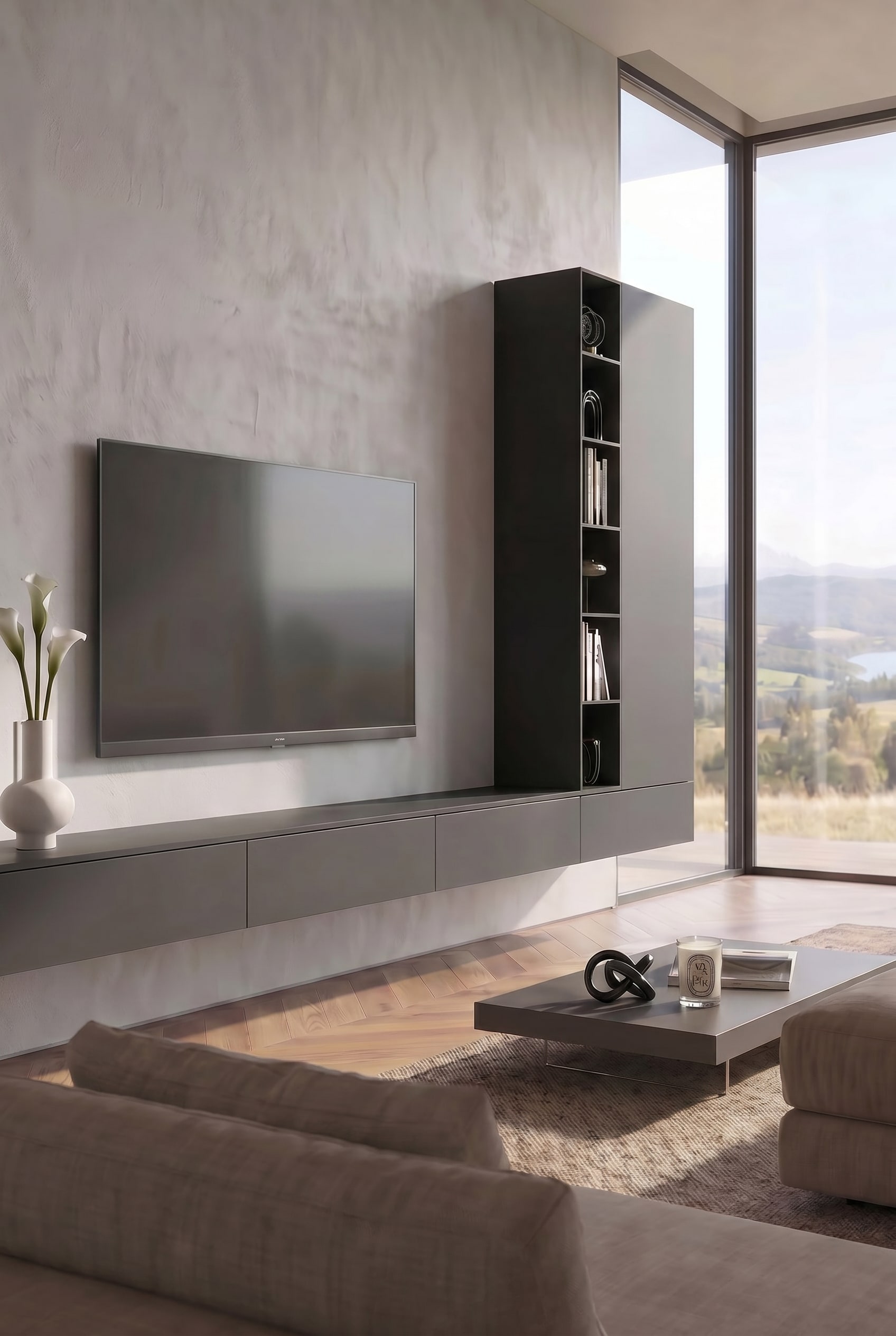
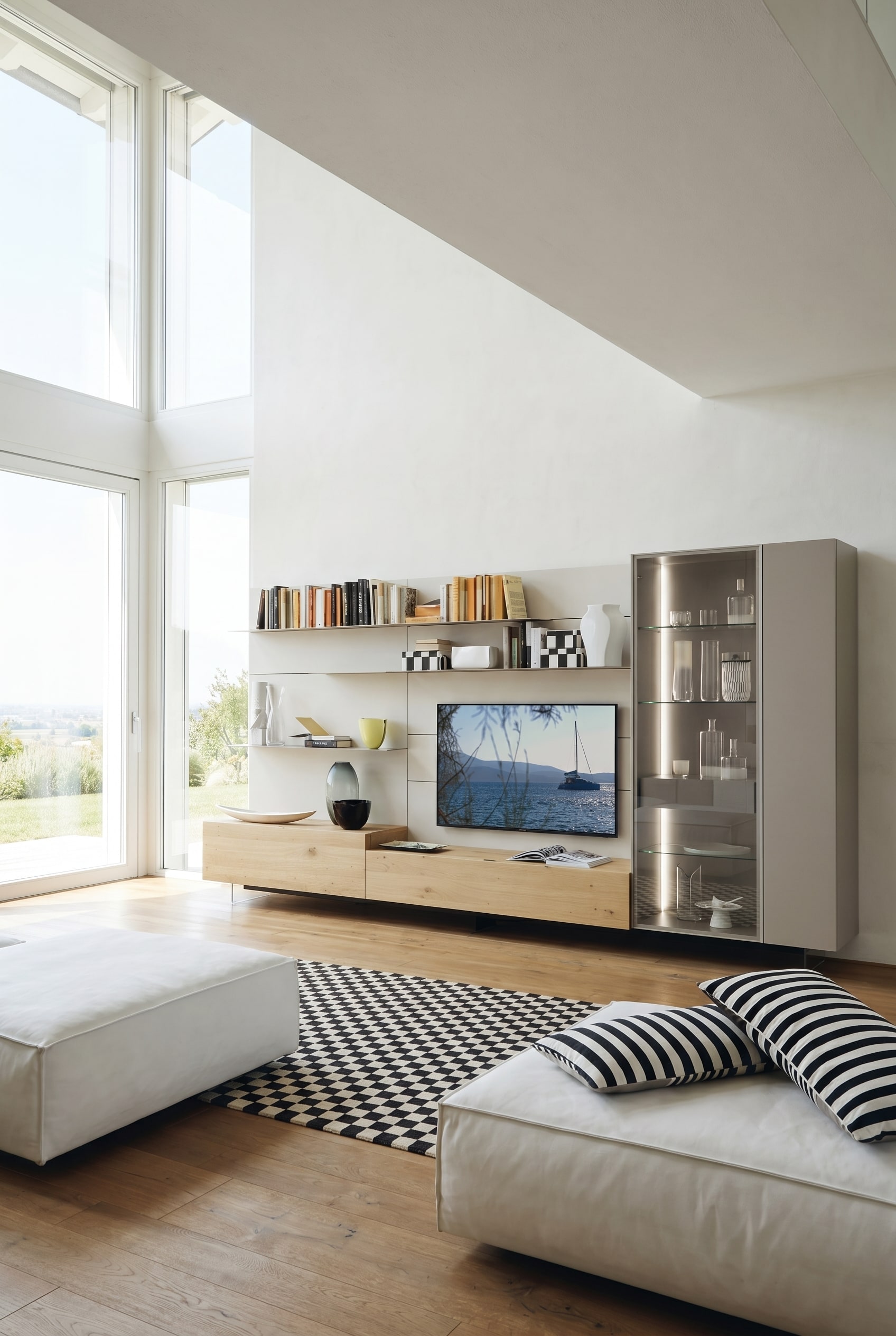
The biggest challenge in modern living areas is the harmonious accommodation of high-end audio systems. A massive AV receiver or a bulky subwoofer severely disrupts the puristic aesthetics of a room. When you plan your custom living room furniture, you solve this problem with specially constructed carcasses. Here, acoustic fabric fronts are used, which allow the sound of the loudspeakers to pass unhindered into the room, while the devices themselves remain completely invisible. A gentle press on the matt lacquered front is enough, and the flap lowers silently to reveal access to the technology.
In planning practice, this integration requires precise calculations. Standard furniture often offers only 35 to 40 centimeters of internal depth, which is insufficient for modern amplifiers including rear HDMI cabling. A custom-made solution takes into account an effective usable depth of at least 45 centimeters. At the same time, specialist planners integrate hidden cable ducts in the top plate and in the partition walls to keep signal paths extremely short and invisible. The thermal management of the devices is also directly incorporated into the module structure.
Livarea Expert Tip:Powerful amplifiers produce heat build-up. For closed technical carcasses, it is essential to plan a rear ventilation slot of at least 5 centimeters in width to permanently ensure air circulation within the furniture.
Furniture Tip for Perfect Audio Integration: The Livitalia Lowboard C101 excellently demonstrates how voluminous technology and soundbars can be concealed behind elegant, sound-permeable fronts without interrupting the minimalist lines.