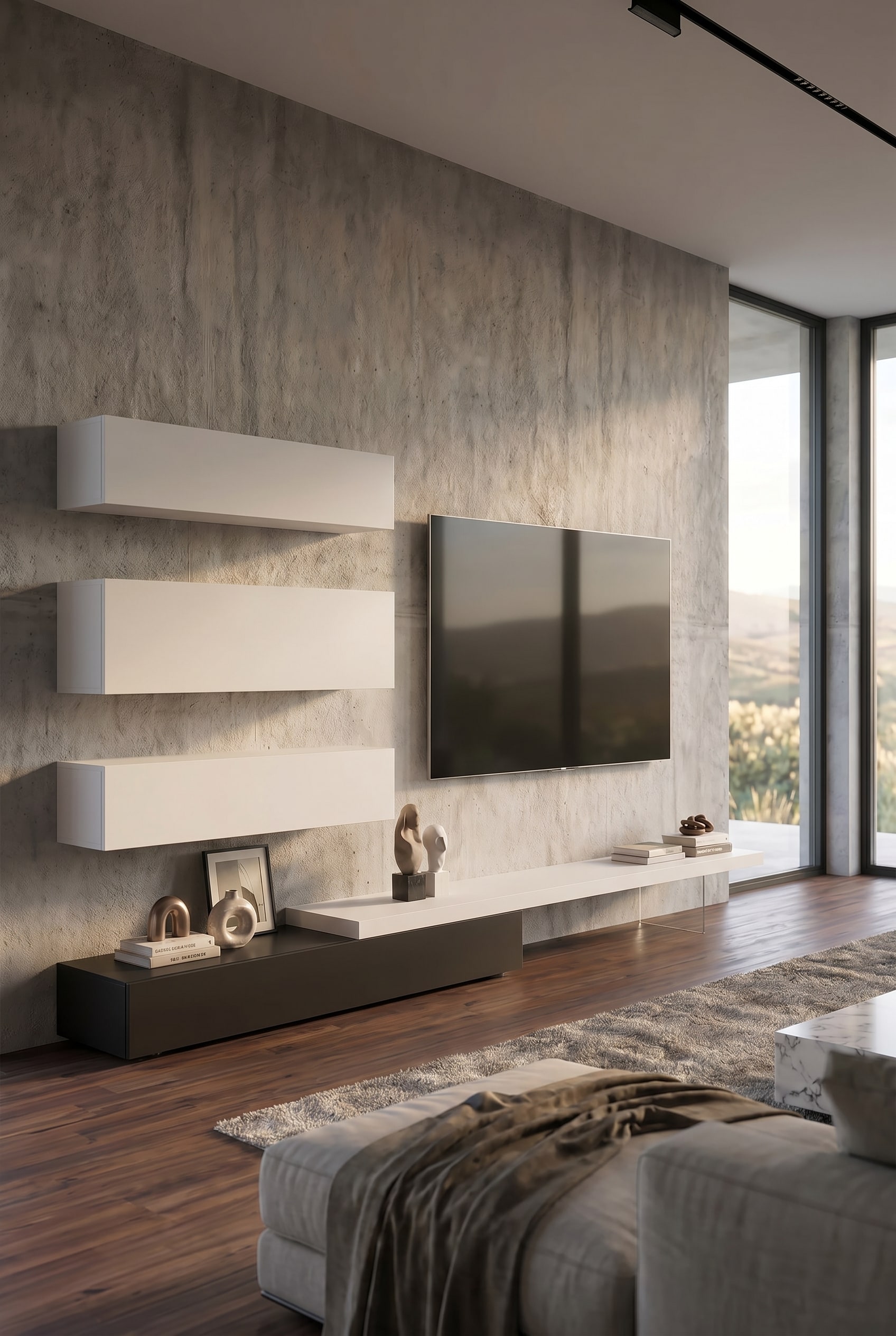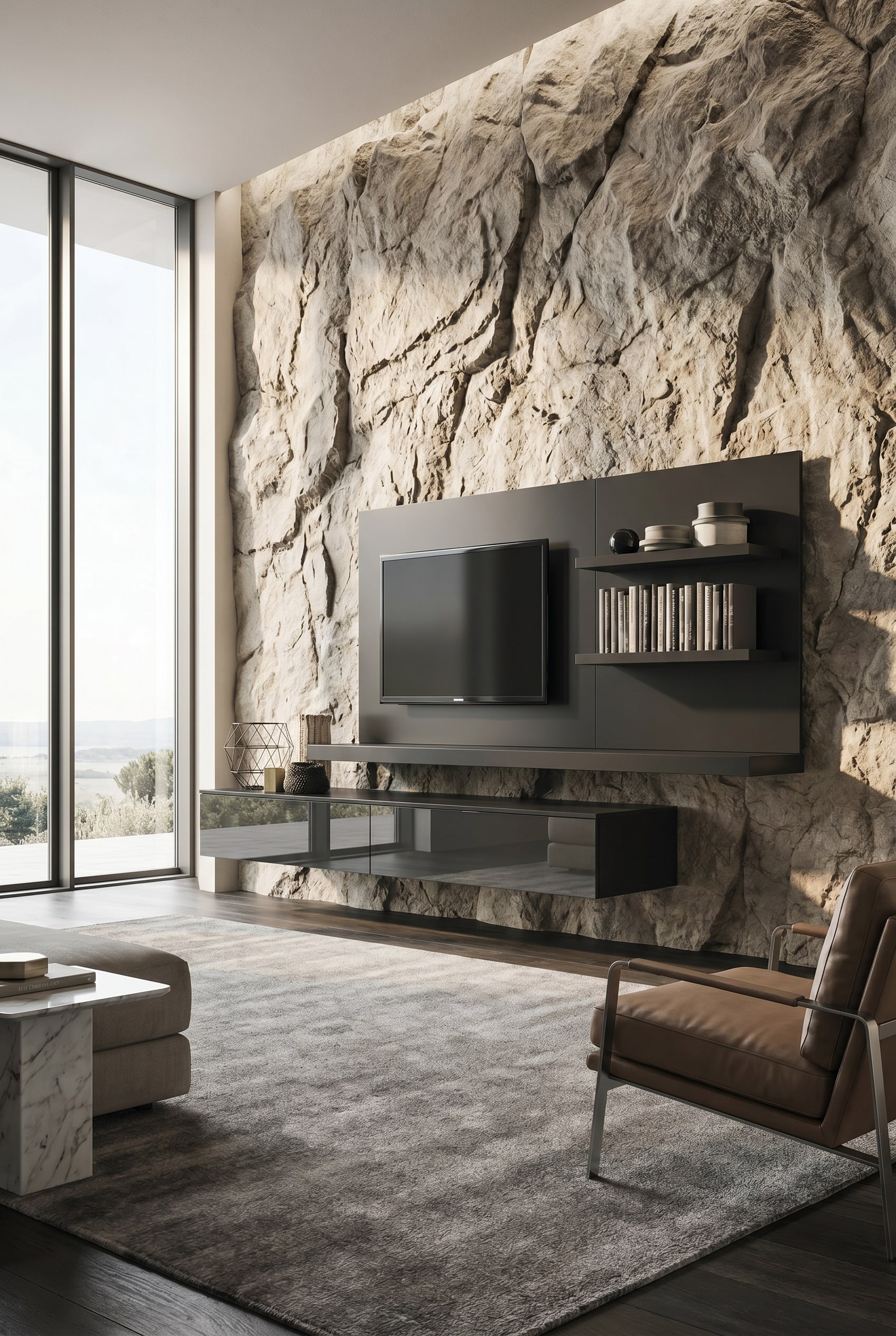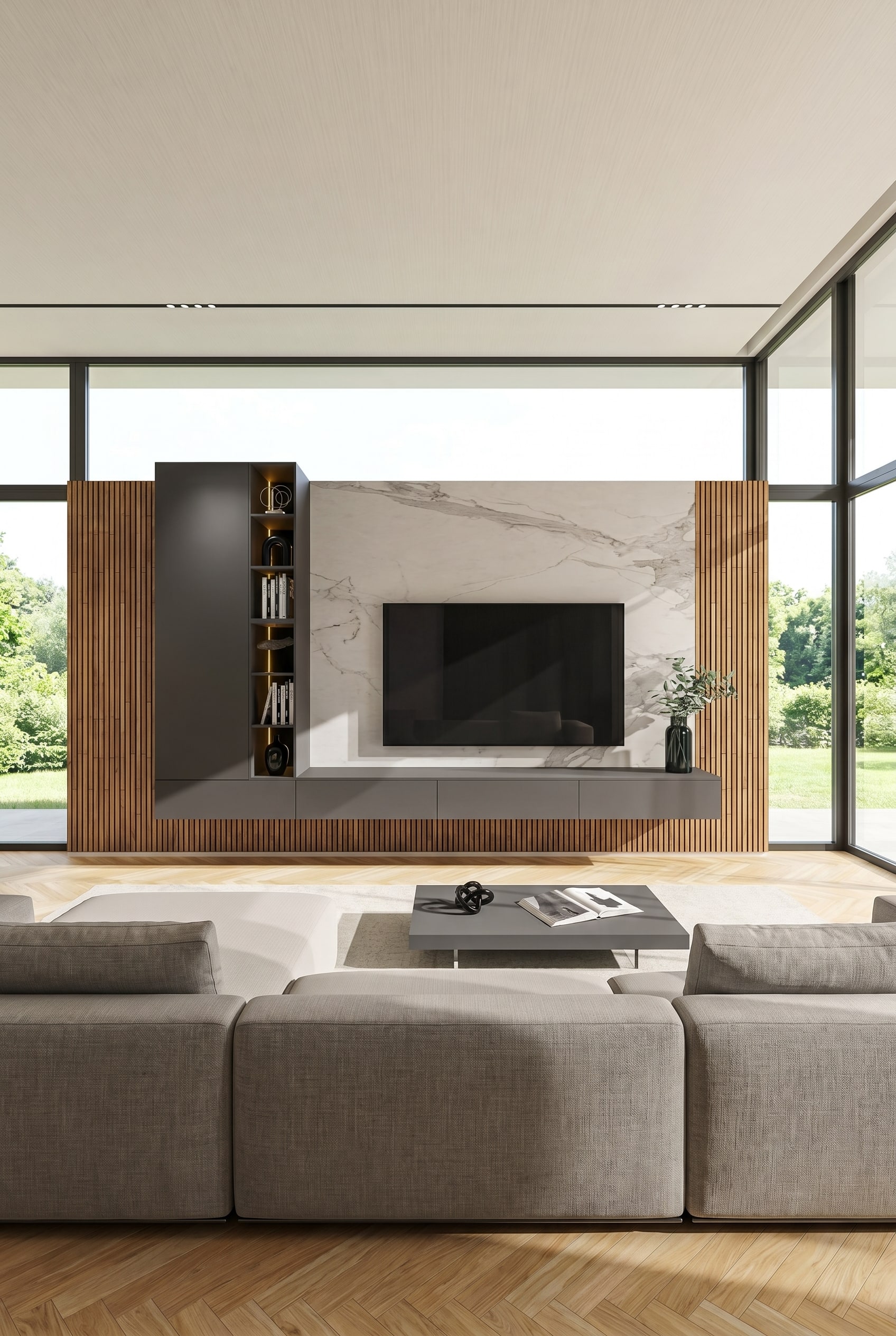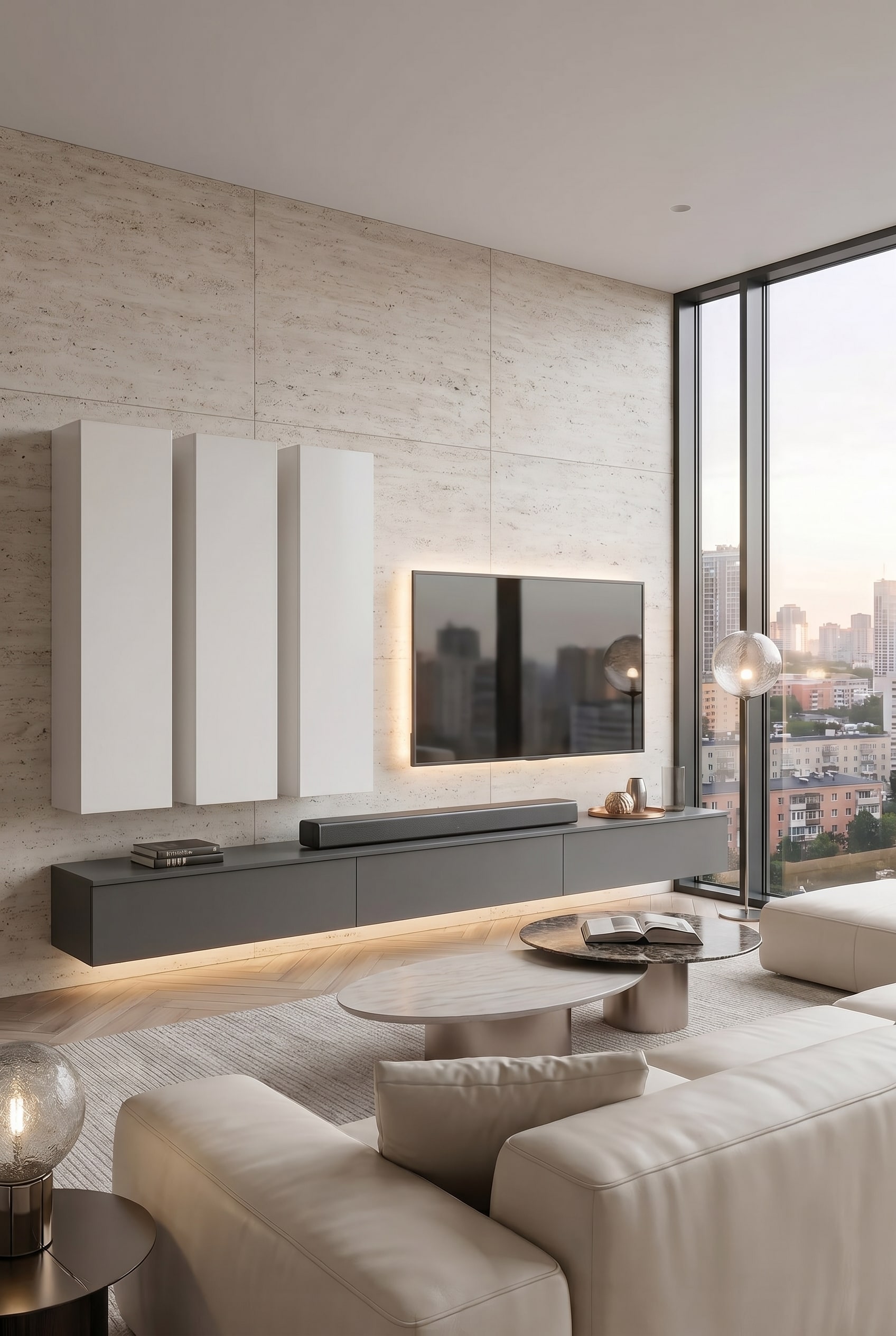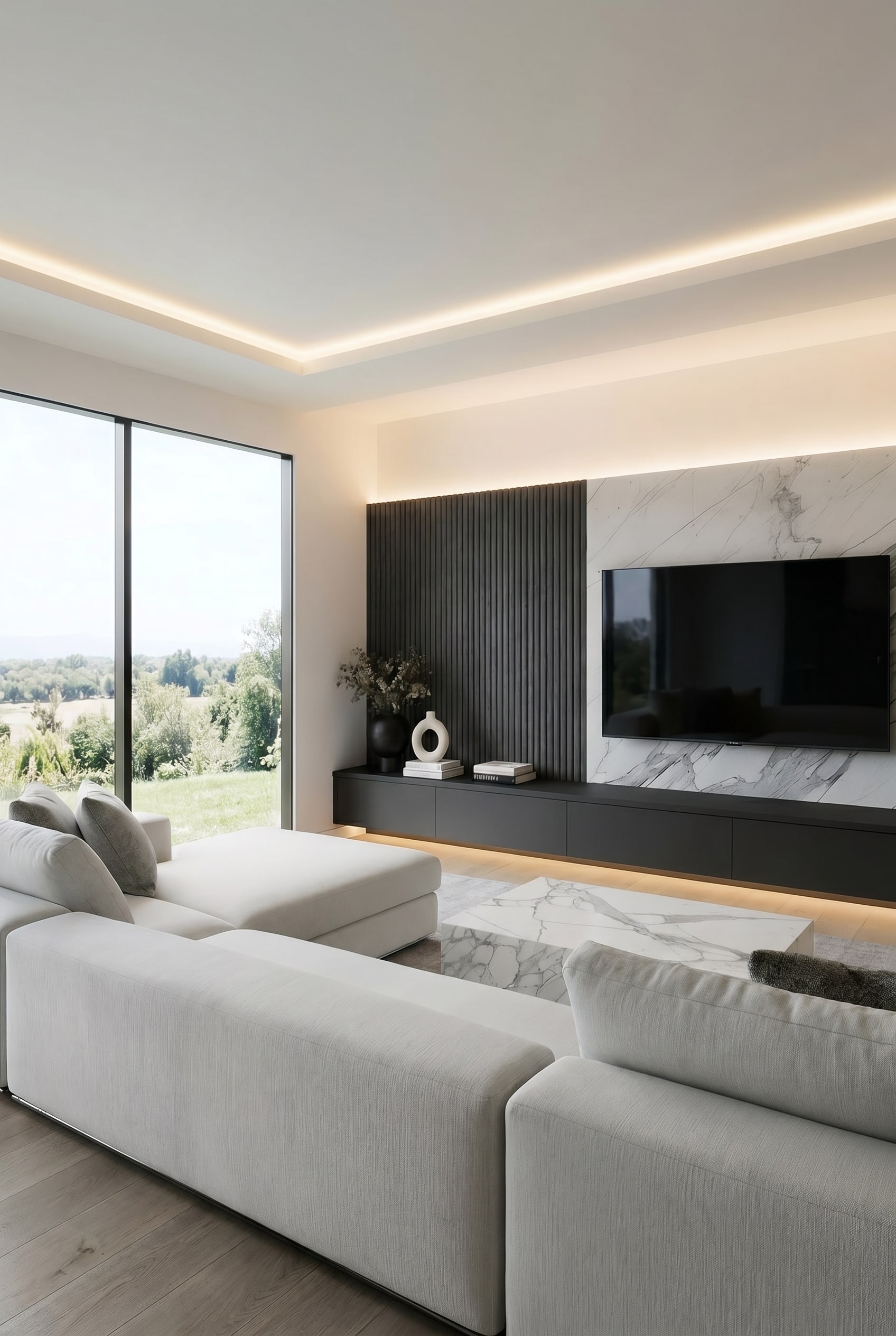











1. Reduce Living Room Echo with a Stone Wall: The Physics Behind the Echo
To defeat the enemy of good acoustics, we must first understand it. Smooth walls, floor-to-ceiling windows, and hard floors create excessive sound reflection. The sound from your TV speakers hits the bare wall behind the TV and bounces back almost unchecked. These constant overlaps measurably extend the reverberation time. The human brain perceives this acoustic chaos as constant stress, even if we often don't consciously notice it directly.
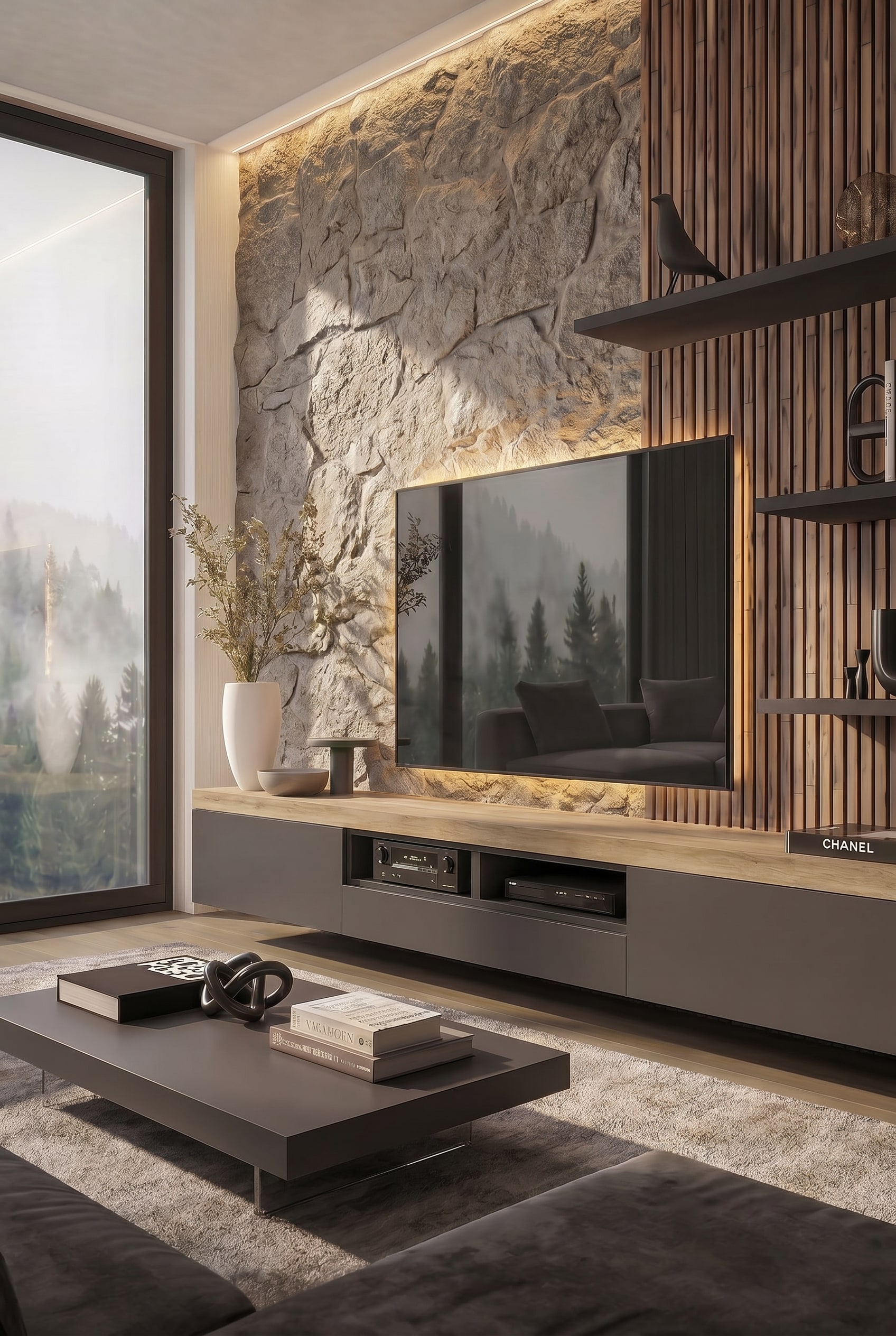
This is exactly where the solution comes in: If you want to reduce living room echo with a stone wall, you can utilize the principle of sound diffusion. A wall cladding in natural stone or rough concrete look has microscopically and macroscopically uneven structures. The incident sound is not reflected in one direction but scattered in countless small directions. This way, the sound wave immediately loses energy. The room sounds audibly drier and more pleasant.
Here's how to do it in 3 steps:
- Locate the largest bare wall surface directly in line with your speakers or seating.
- Choose a structured cladding (e.g., rough concrete look, natural stone, or complementary wooden slats) that covers at least one-third of this wall.
- Combine this wall structure with low-lying, closed furniture elements that act as additional bass traps.
Livarea Expert Tip: Make sure that your system's center speaker does not aim directly at a mirror-smooth surface. A slightly asymmetrically arranged furniture ensemble in front of a structured wall breaks direct sound most effectively.
Furniture Tip for a Strong Foundation: The elegant Livitalia Lowboard C101, with its deep profile, offers the perfect visual and acoustic anchor point for large wall structures to unfold above it.