










1. Mistake 1: The Massive Plinth Barrier as a Secret Dust Trap
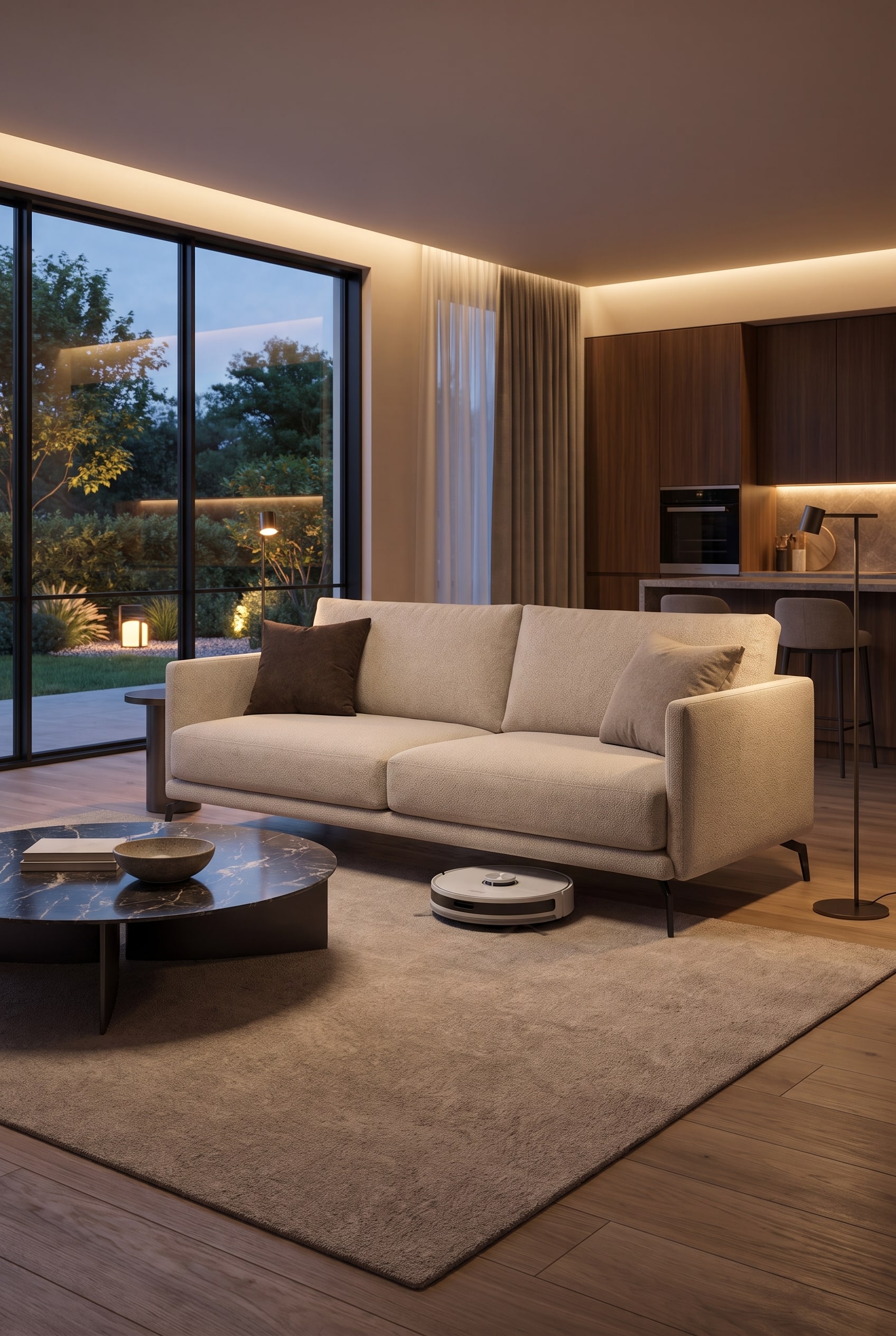
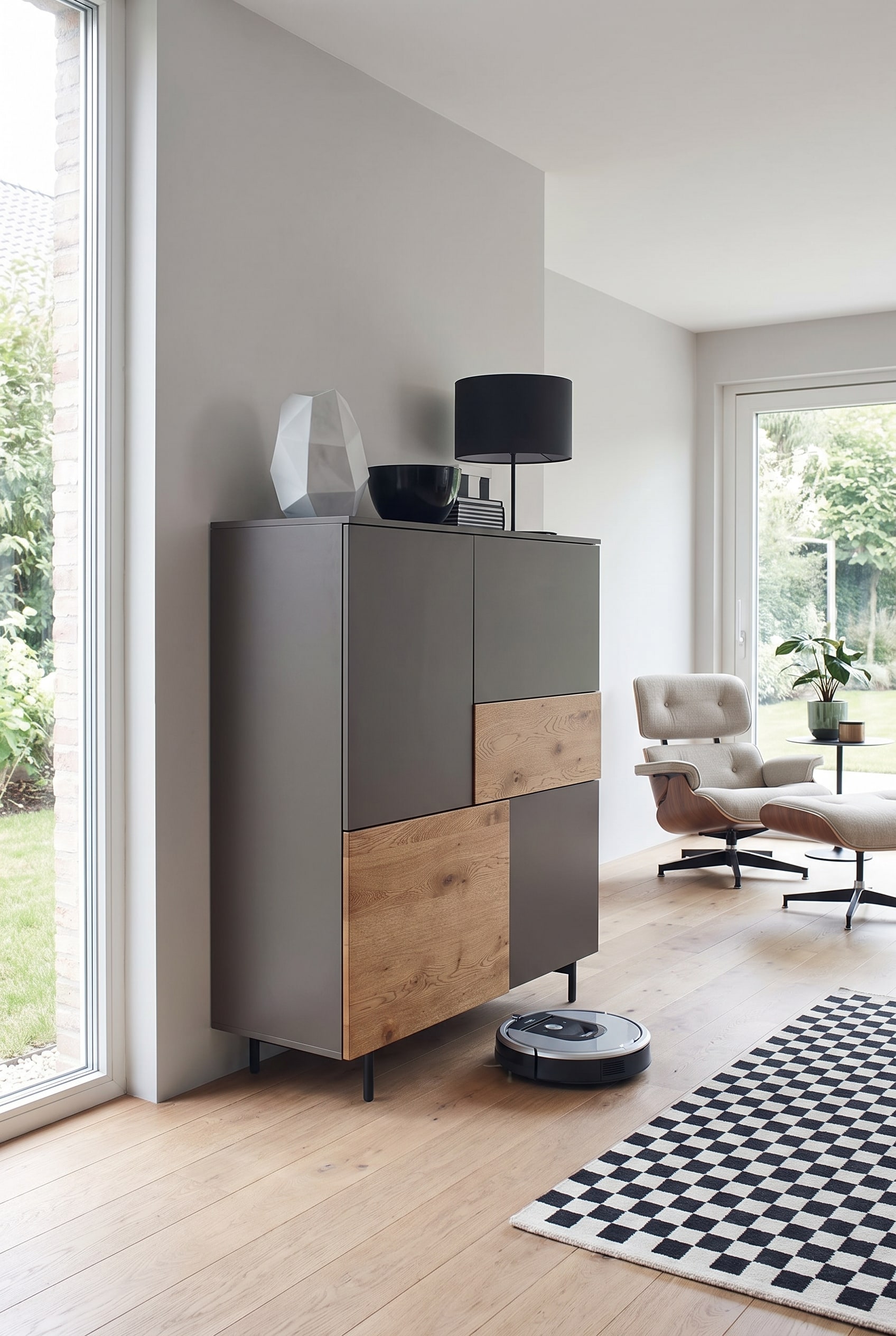
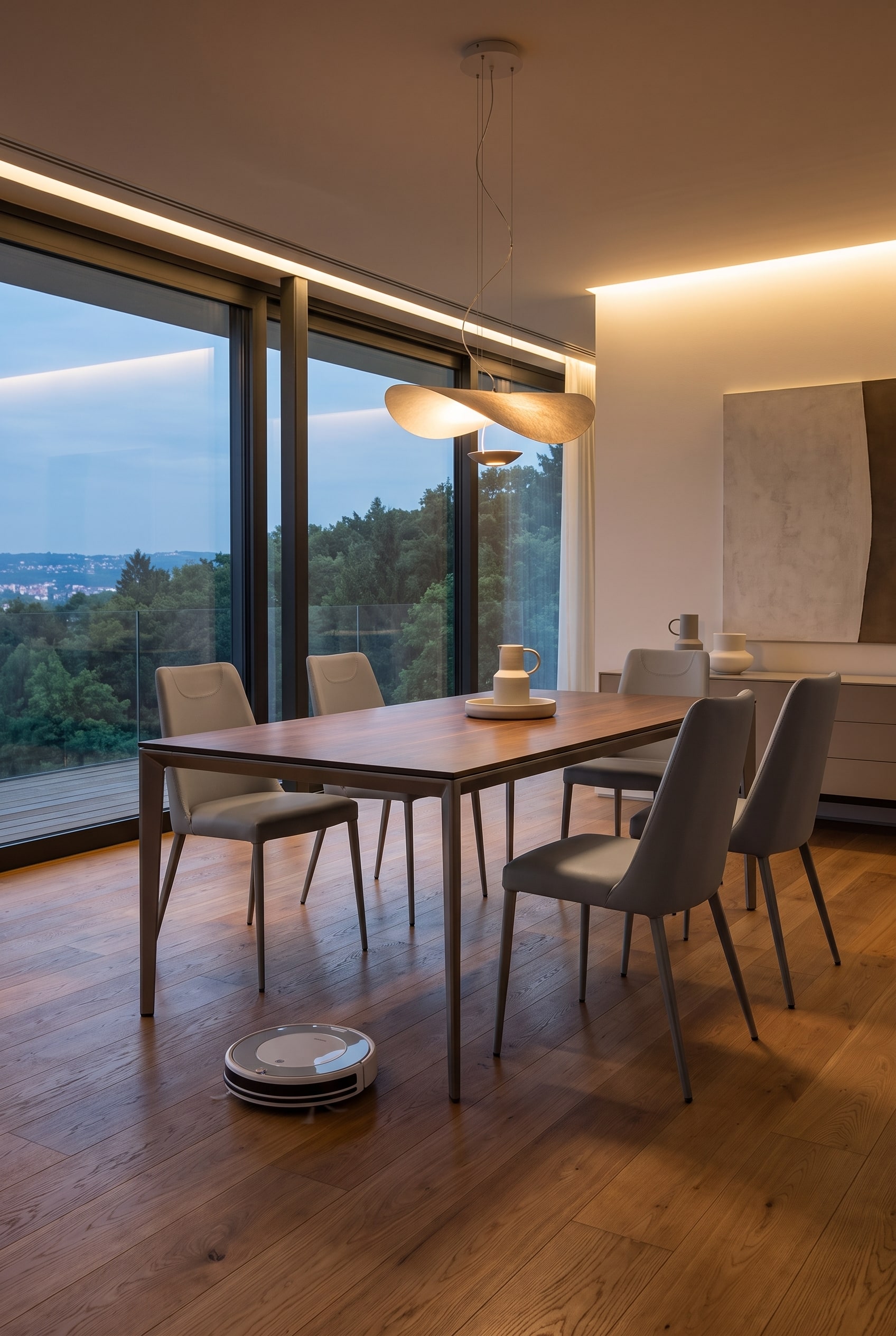
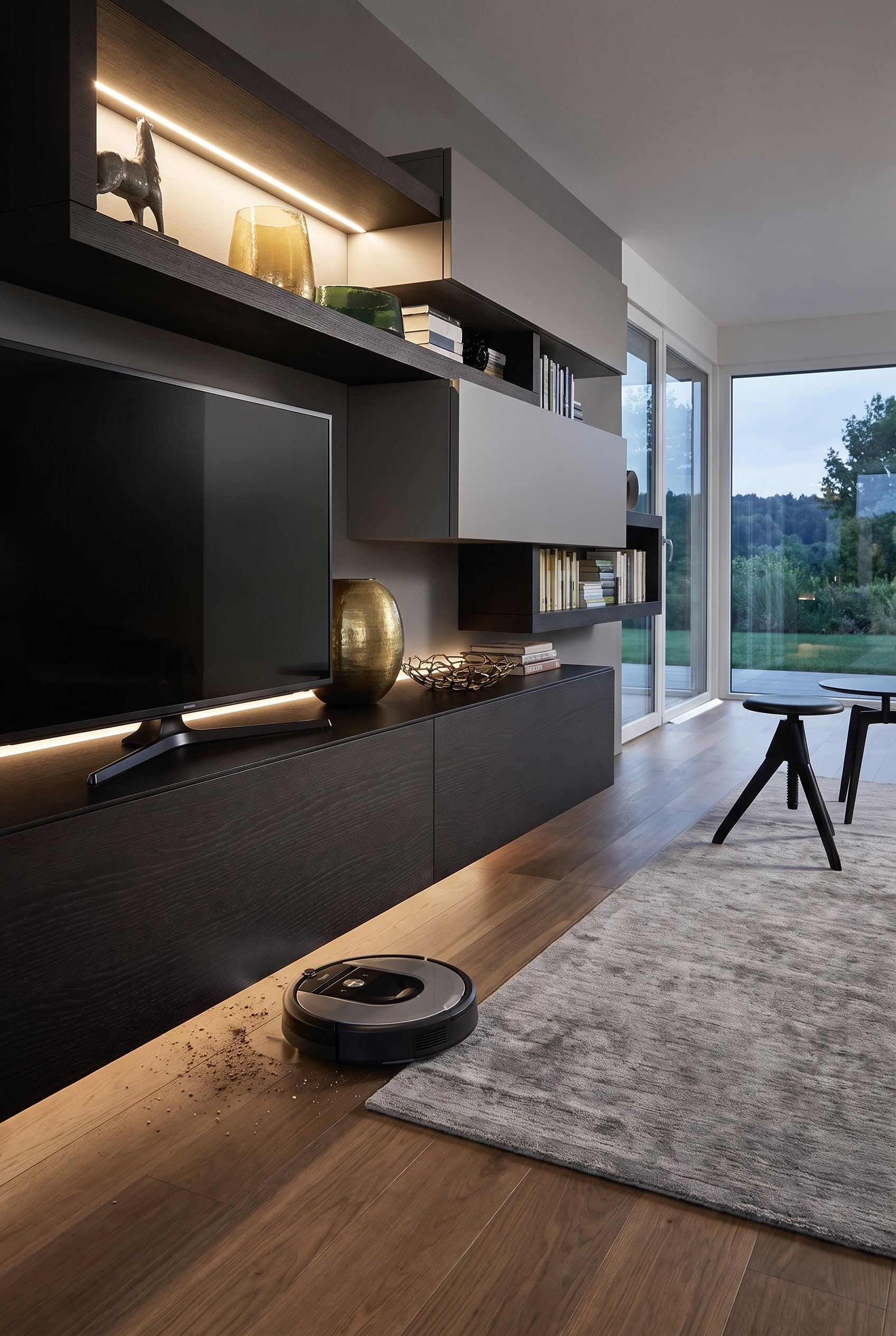
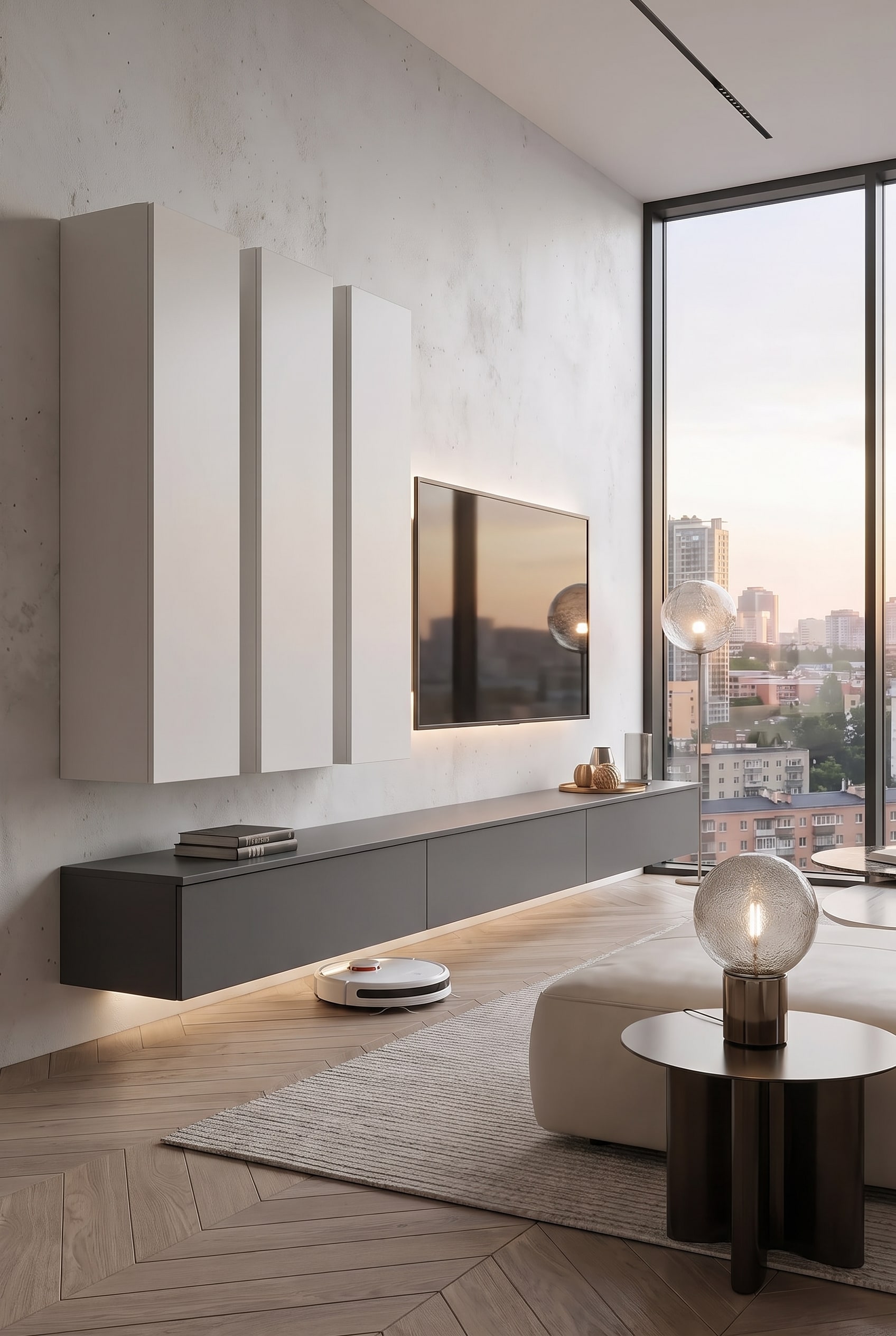
 Product shown true to original. Room styling created by digital staging.
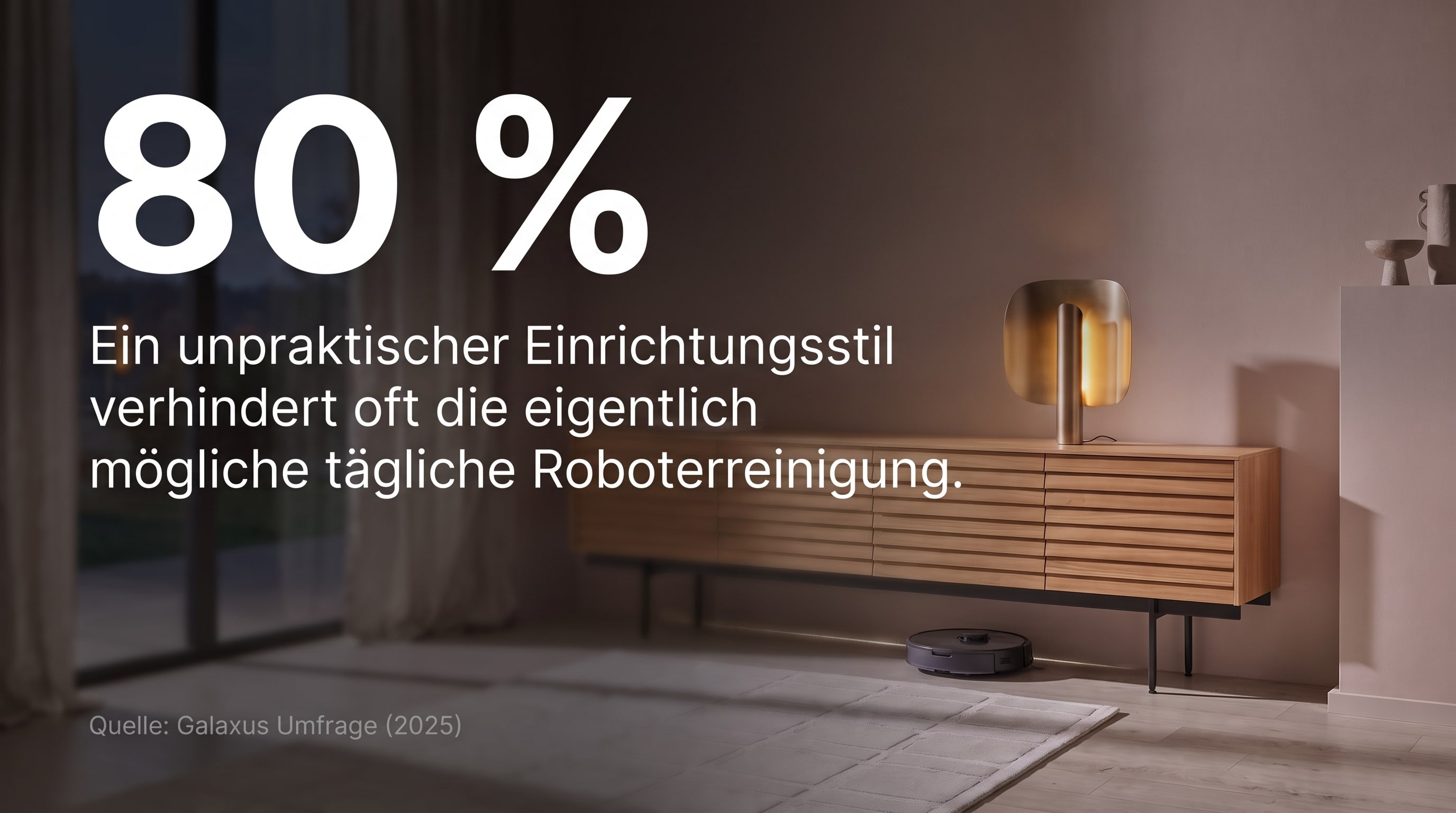
A floor-standing piece of furniture with a continuous plinth appears solid and grounded. However, for the automatic household helper, this barrier is the absolute end of the journey. The laser turret scans the wooden panel, the software registers a massive obstacle, and the device turns around.
The fatal result: Precisely at this plinth edge, household dust accumulates, driven by the robot's side rotor brushes. Since the vacuum cannot get under the furniture, an unpleasant dust reservoir forms in the blind spot behind it, which is carried back into the room with the next draft of air.
In our consulting practice, we often find that customers overestimate the devices' edge cleaning capabilities. Replace the closed carcass with a piece of furniture that grants the robot free access to reduce manual rework to zero.
A successful example of a piece of furniture that offers the robot sufficient ground clearance is the Punt Sideboard Sussex. Thanks to its open leg construction, annoying dust accumulation at the edge is a thing of the past. Thus, the edge area remains clean without manual rework.