










1. Bed under a sloped ceiling: Why frame height determines visual spaciousness
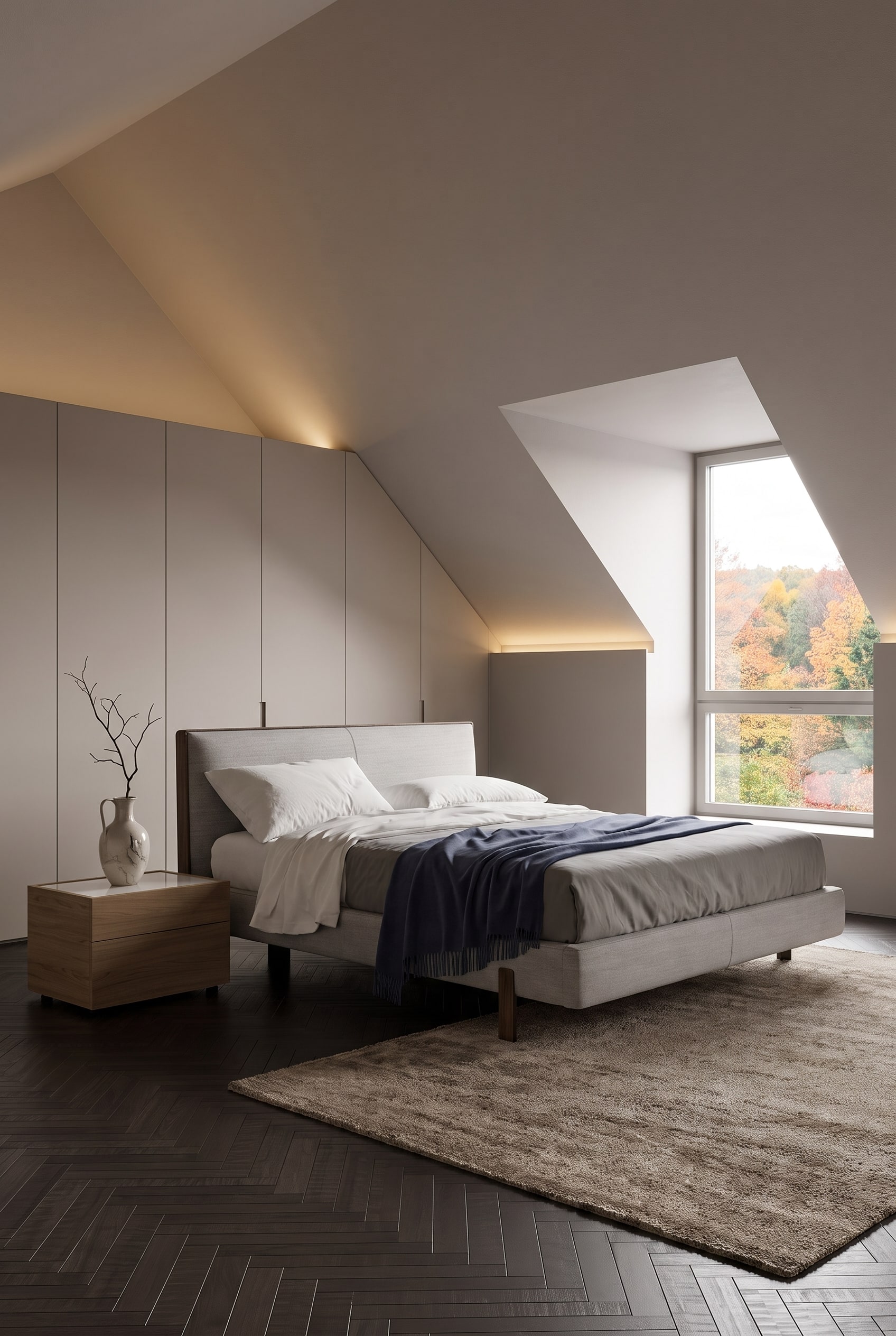
 Product shown true to original. Room styling created by digital staging.
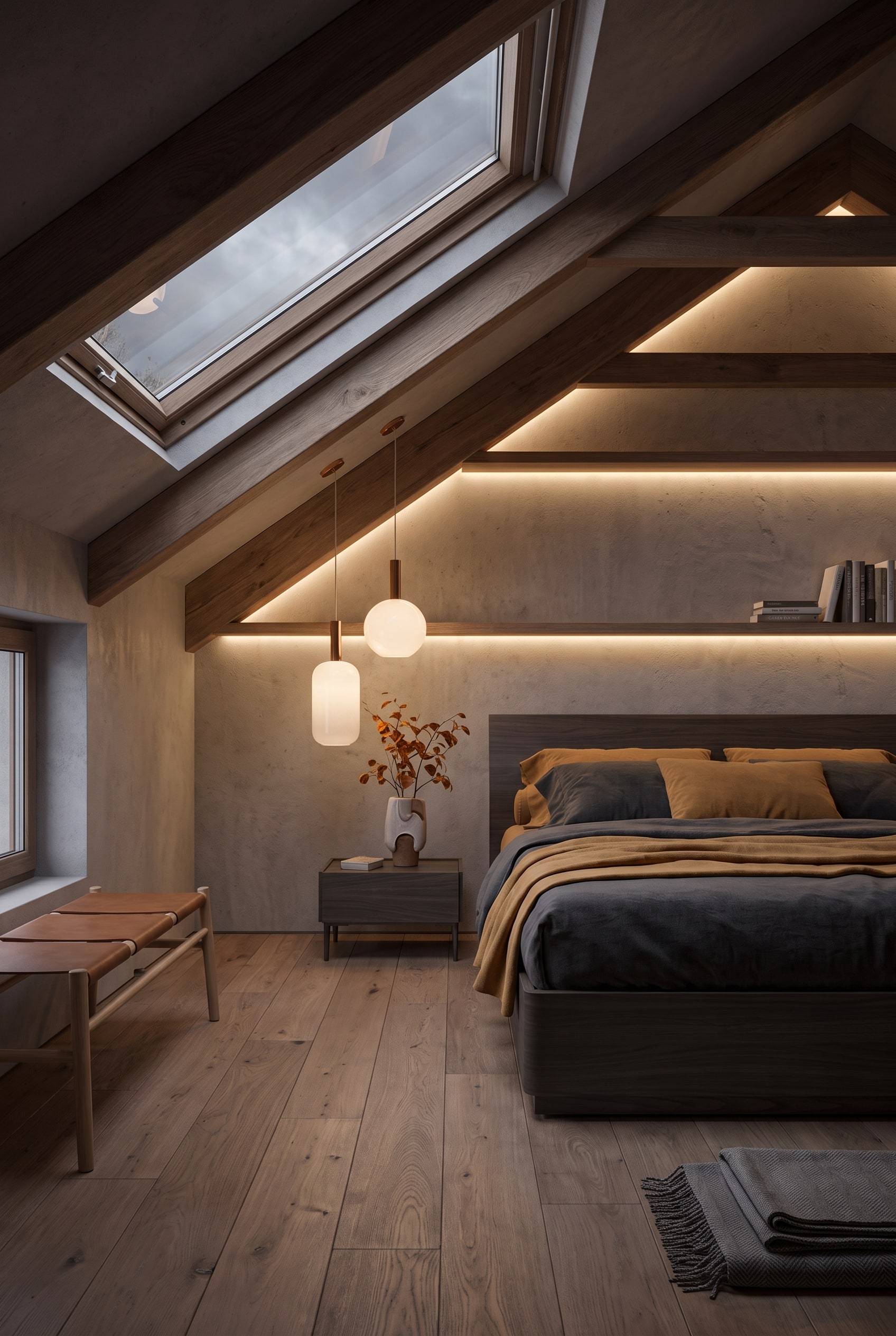
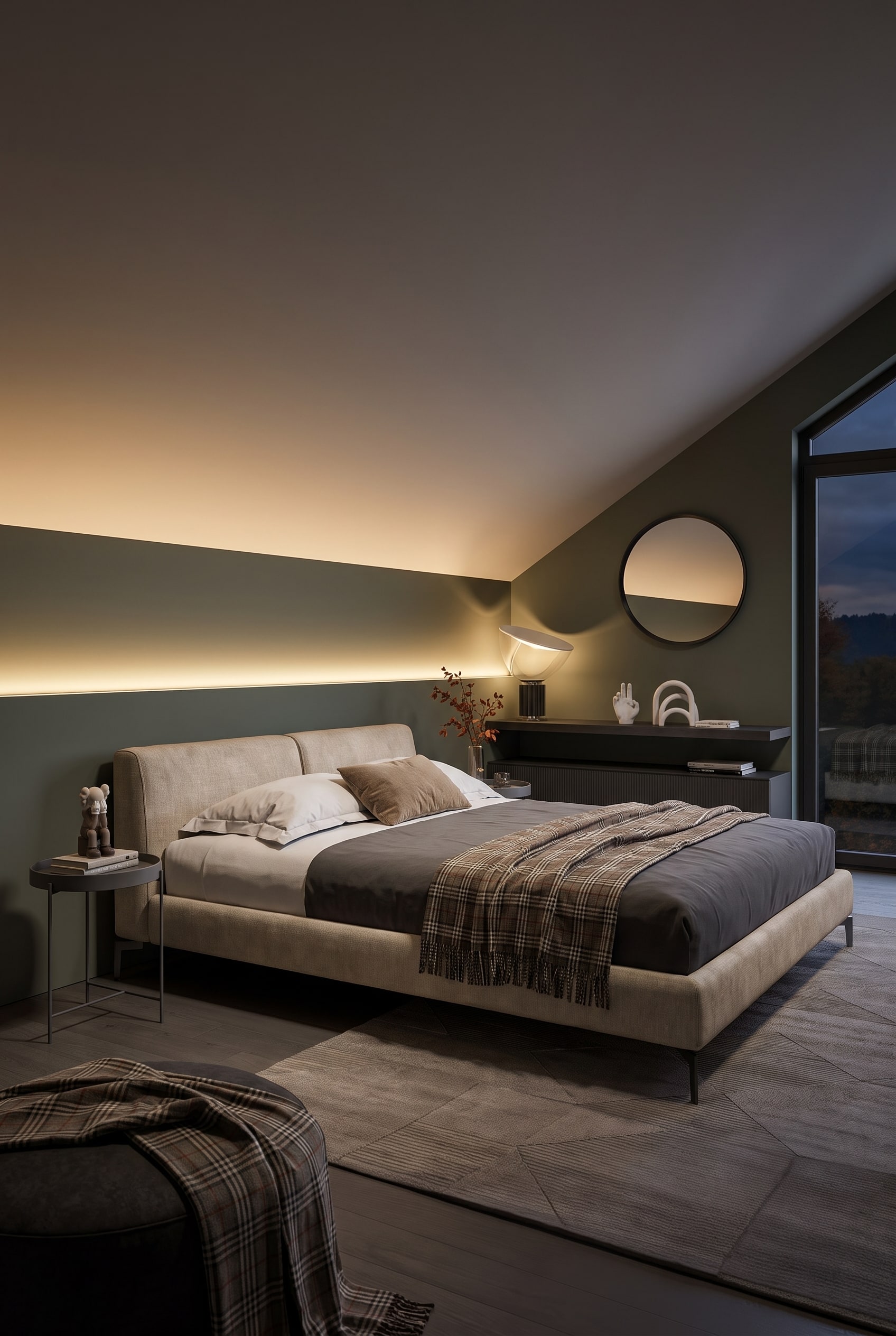
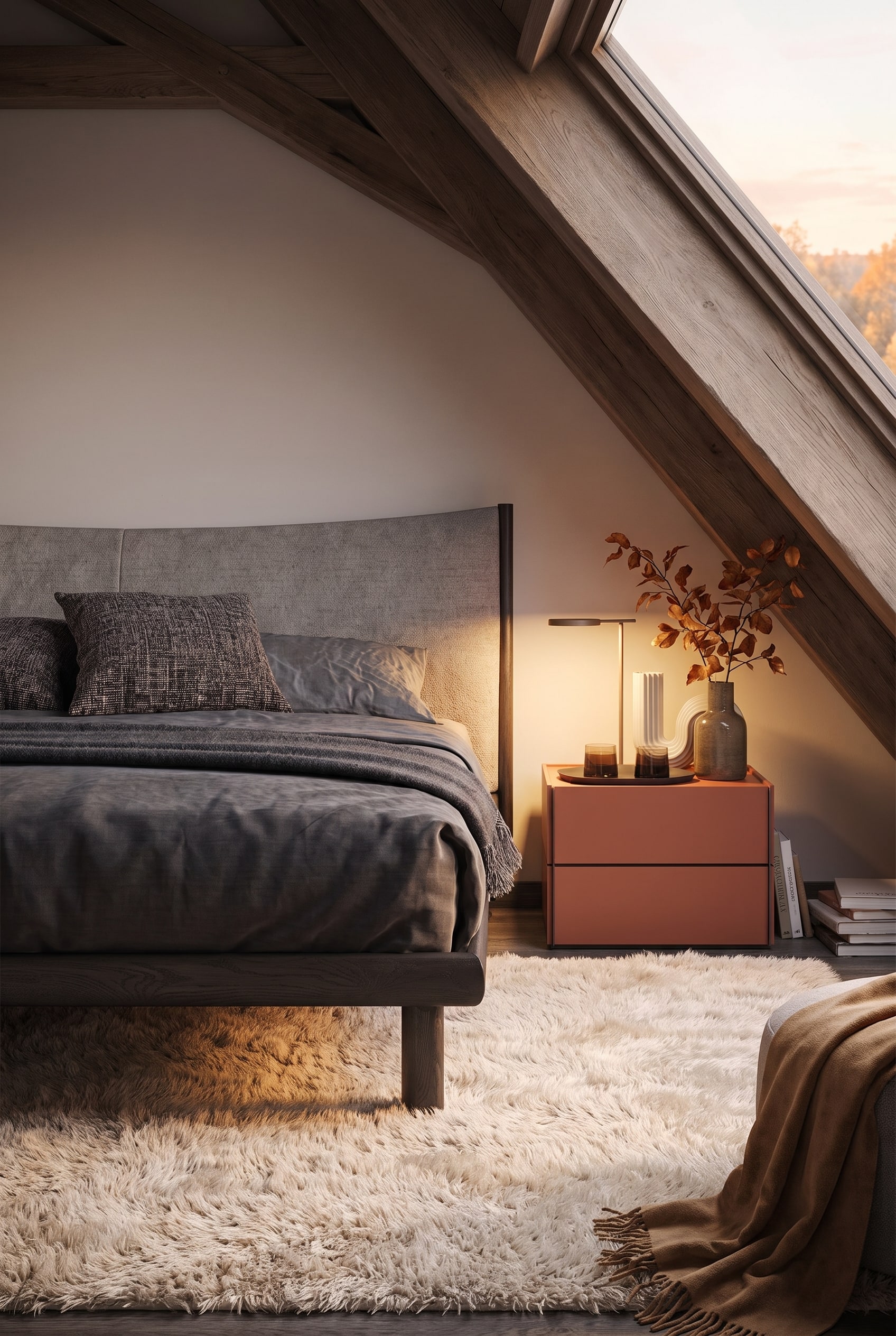
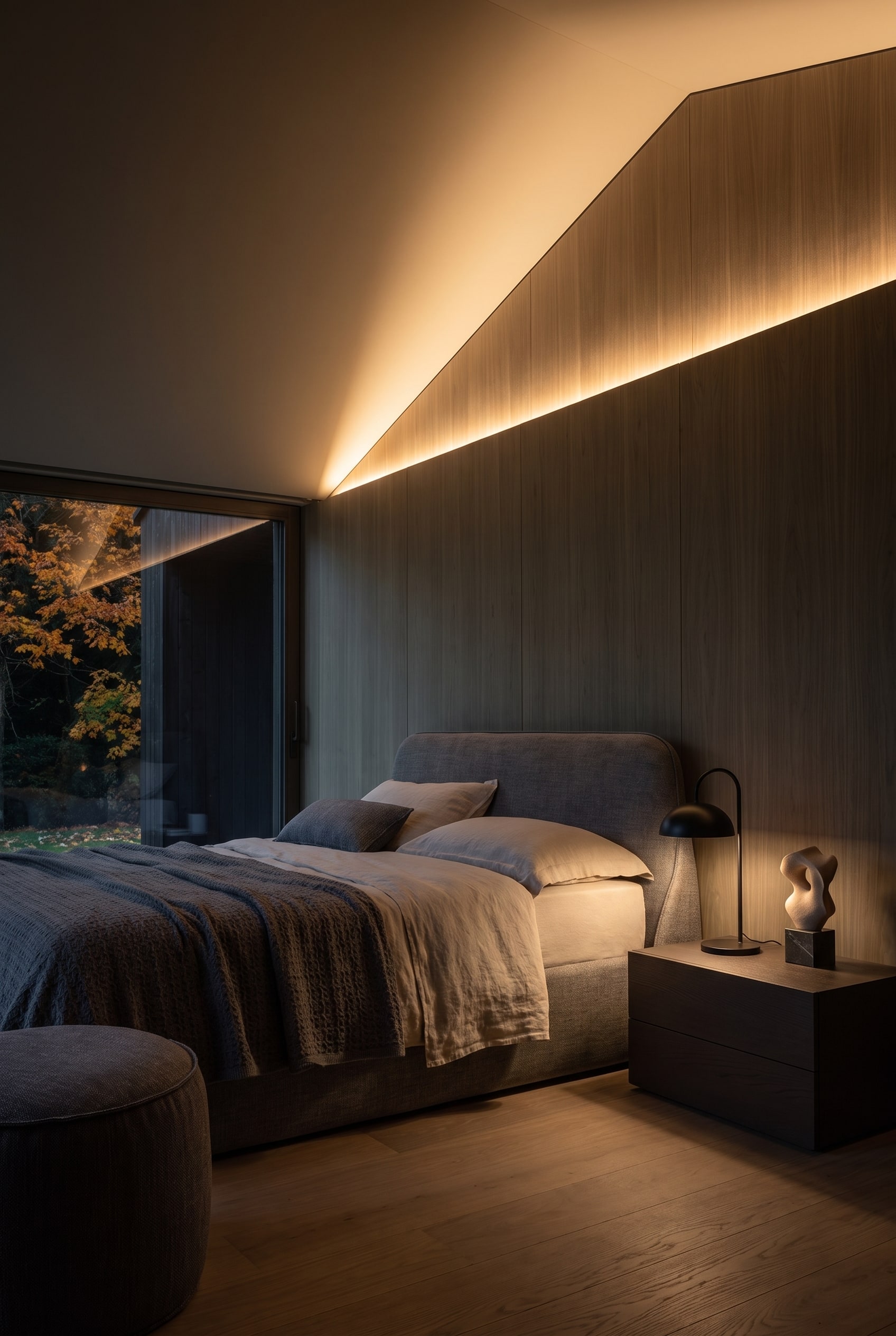
The biggest source of error when furnishing attics is a disproportion between furniture volume and room height. Anyone positioning a bed under a sloped ceiling must precisely measure the so-called knee wall – the vertical wall surface below the slope. If this knee wall is under 120 centimeters, a massive box spring bed literally sucks the air out of the room. The ceiling visually moves threateningly close. Here, luxury bedroom furniture proves its strength through reduced, floor-level silhouettes that open up the room upwards.
A well-thought-out design concept for autumn relies on the low-profile approach. Beds with a flat frame and a subtle or entirely absent headboard do not draw attention to the height restriction, but rather emphasize the horizontal. This creates a feeling of lightness and spaciousness even with a steep slope. Complemented by a simple merino wool plaid and color-coordinated pillows in rich earthy tones, the low bed becomes the unobtrusive center of the room.
Livarea Expert Tip:Always calculate a clearance of at least 60 centimeters between the top edge of the mattress and the beginning of the sloped ceiling. This distance is crucial so that you can comfortably sit up in bed for autumnal reading without feeling cramped.
Furniture Tip for Visual Spaciousness: The minimalist lines and extremely flat construction make the Novamobili Bett Neos the ideal choice if you don't want to forgo exquisite design despite a low knee wall.