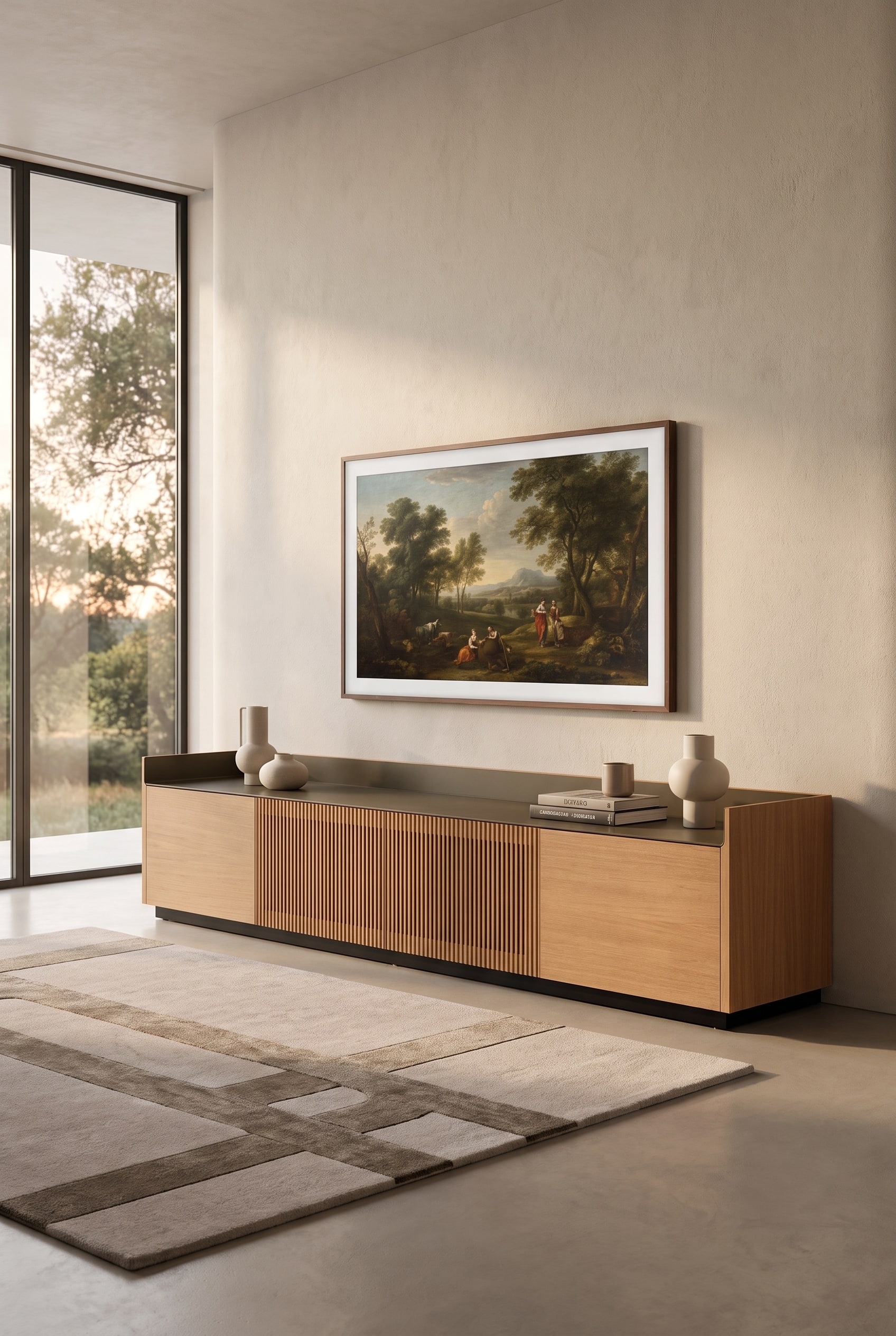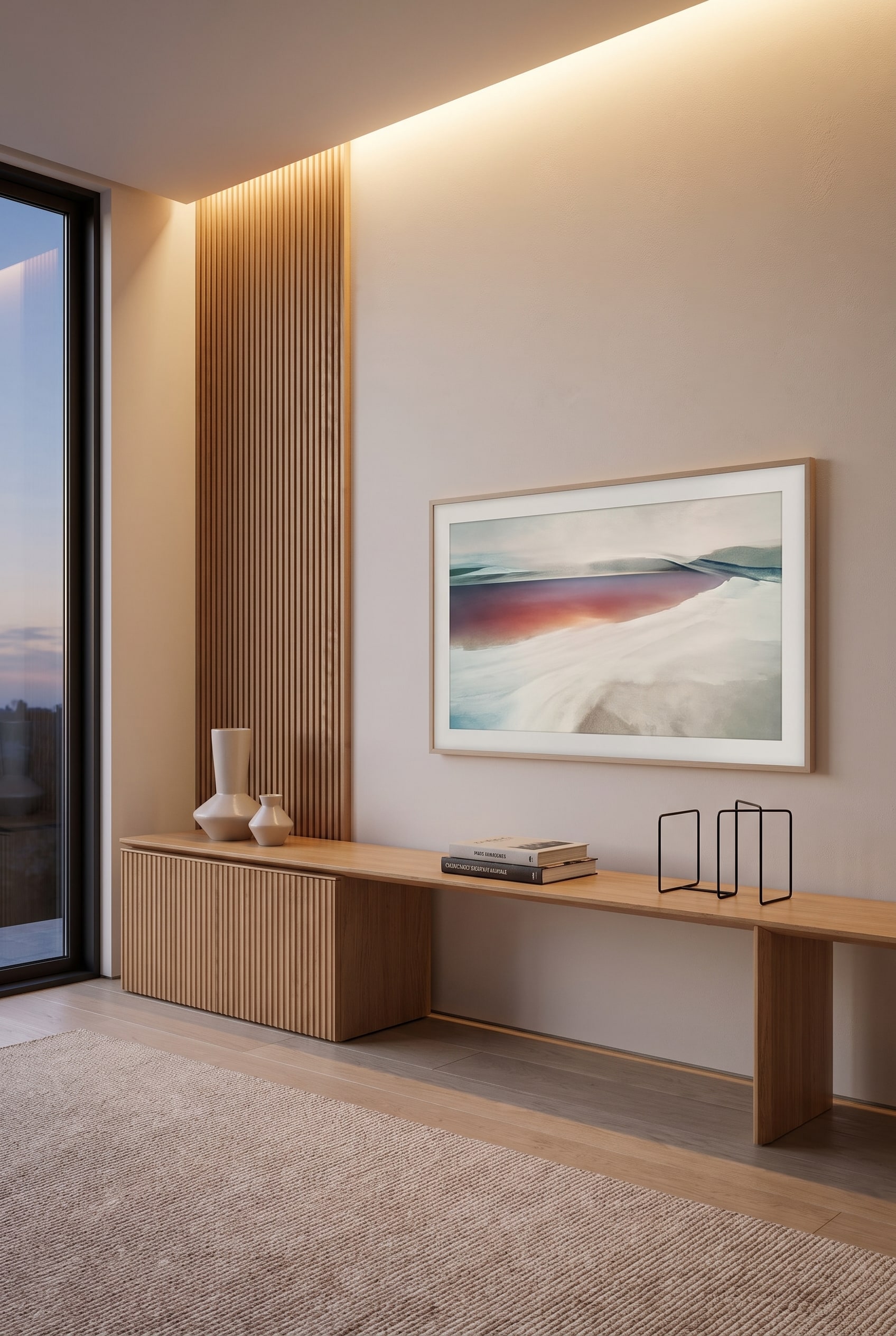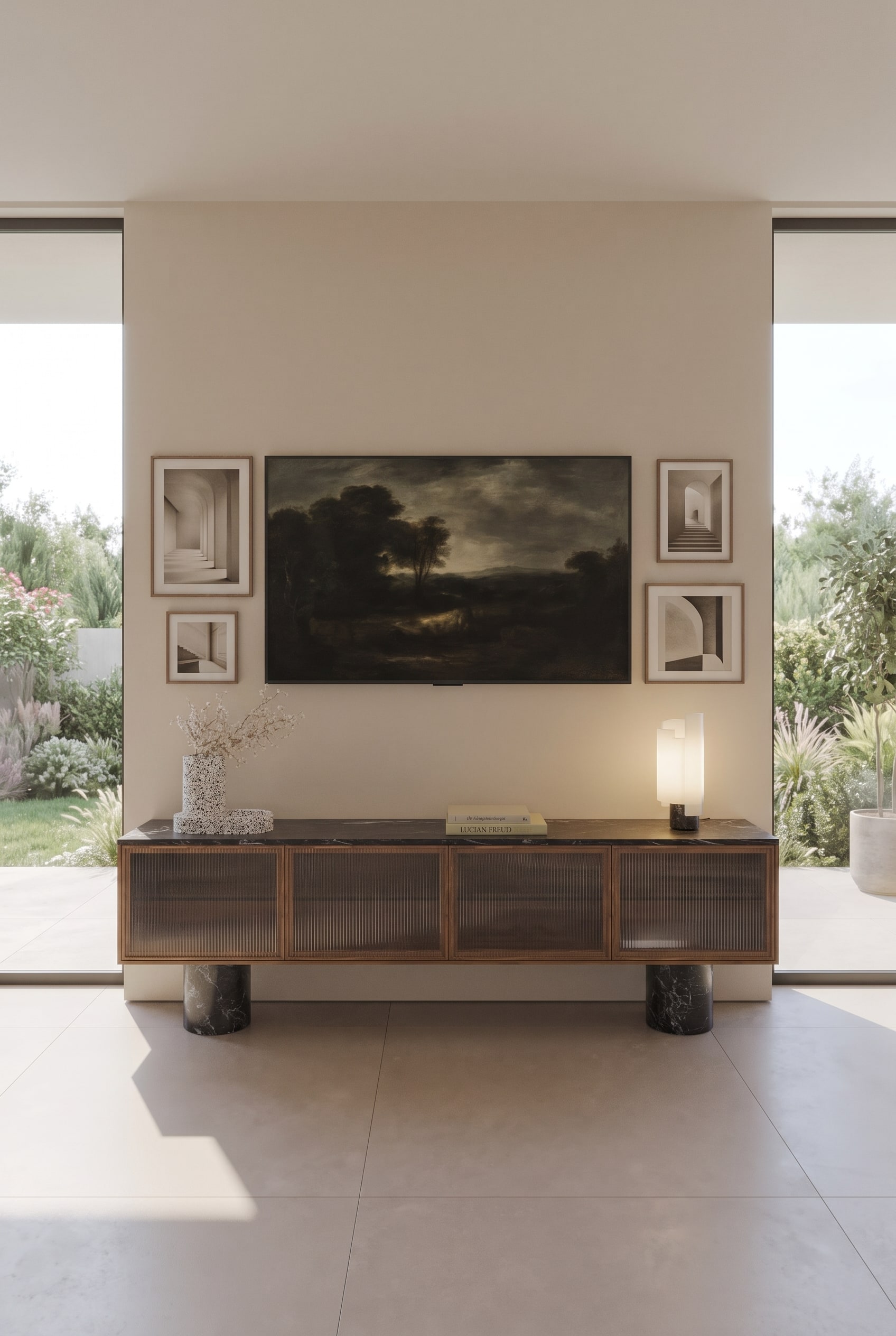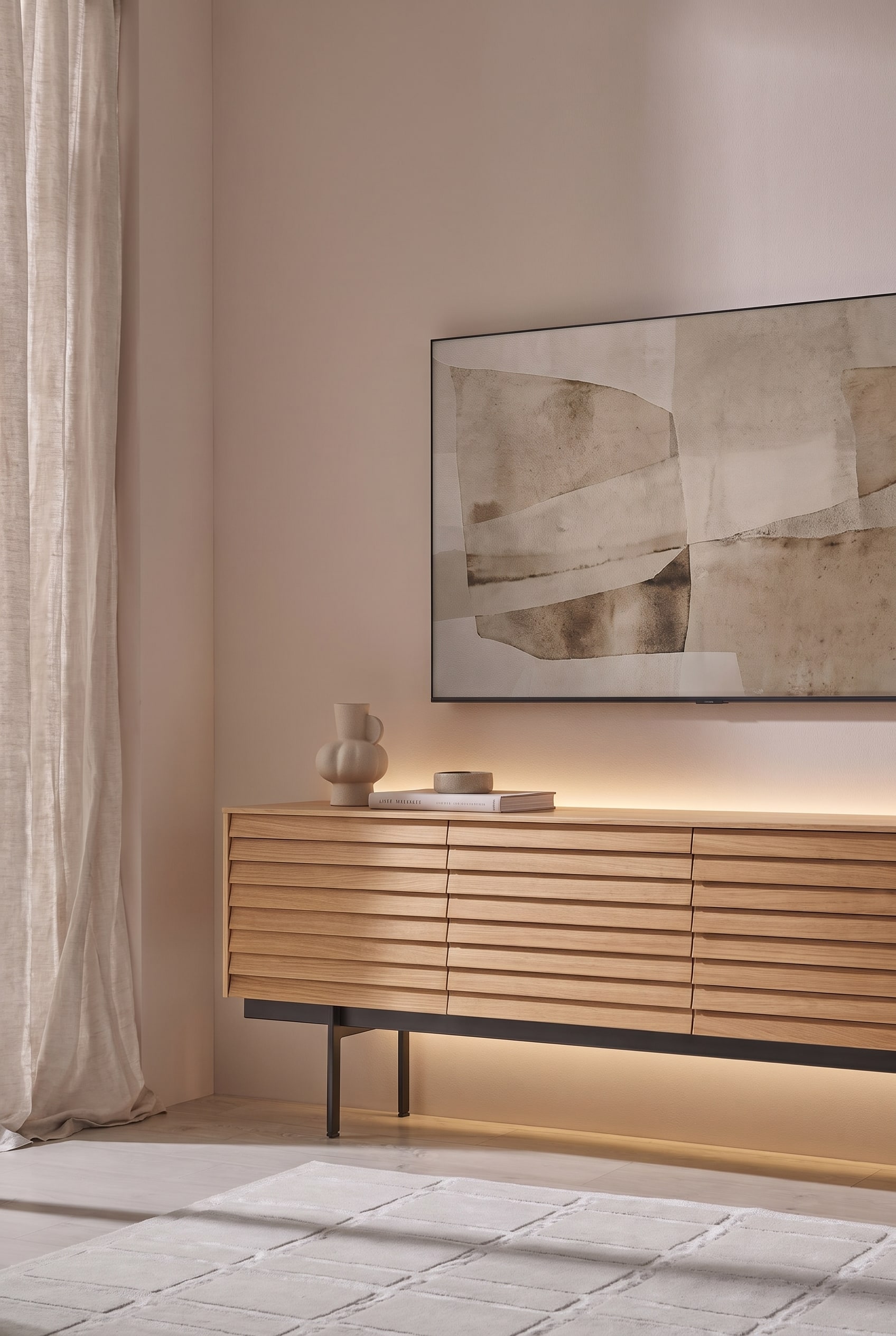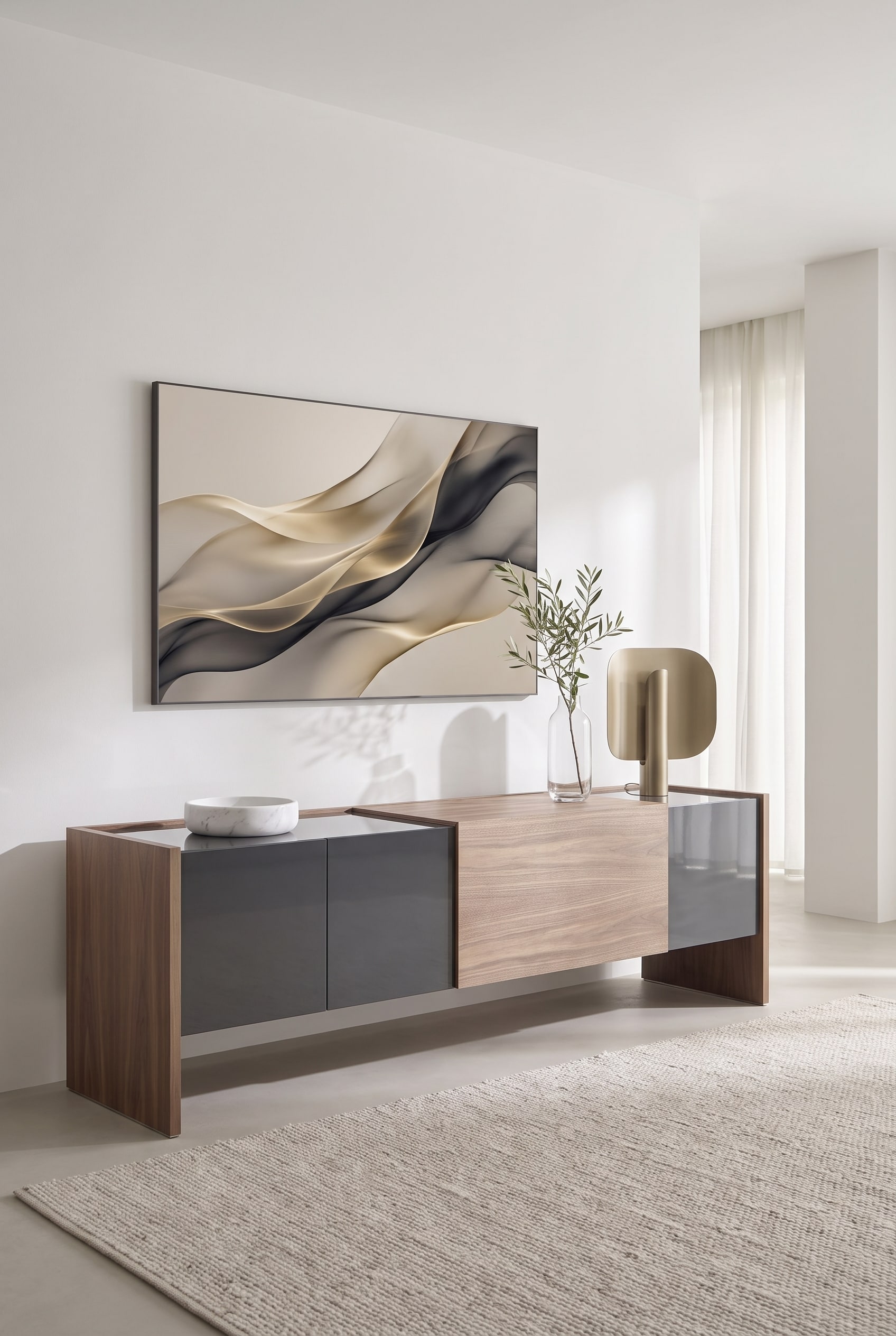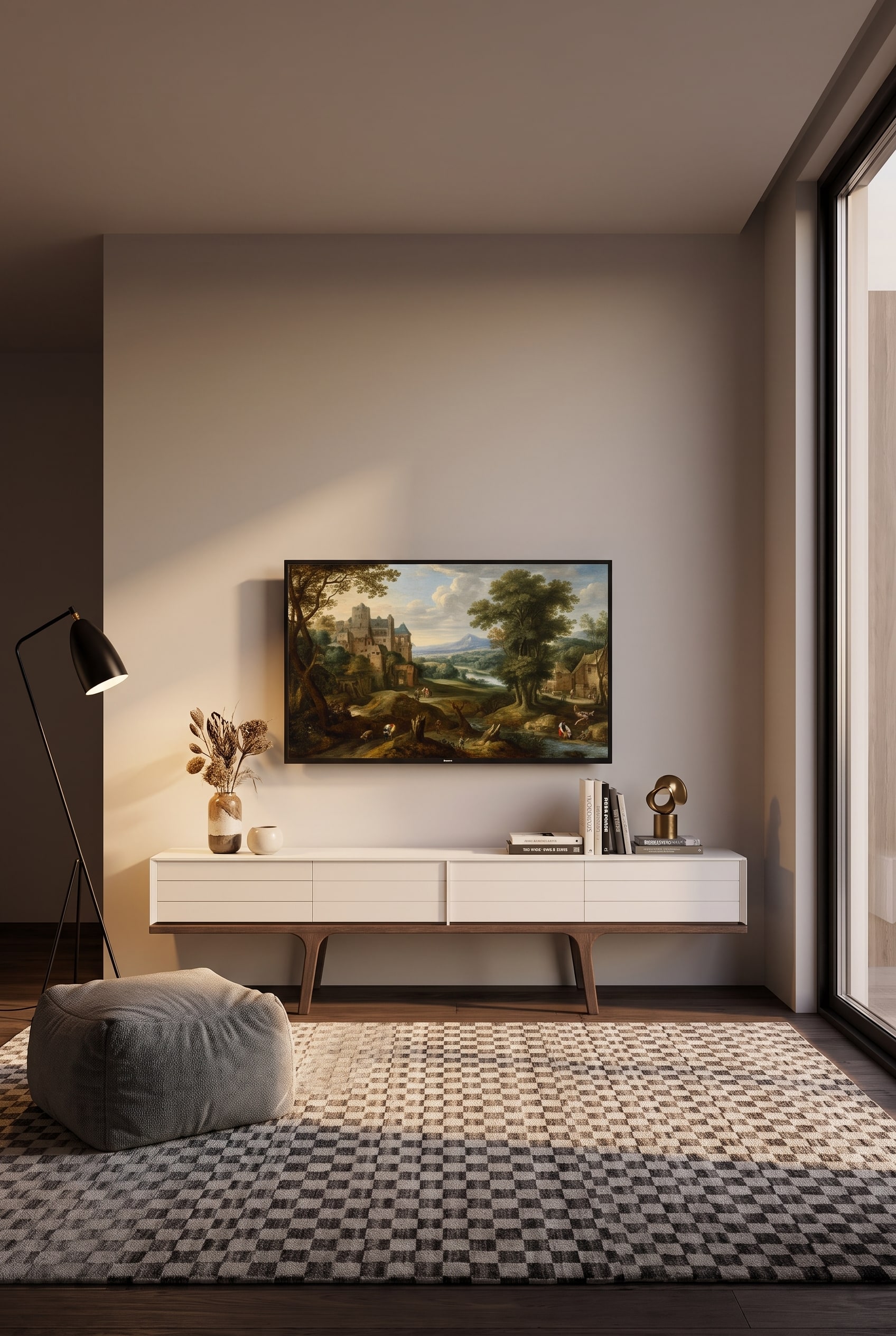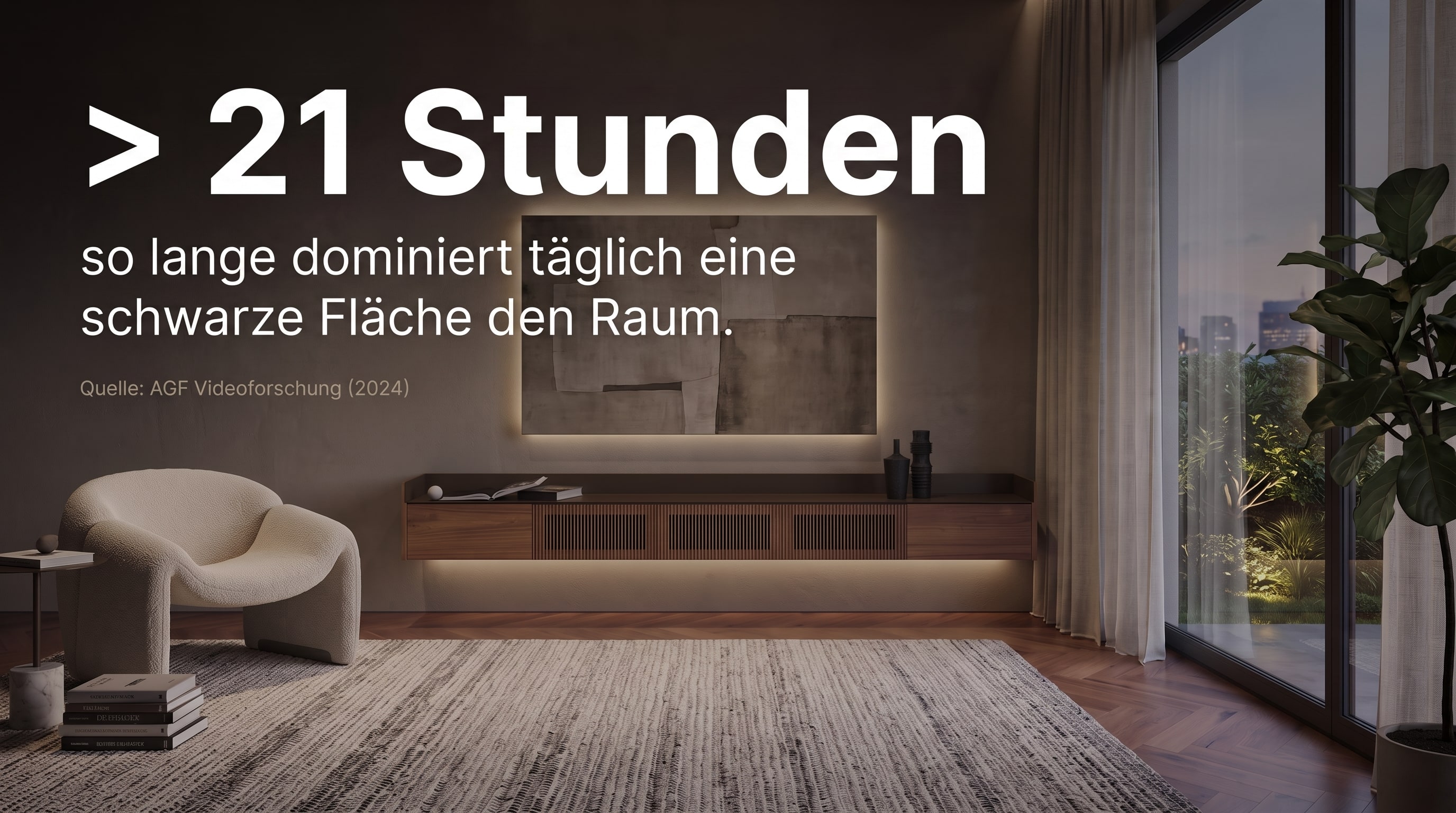











1. 7 Ideas to make your TV disappear behind a work of art: Why an ultra-slim floating base is essential
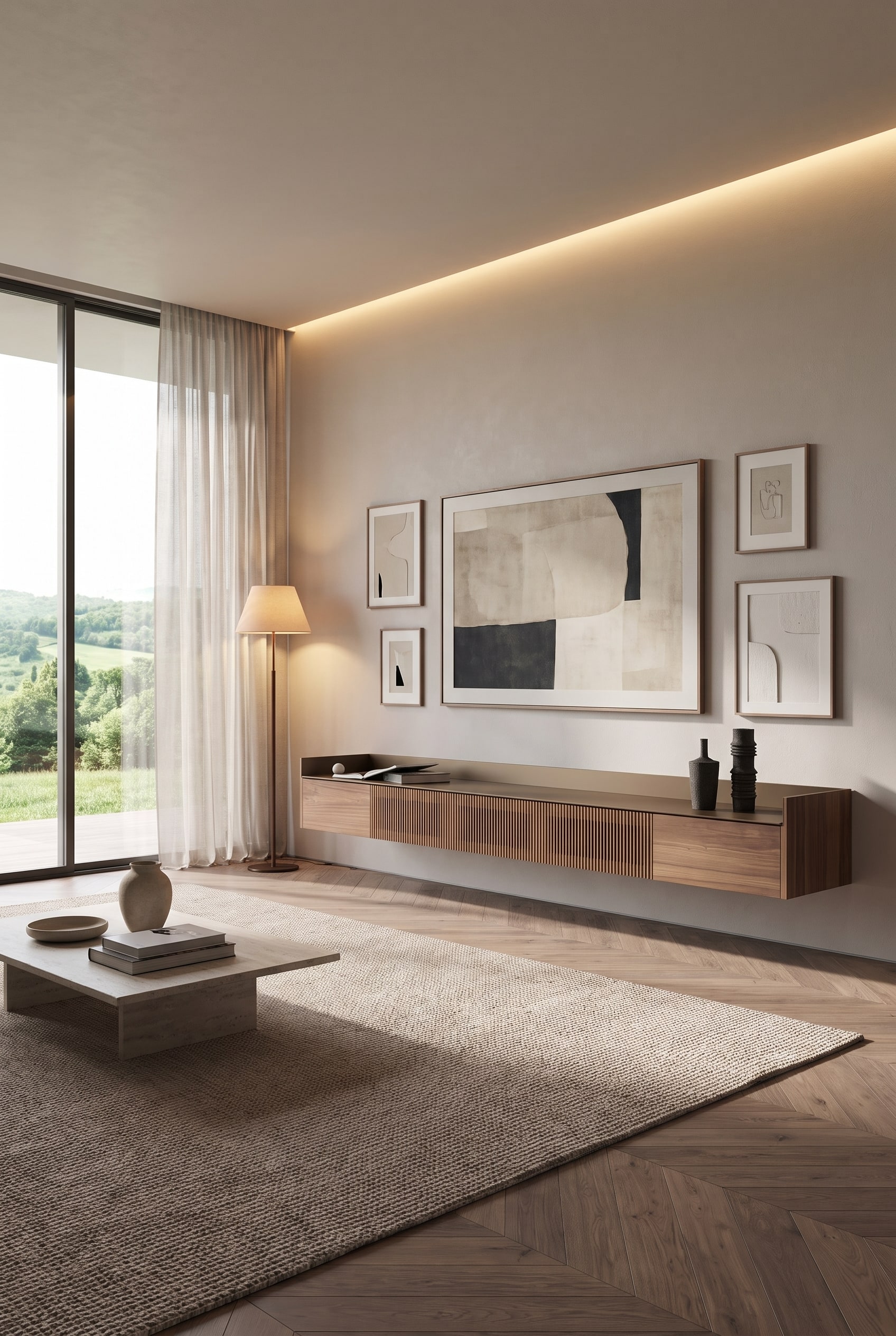 Product shown true to original. Room styling created by digital staging.
A large-format artwork needs room to breathe. If a bulky, floor-standing piece of furniture is placed beneath it, the wall immediately loses its lightness. Floating installation is therefore the absolute foundation of this design. A wall-mounted lowboard breaks up the visual weight of the technology and leaves the floor untouched. The eye wanders unhindered over the parquet floor, making the room feel noticeably larger and more open.
In addition to floor clearance, the cabinet depth determines the gallery character. If the furniture piece is deeper than 45 centimetres, it visually pushes itself into the foreground and competes with the picture wall. Modern ultra-short-throw receivers and flat sound processors now require hardly any space. A depth-reduced furniture piece with a maximum of 35 to 40 centimetres integrates into the room's architecture like a two-dimensional passe-partout.
Concealed cable management within the cabinet is essential. All electronics, from Apple TV to the amplifier, disappear invisibly behind the flap. The furniture piece thus appears not like a tech cabinet, but like an architectural plinth, created solely to showcase the art above it.
Livarea Expert Tip:Plan the bottom edge of the floating unit to be exactly 20 to 25 centimetres above the floor. This distance guarantees maximum lightness, while reliably concealing the wall sockets beneath.
Furniture Tip for maximum lightness: The Punt Stockholm Slim Wall TV Sideboard masterfully overcomes this architectural challenge with its extremely flat design and elegant solid wood texture.