










1. Securely Mounting Heavy Wall Cabinets: The Wall Tap Test Decides

Before the first drill bit is even used, a fundamental question arises: Do you know exactly what your wall is made of? The so-called acoustic tap test provides the first undeniable clue. A bright, hollow sound reveals a plasterboard or stud wall, while a solid, dull tone indicates concrete or solid brickwork. If fine, light grey dust trickles out during the first test drill, you're usually dealing with load-bearing concrete masonry – the absolute ideal for any wall-mounted furniture.
With red drill dust, you'll encounter brick, which in old buildings is often porous and requires an adapted approach. Here, we strictly follow the 80-millimeter rule: A drill hole for heavy loads in solid walls must penetrate at least eight centimeters deep into the full masonry to bridge the plaster as a weak point. Why rely on assumptions when a single test drill provides absolute certainty? Only when the wall composition is unequivocally determined does the professional select the appropriate anchoring system.
Livarea Expert Tip:Always drill the first hole without the hammer function activated. This prevents the delicate internal webs of hollow bricks from breaking away, which would cause the anchor to grip empty space later.
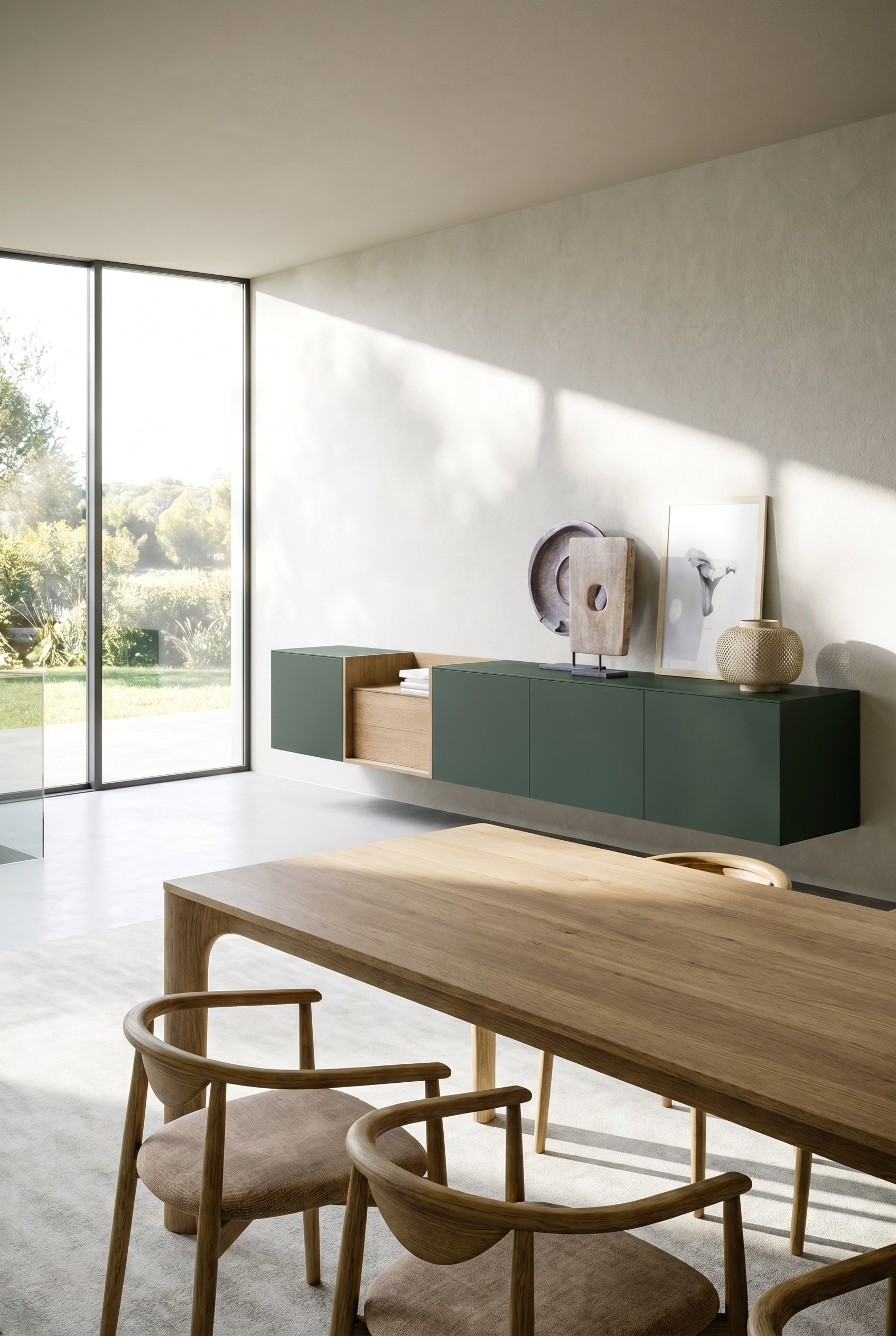
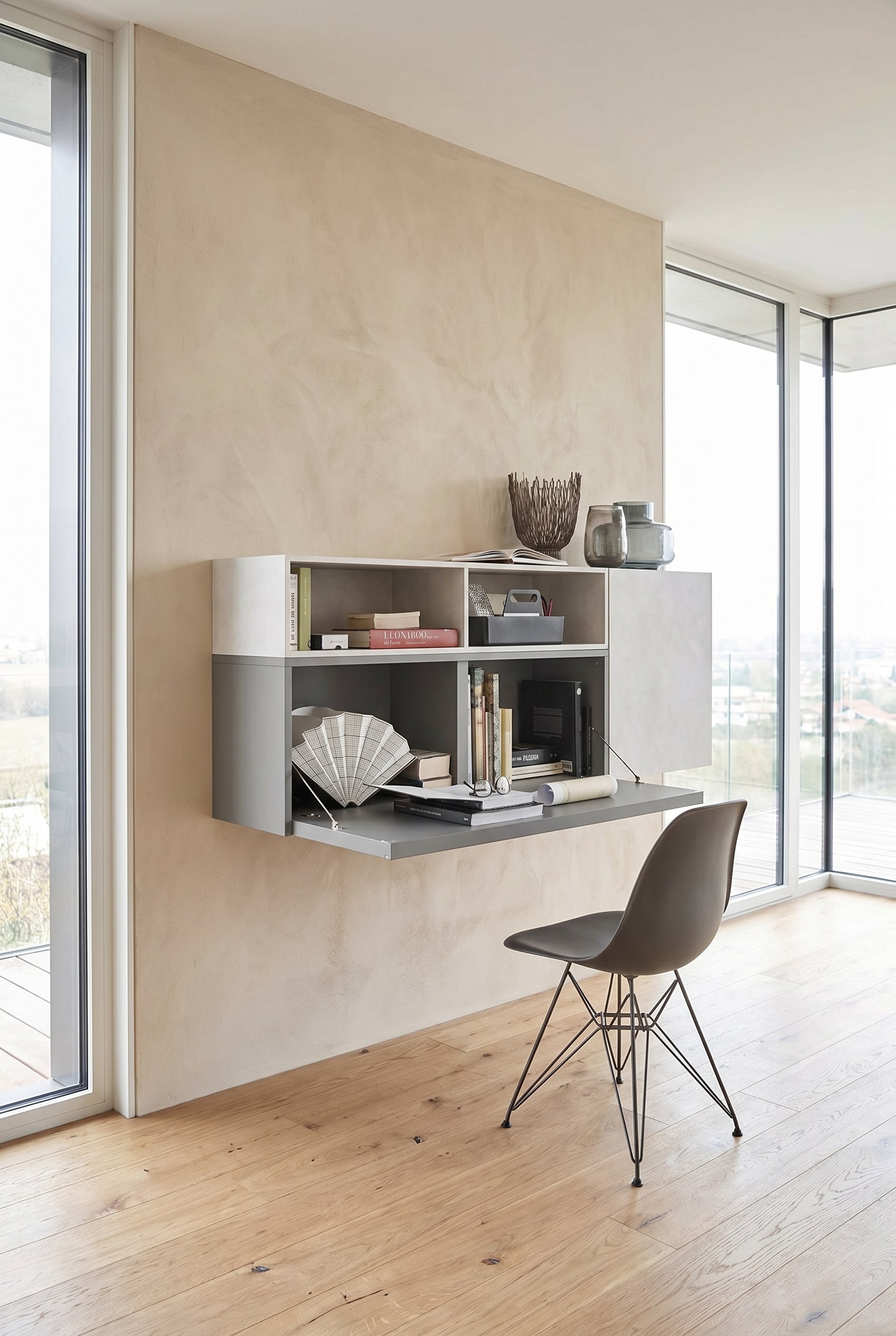
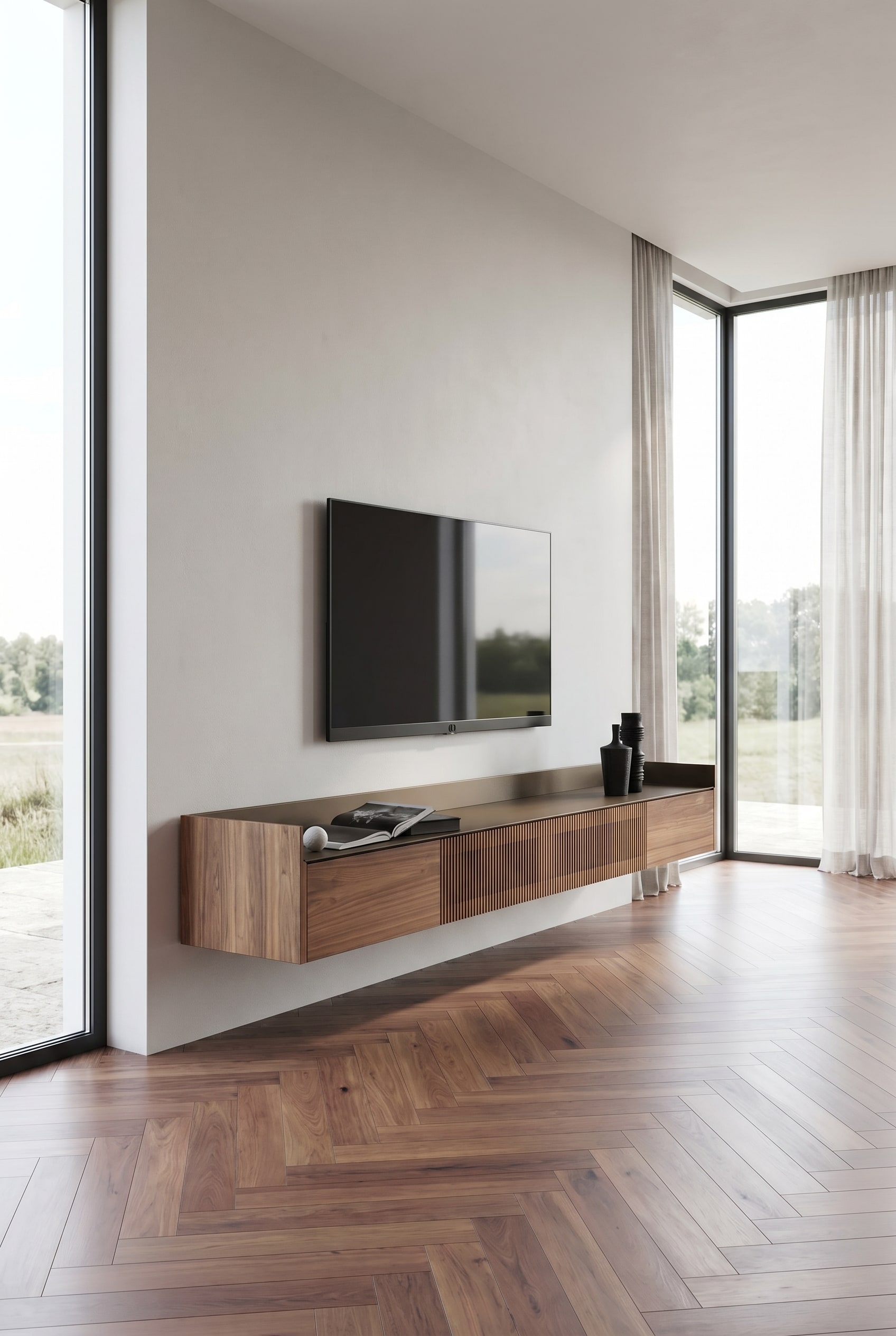
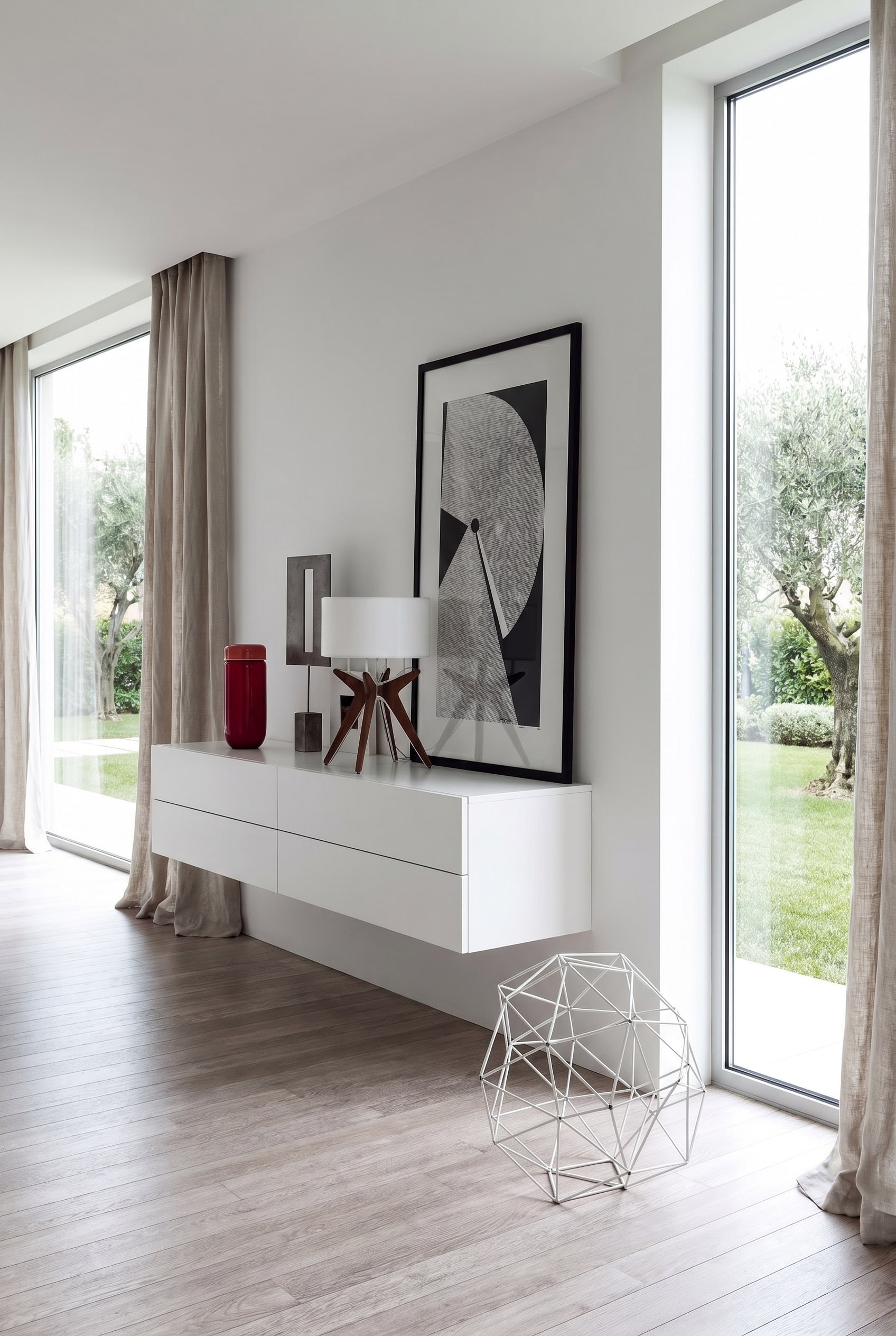
Furniture Tip for Floating Elegance: Precise wall inspection paves the way for masterpieces like the Livitalia Ecletto Wall Chest of Drawers, which visually opens up the room with its modular design and radiates a calming weightlessness.