









2. Seamless Transition Between Dresser and Workspace
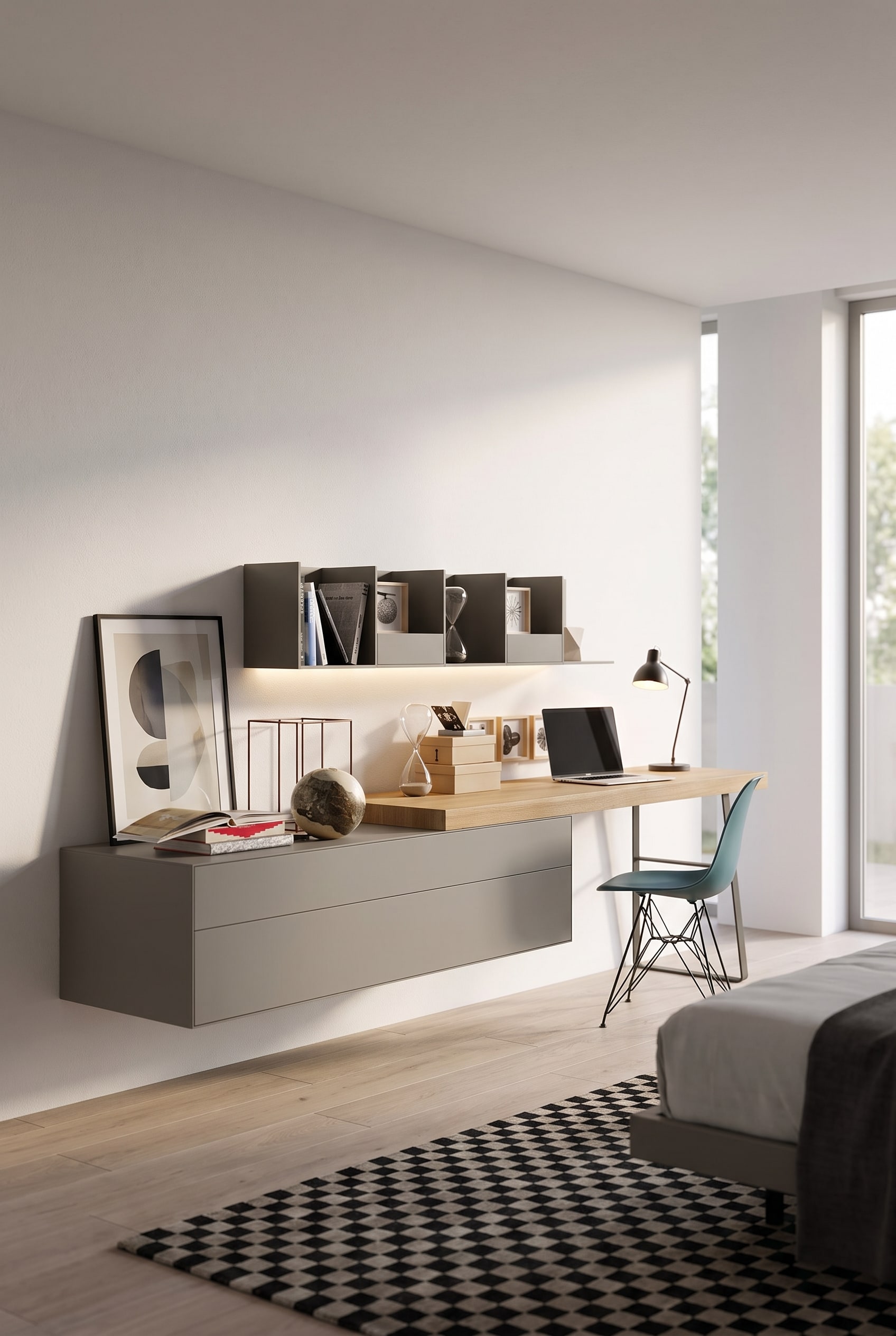
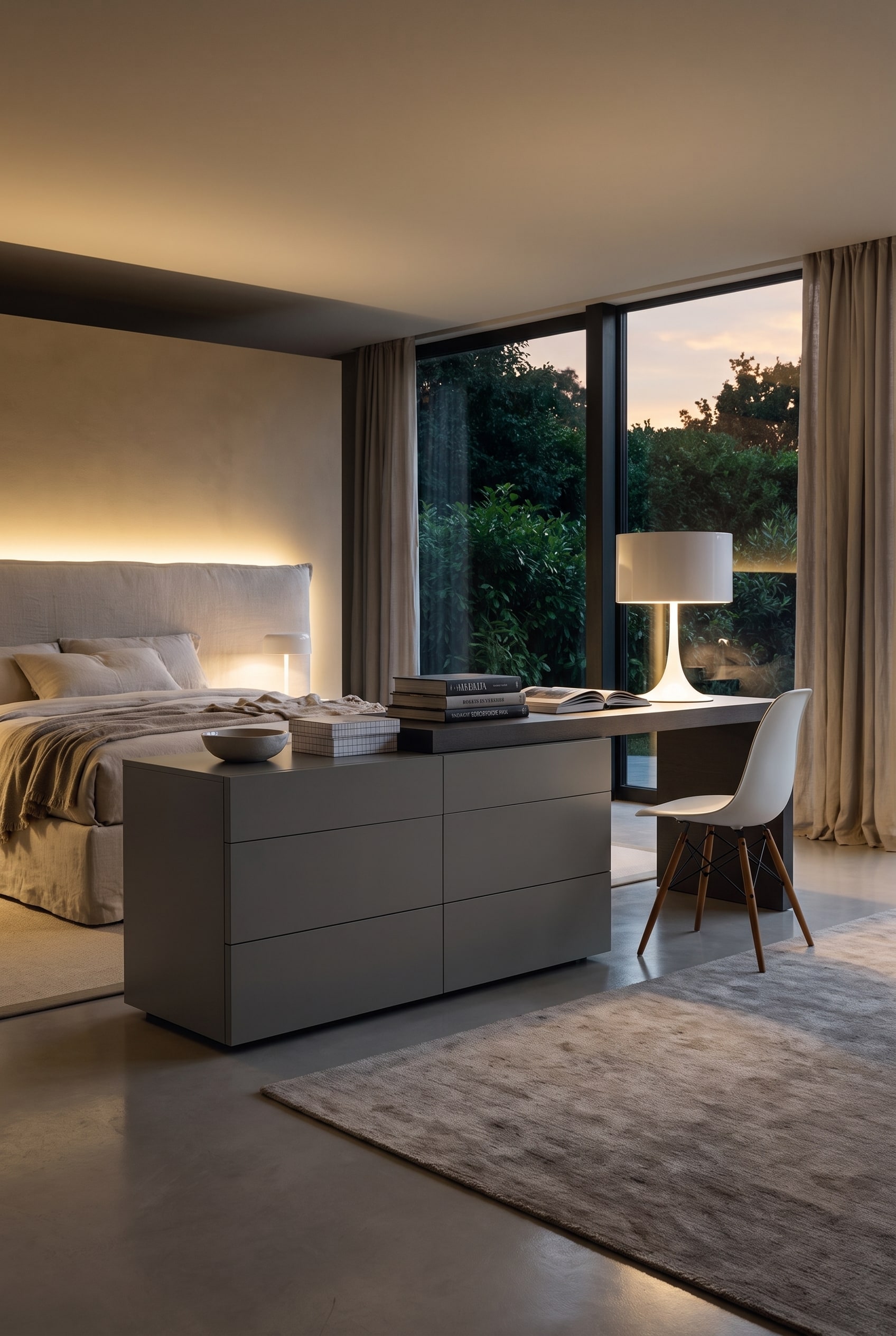 Product shown true to original. Room styling created by digital staging.
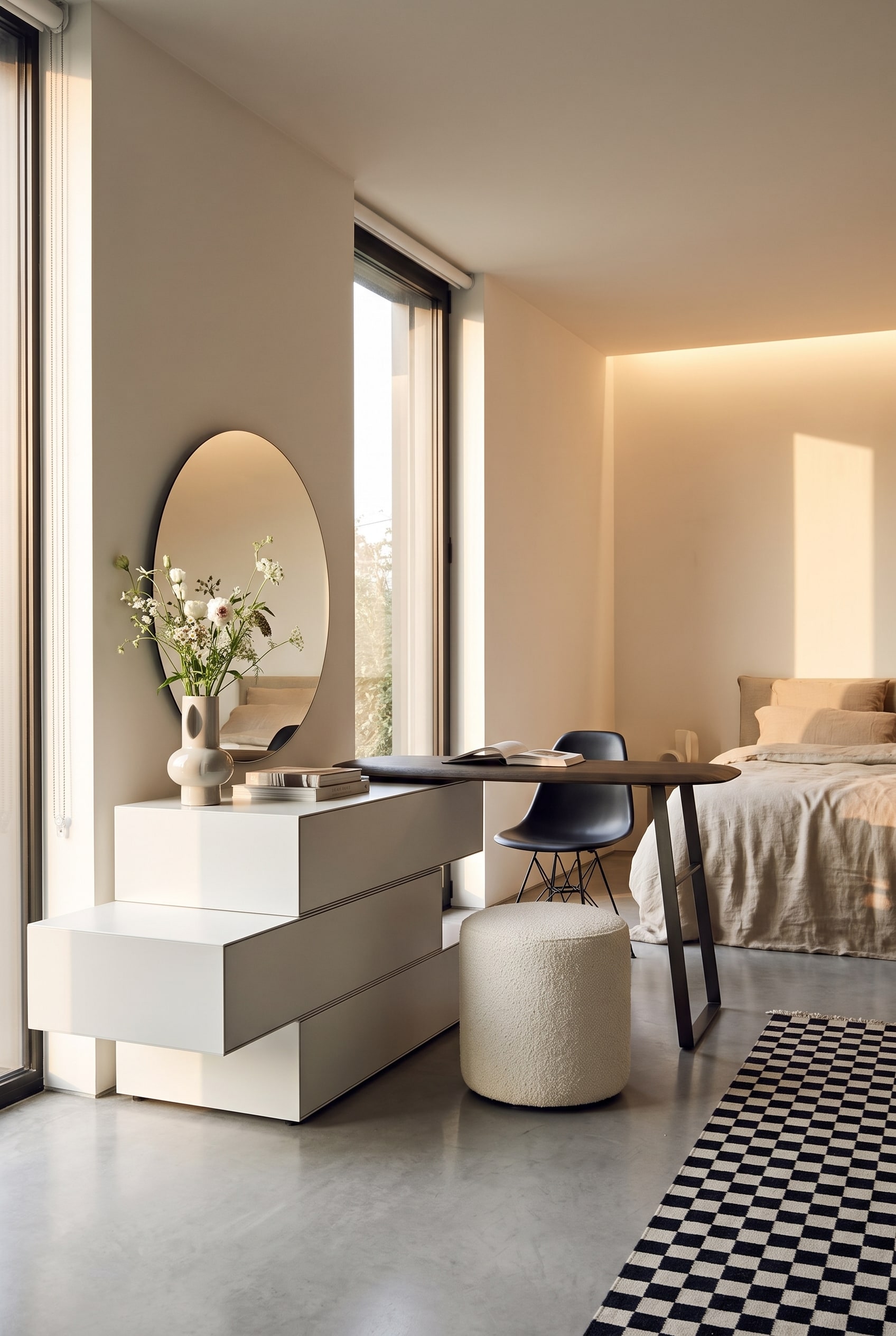
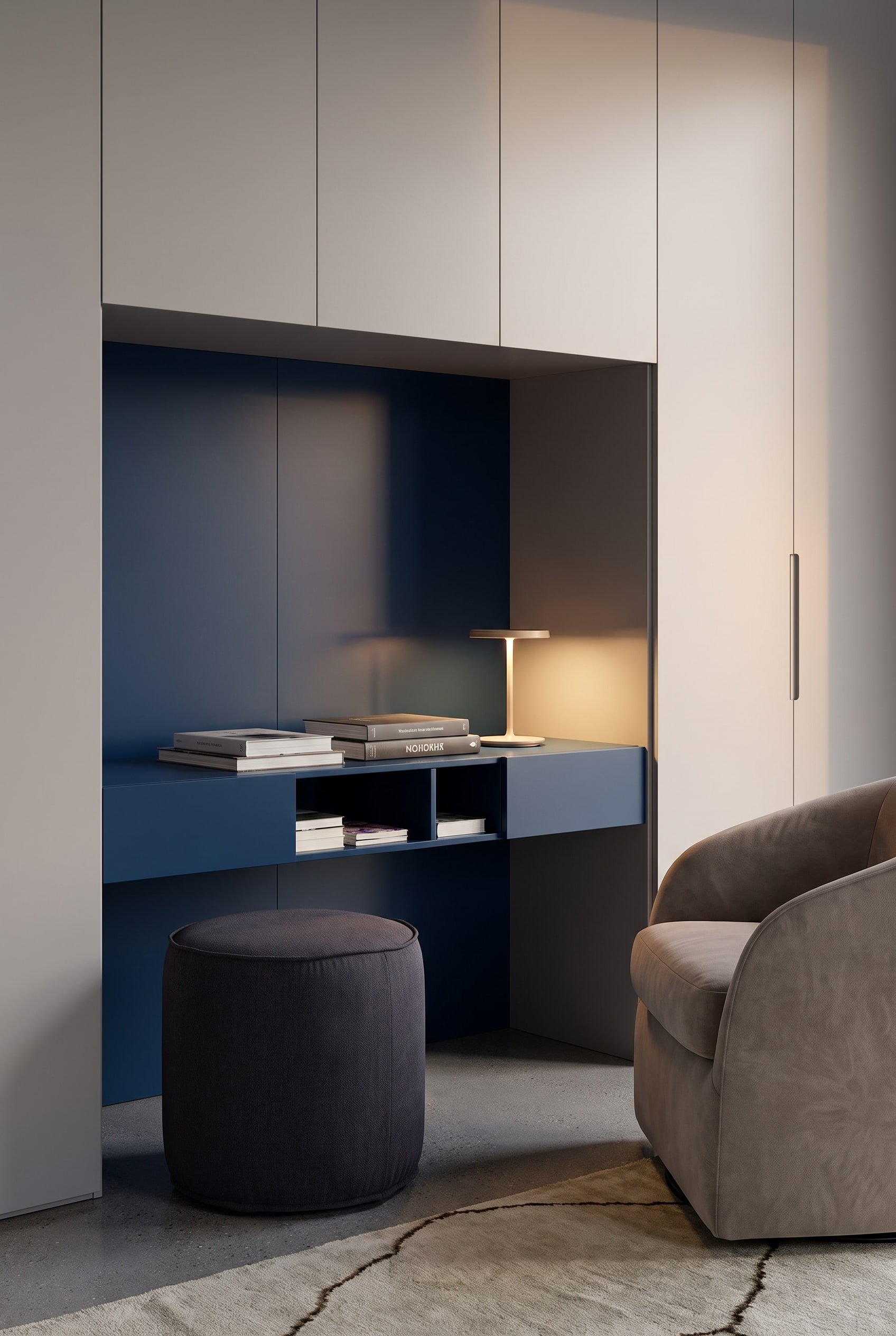
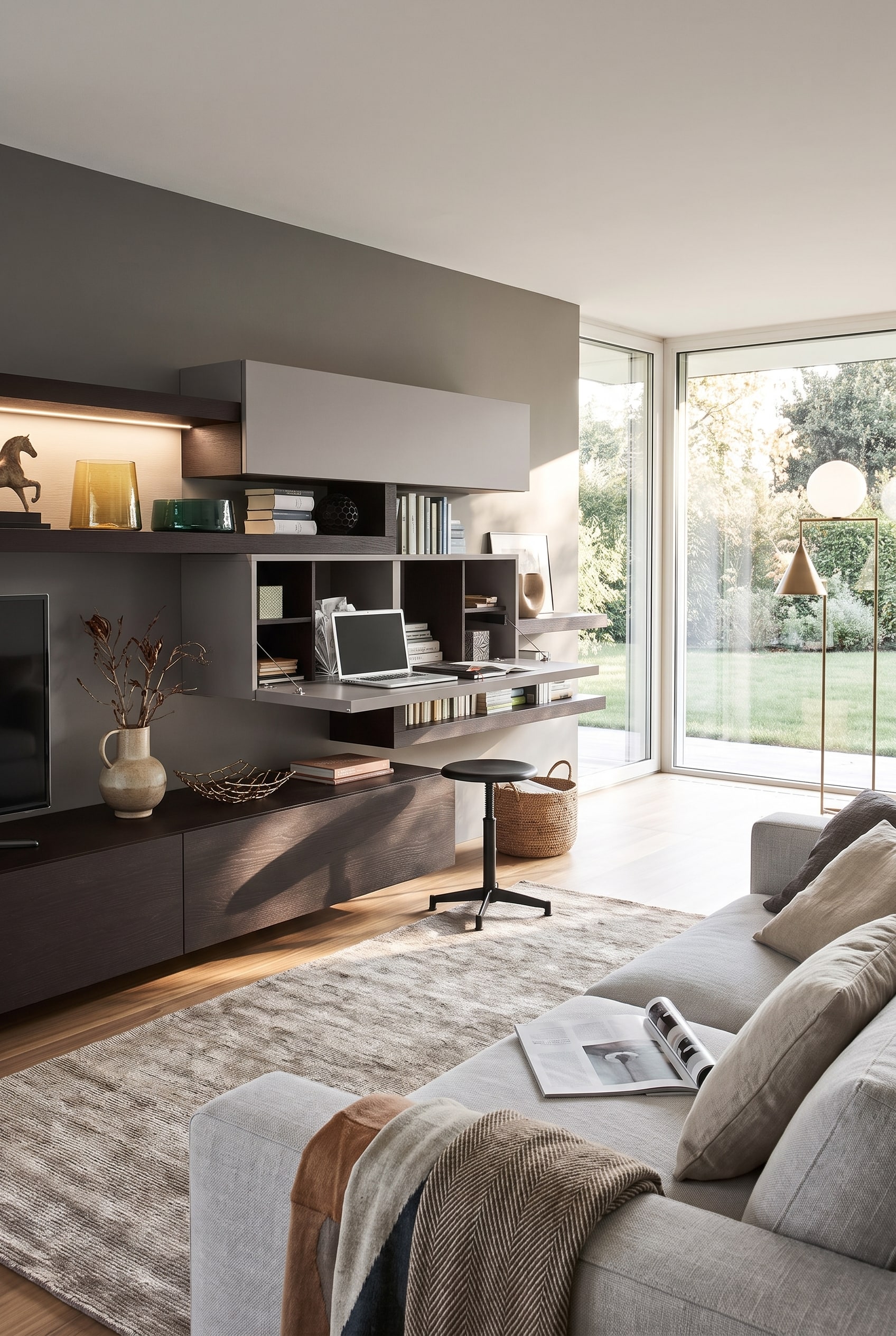
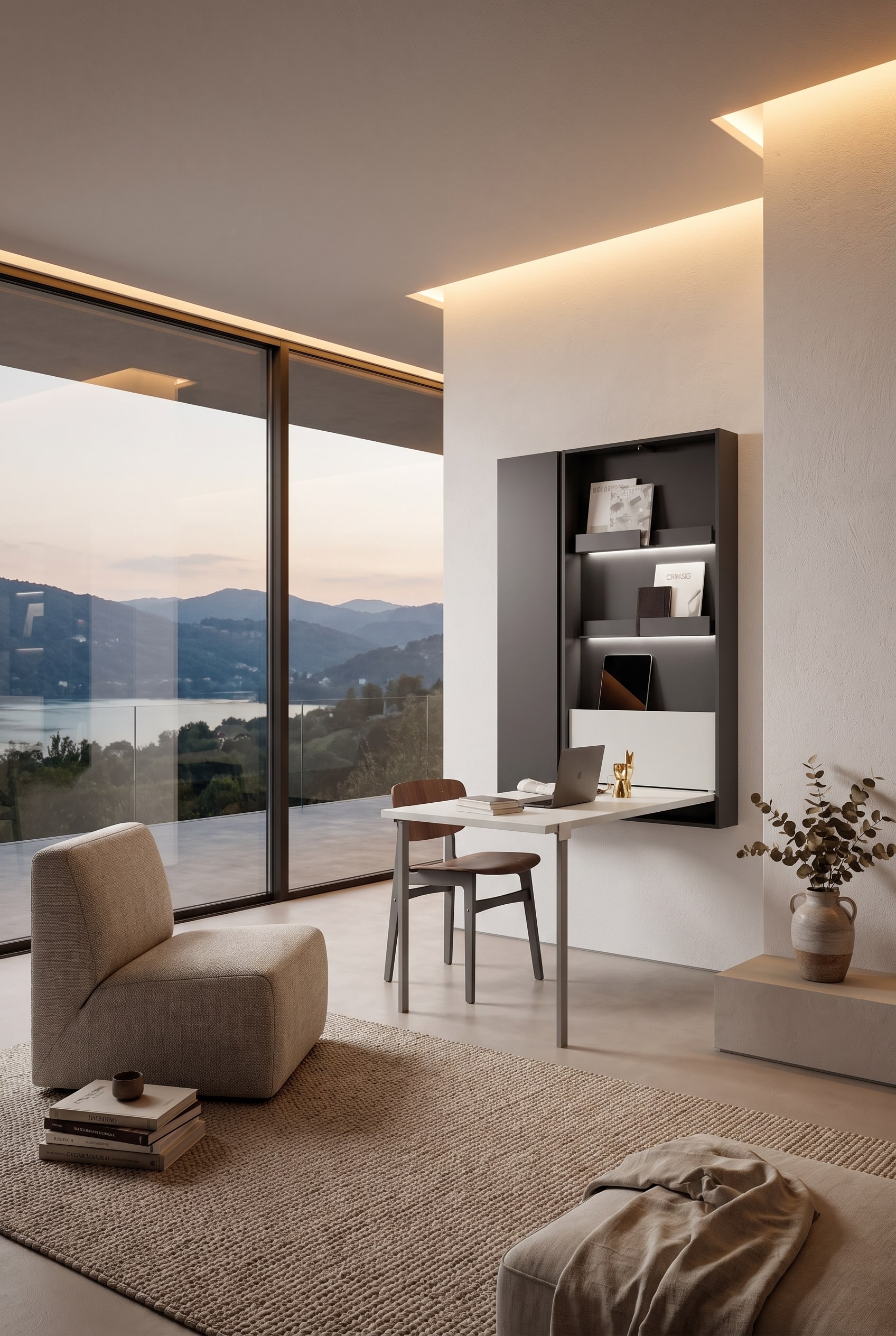
One of the most elegant methods to integrate a workspace into a living room or bedroom is the superposition of horizontal lines. When a desk stands as an isolated element next to a lowboard or a dresser, visual clutter immediately arises due to the differing height levels. The solution lies in a flowing transition, where the tabletop seamlessly interlocks with the body of the storage furniture or slightly overlaps it.
This asymmetrical construction creates an exciting yet very tidy architecture. The standard table height of 75 centimeters floats above a lower dresser (often 45 to 55 centimeters high). The storage furniture simultaneously takes on the function of a single table leg, which visually grounds the workspace and inextricably links it with the living area. As we show in our article on setting up a modern dining room, continuous horizontal lines always create a calm, spacious room effect.
Livarea Expert Tip:Consciously use the overlapping area of both furniture pieces for cable management. A hidden cable pass-through in the tabletop, leading directly into the top drawer of the dresser, makes all power supplies disappear invisibly.
Furniture Tip for Seamless Design: The Livitalia Valeo Dresser with Desk masters precisely this balancing act by merging first-class oak storage space with a delicately integrated workspace into an inseparable, sculptural unit.