










1. Properly illuminating decor behind glass: The geometry of light guidance
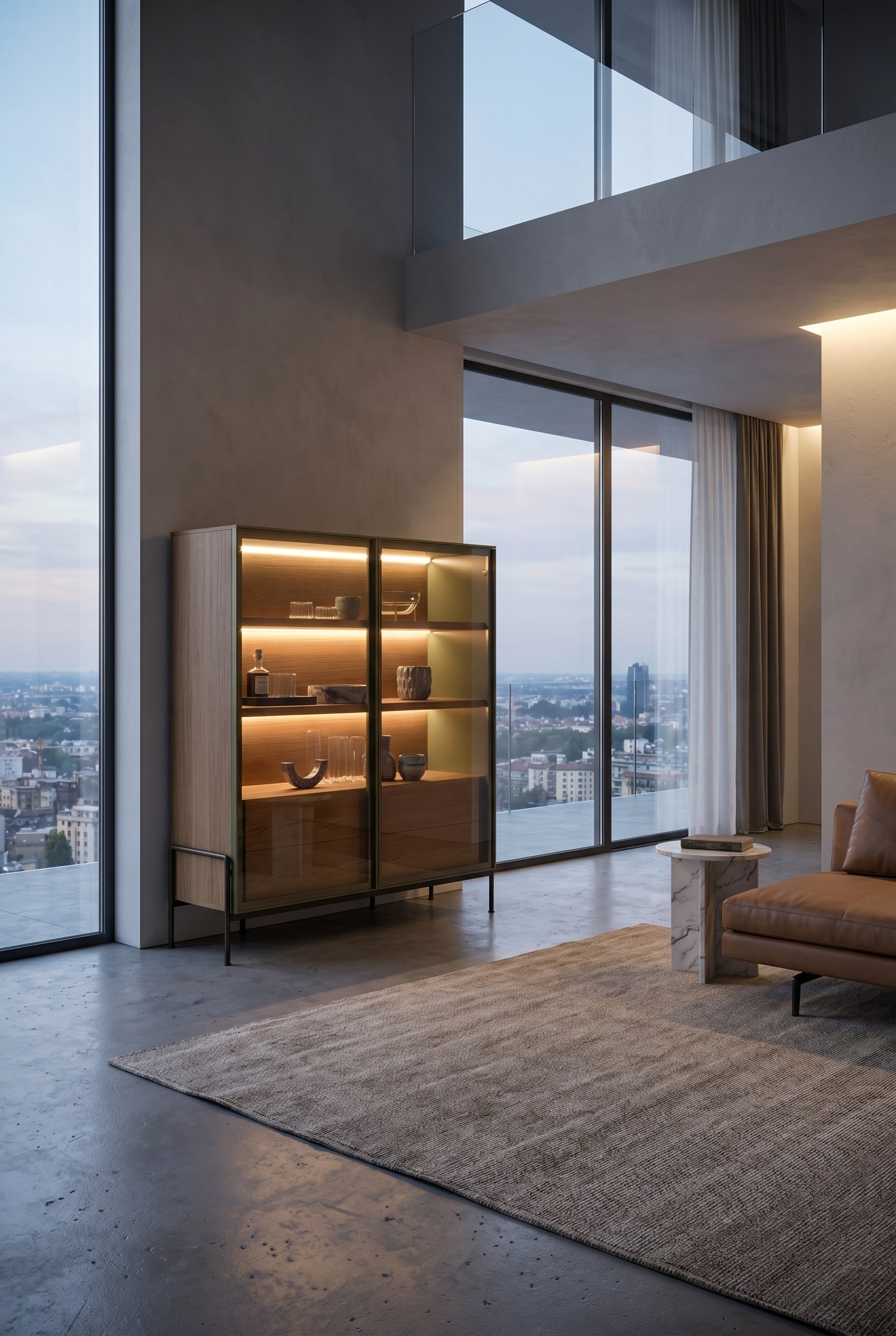
The most common mistake when illuminating display cabinets is frontal illumination of the objects. Light hitting a glass pane directly at a 90-degree angle inevitably creates harsh reflections. In the worst case, the viewer only sees the reflection of the LED diode, not the exhibited object. To break through this physical barrier, high-end furniture manufacturers use targeted, indirect light guidance. Placing light sources just behind the front frame, shining inwards and downwards at a 45-degree angle, completely eliminates the glare effect on the outer pane.
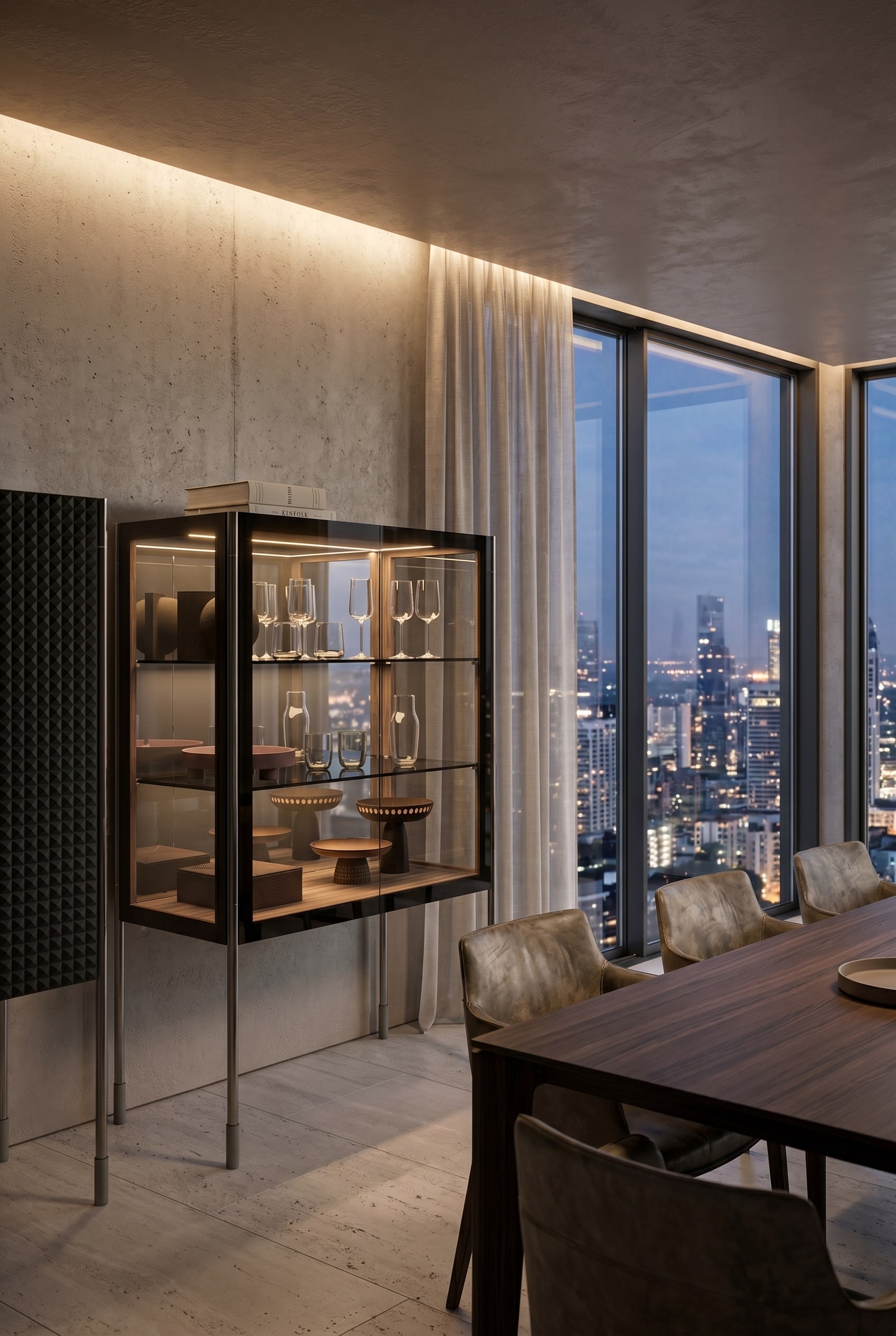
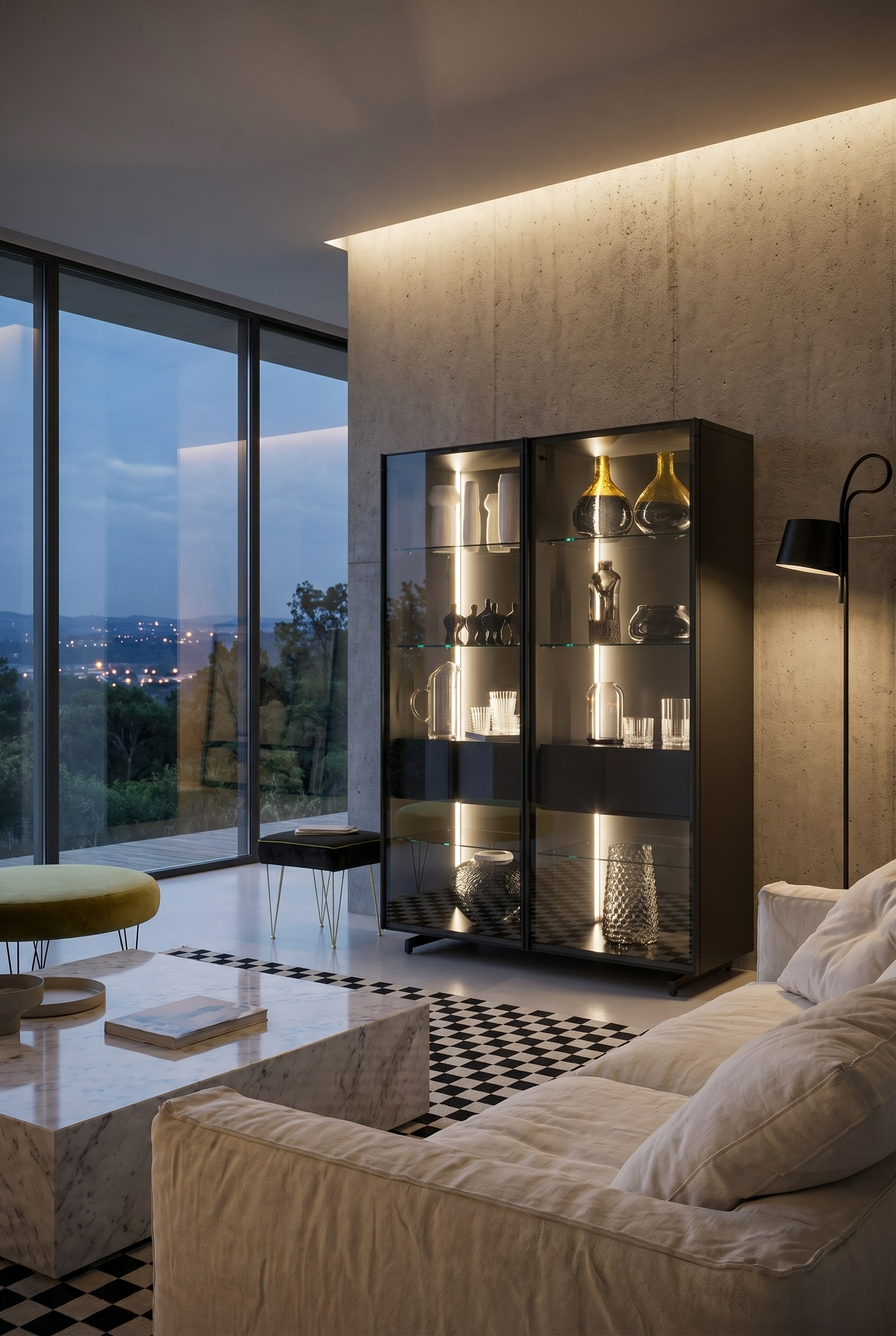
Additionally, pure backlighting merely creates a silhouette effect. The objects appear two-dimensional and flat. The architectural solution consists of a horizontal light strip integrated per shelf. This provides each exhibit with its own gentle uplight. The velvety soft illumination removes the coldness of the glass and excellently emphasizes the sculptural form of sculptures and vases, without overpowering the rest of the room.
Livarea Expert Tip:When selecting lighting, ensure a color rendering index (CRI) of at least 90. Only then will the color pigments of your ceramics or book spines appear in their natural, unadulterated tones.
Furniture Tip for precise light guidance: The Novamobili Belt Highboard masterfully demonstrates this geometry by integrating fine, horizontal light strips directly into the construction level, thus creating a floating, completely glare-free presentation plane.