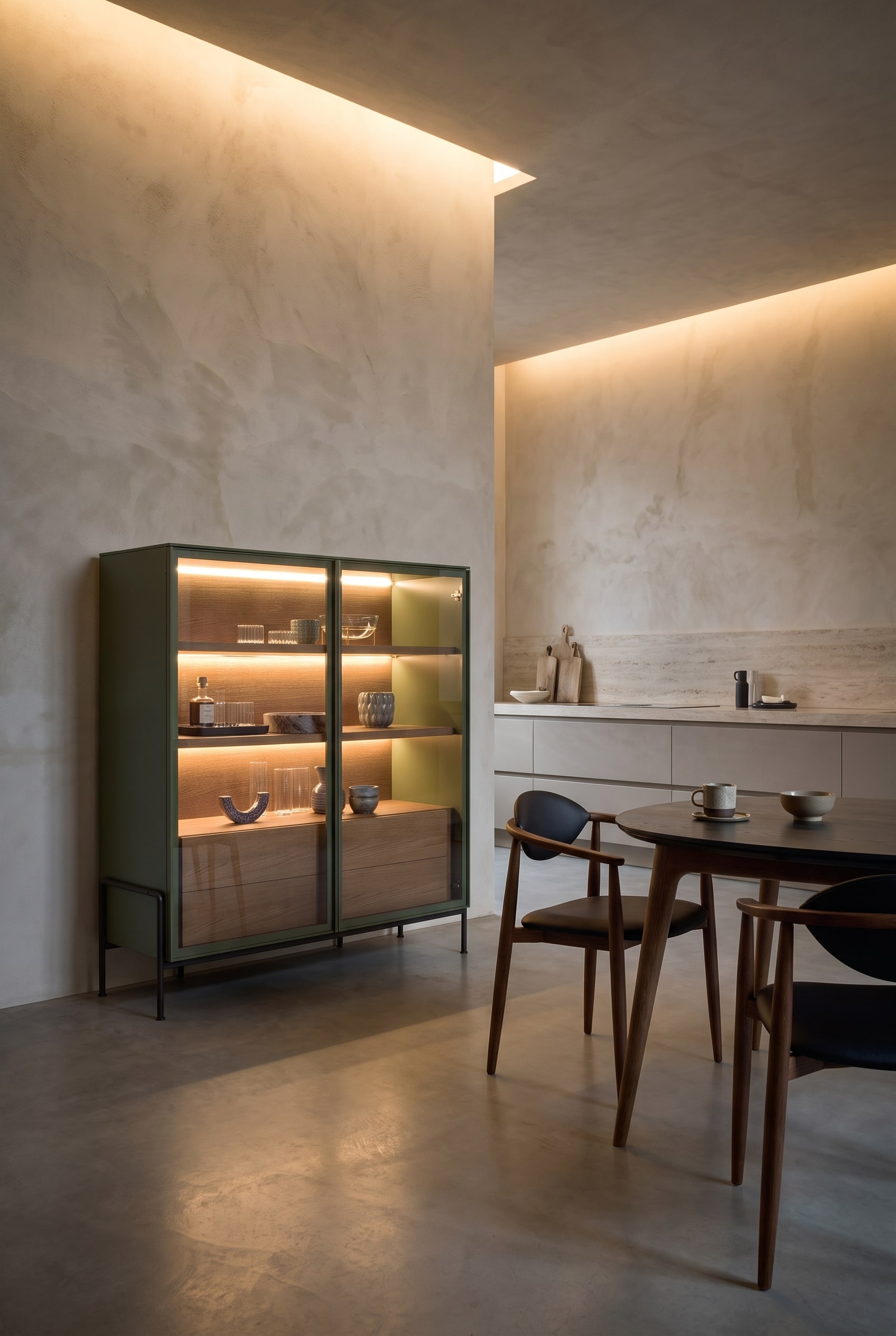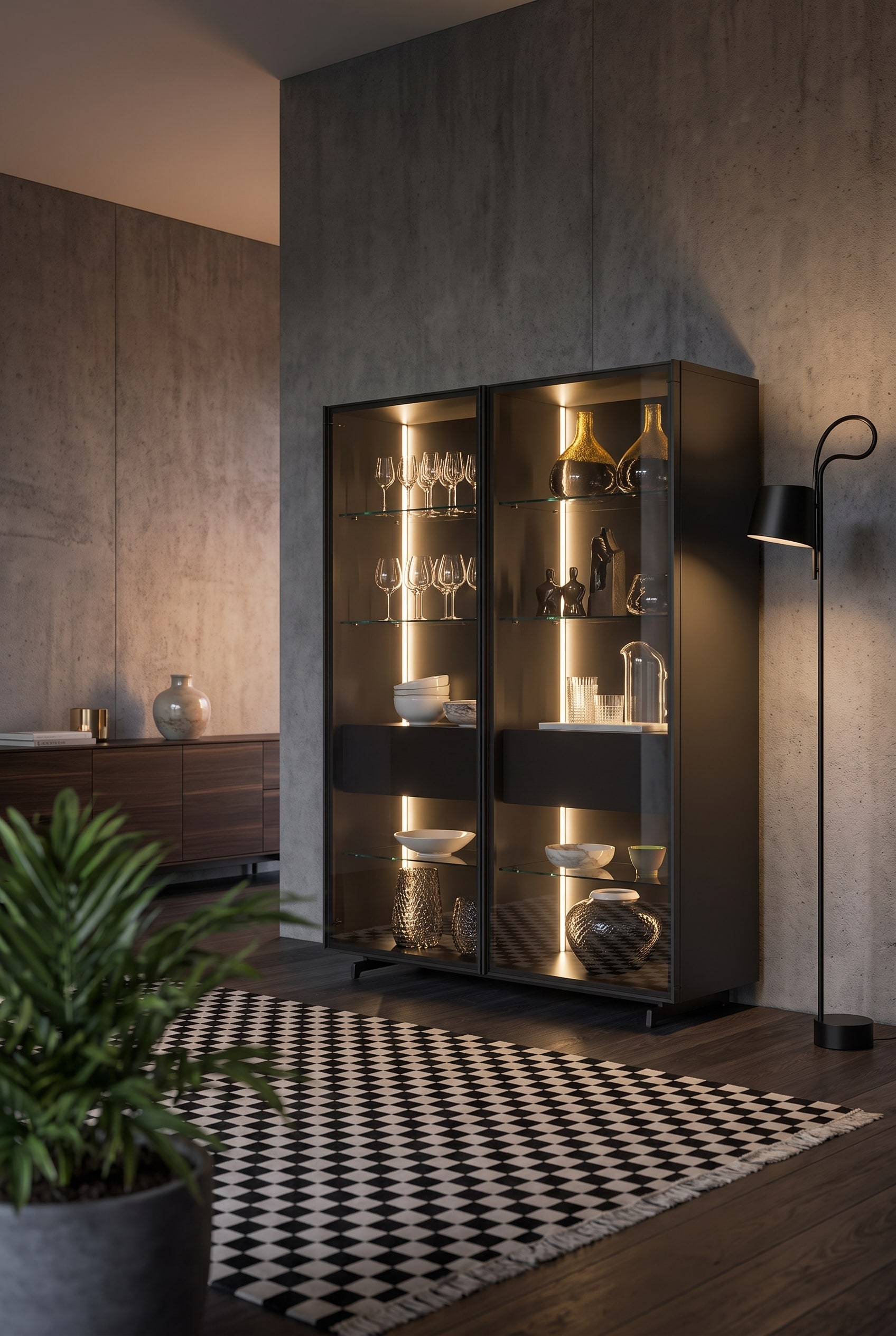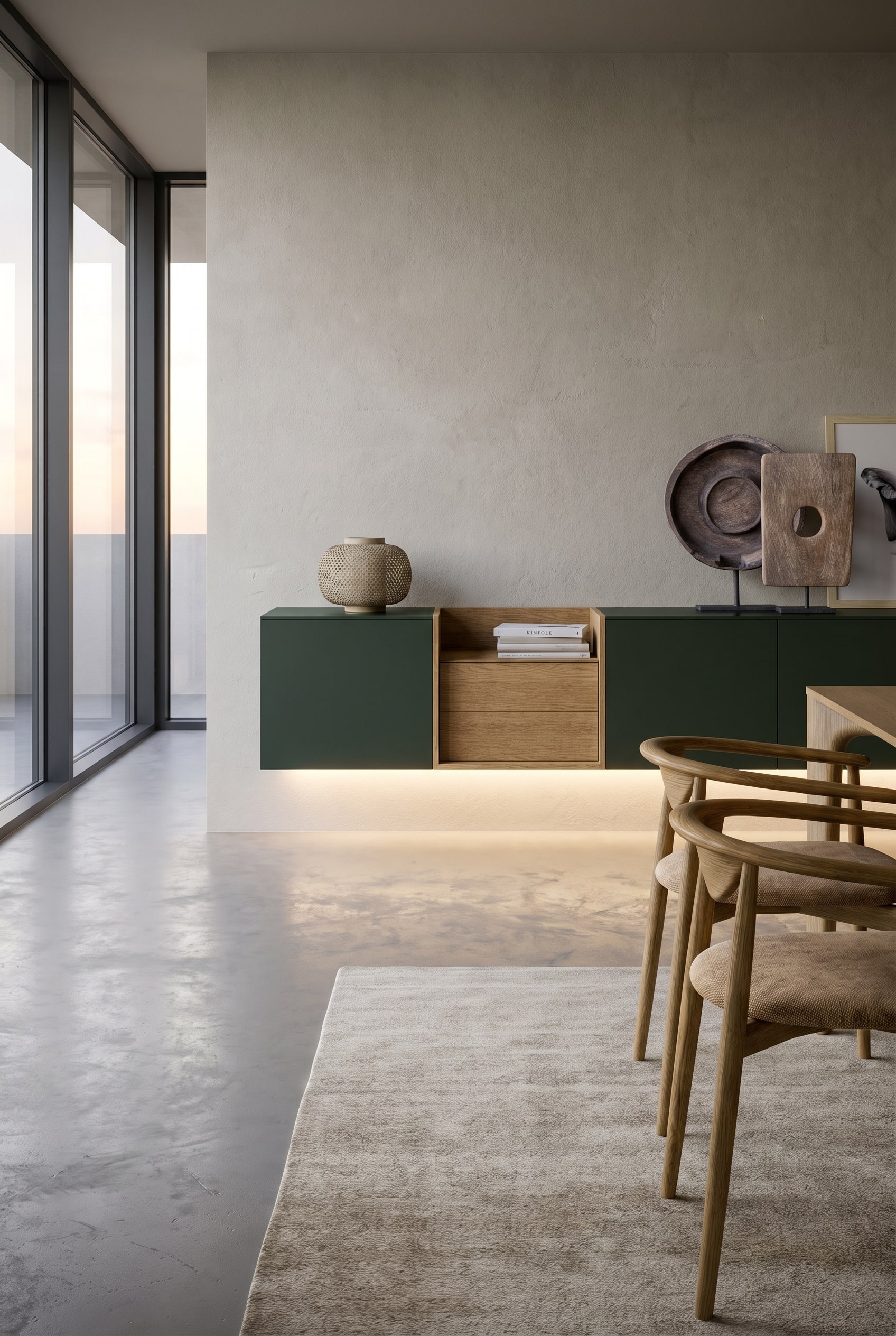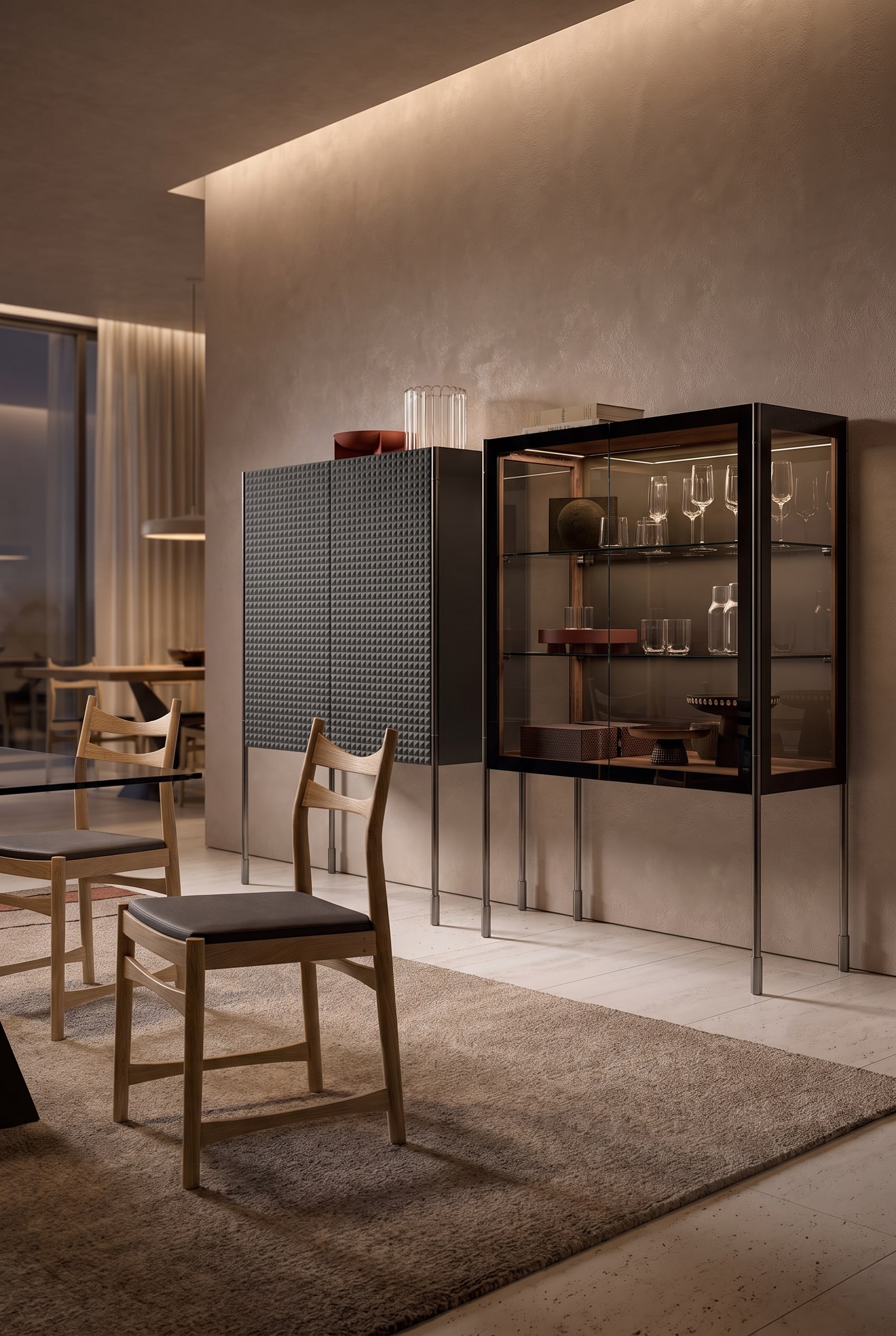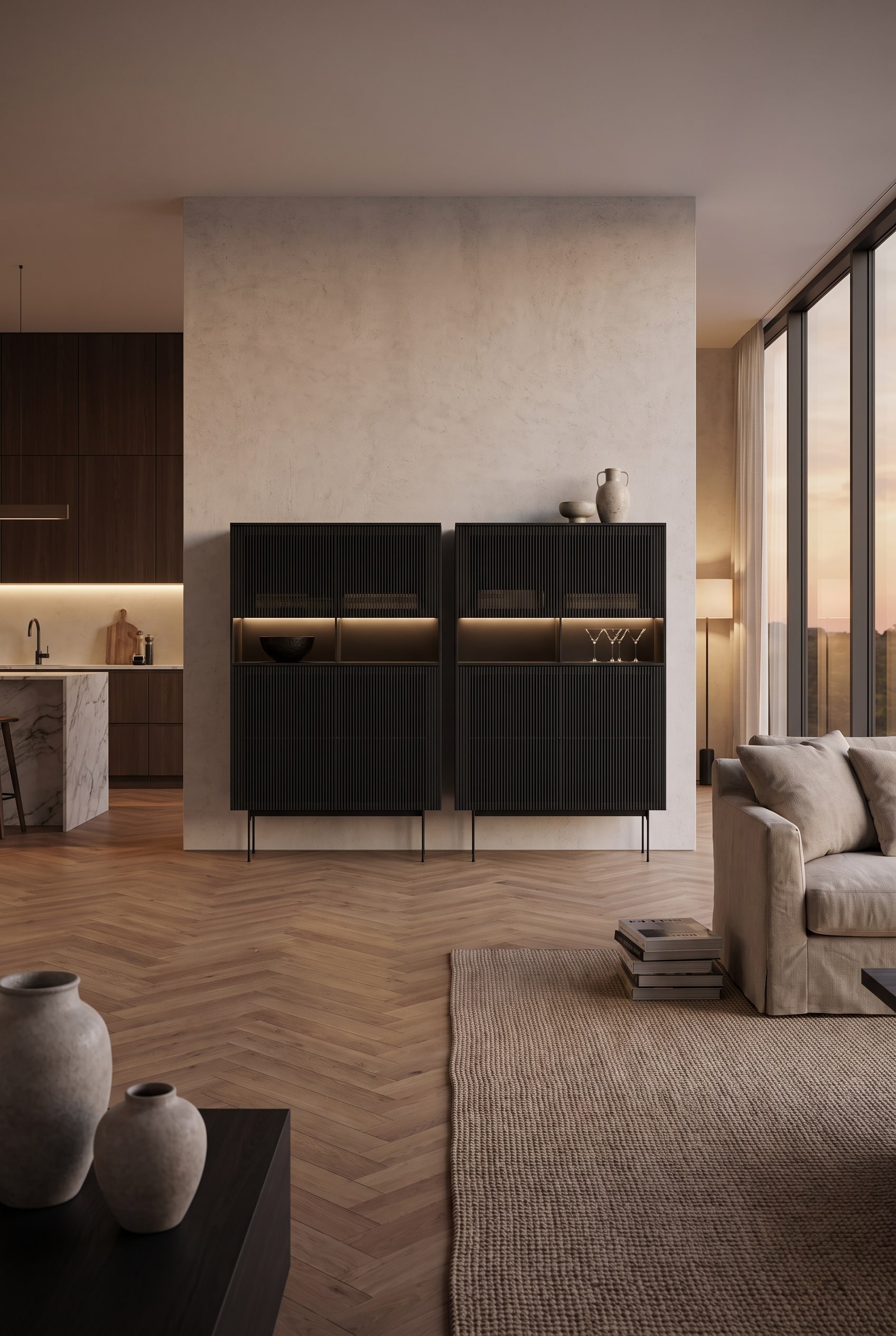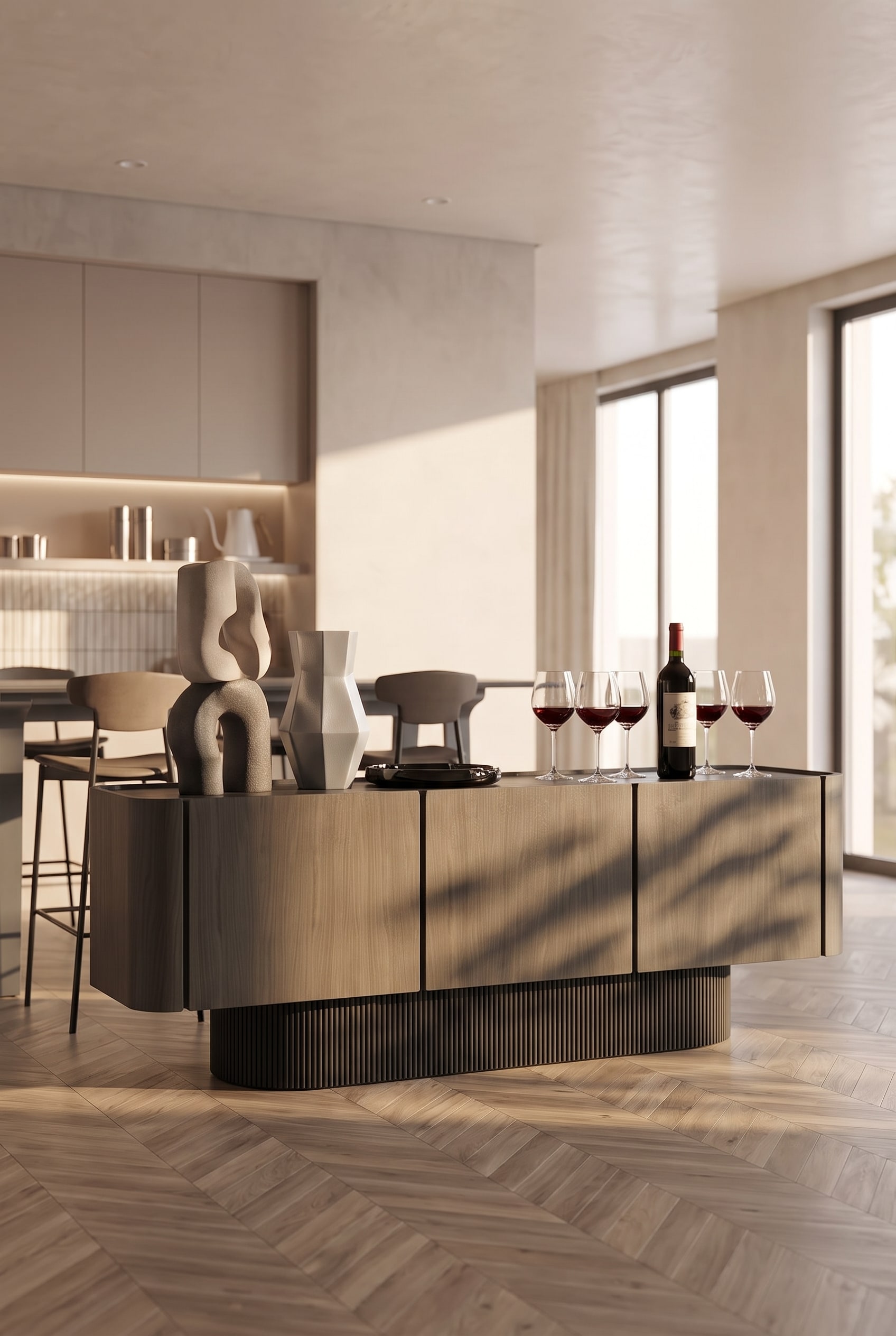











1. Sideboard for Dinnerware: The Hidden Minimum Dimension for Your Plate Stacks
 Product shown true to original. Room styling created by digital staging.
Horizontally oriented storage planning classically begins with the sideboard. These low cabinet elements visually extend the room horizontally and offer a generous surface for buffets or decoration. When storing dinner plates, a specific dimension determines everyday usability: A sideboard for dinnerware requires a cabinet depth of at least 45 centimeters. Large charger plates or modern ceramic bowls often measure up to 33 centimeters in diameter. If you subtract the thickness of the back panel and the fronts, narrower furniture fails at this task.
Another factor in planning is the choice between doors and drawers. For heavy plate stacks, wide drawers in the lower part of the furniture prove effective. Access from above is ergonomically more comfortable than having to reach deep into a cabinet compartment in a bent posture. To complete the look of the top panel, a targeted staging is ideal, as we extensively discuss in our article on decorating a sideboard.
For glasses and carafes, however, classic shelves behind hinged doors are better suited, as the height of the storage space can be adjusted more flexibly here. The combination of both elements forms the ideal functional basis for the dining area.
Livarea Expert Tip:For drawers intended for plate stacks, pay attention to so-called heavy-duty runners. Conventional rails are usually only designed for 15 to 20 kilograms – a stack of massive stoneware plates quickly reaches this weight and can cause the runners to warp over time.
Furniture Tip for Maximum Overview: The Livitalia Sideboard Nolea combines this required depth with fine lines. It offers the exact stability to store extensive dinnerware sets securely and elegantly in the dining room.