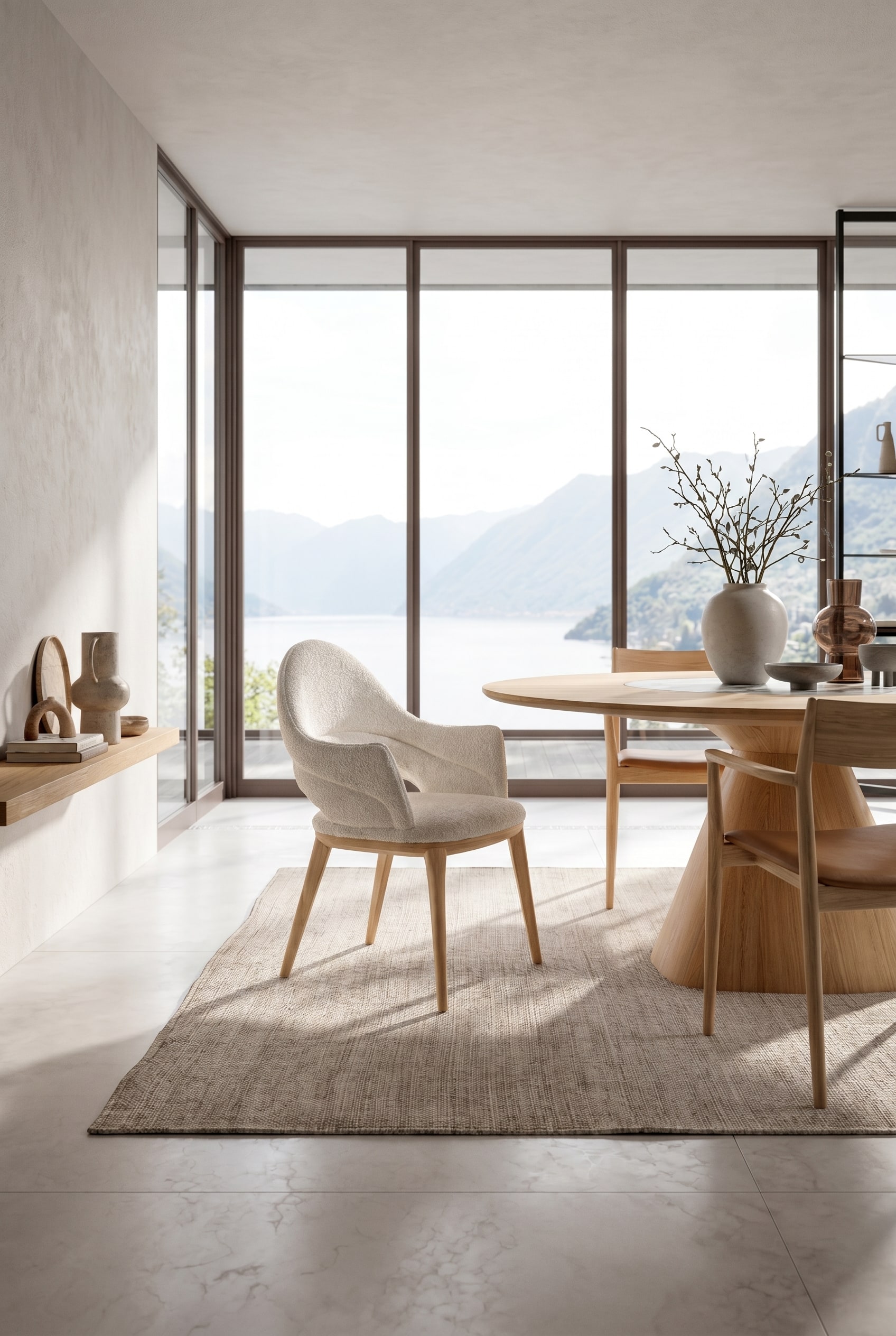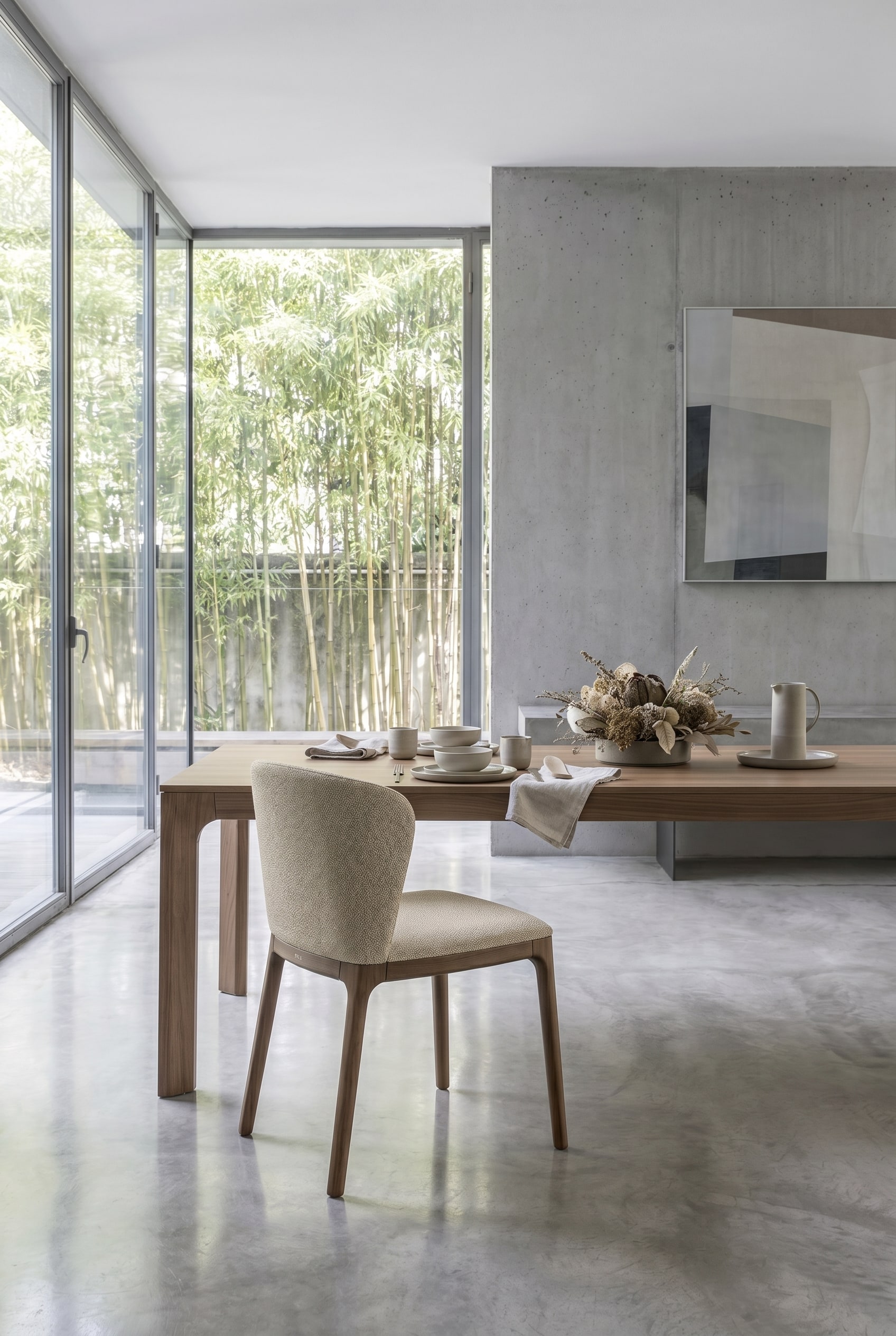











1. The Anatomical Basis of Sitting: Standards for Lasting Support
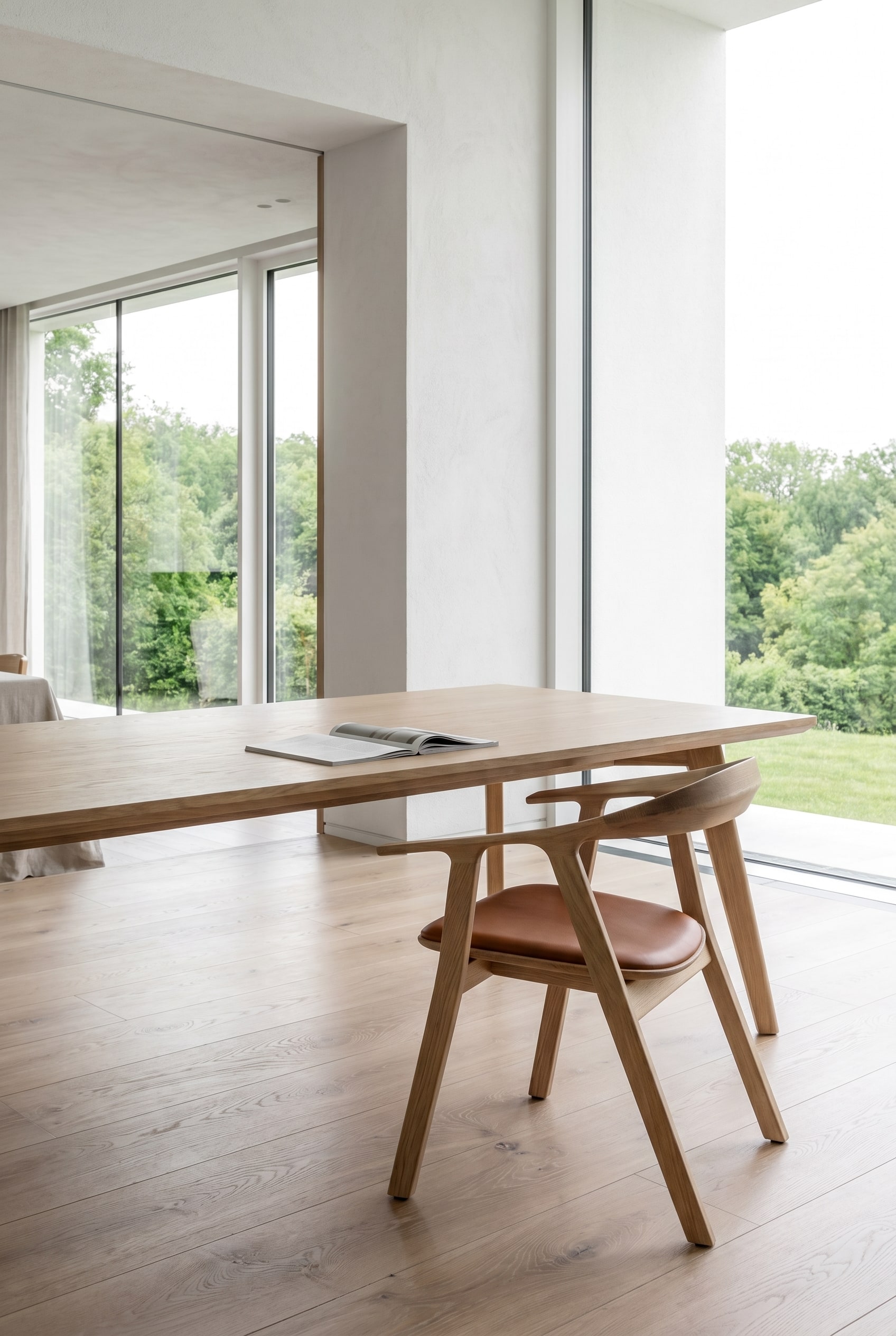
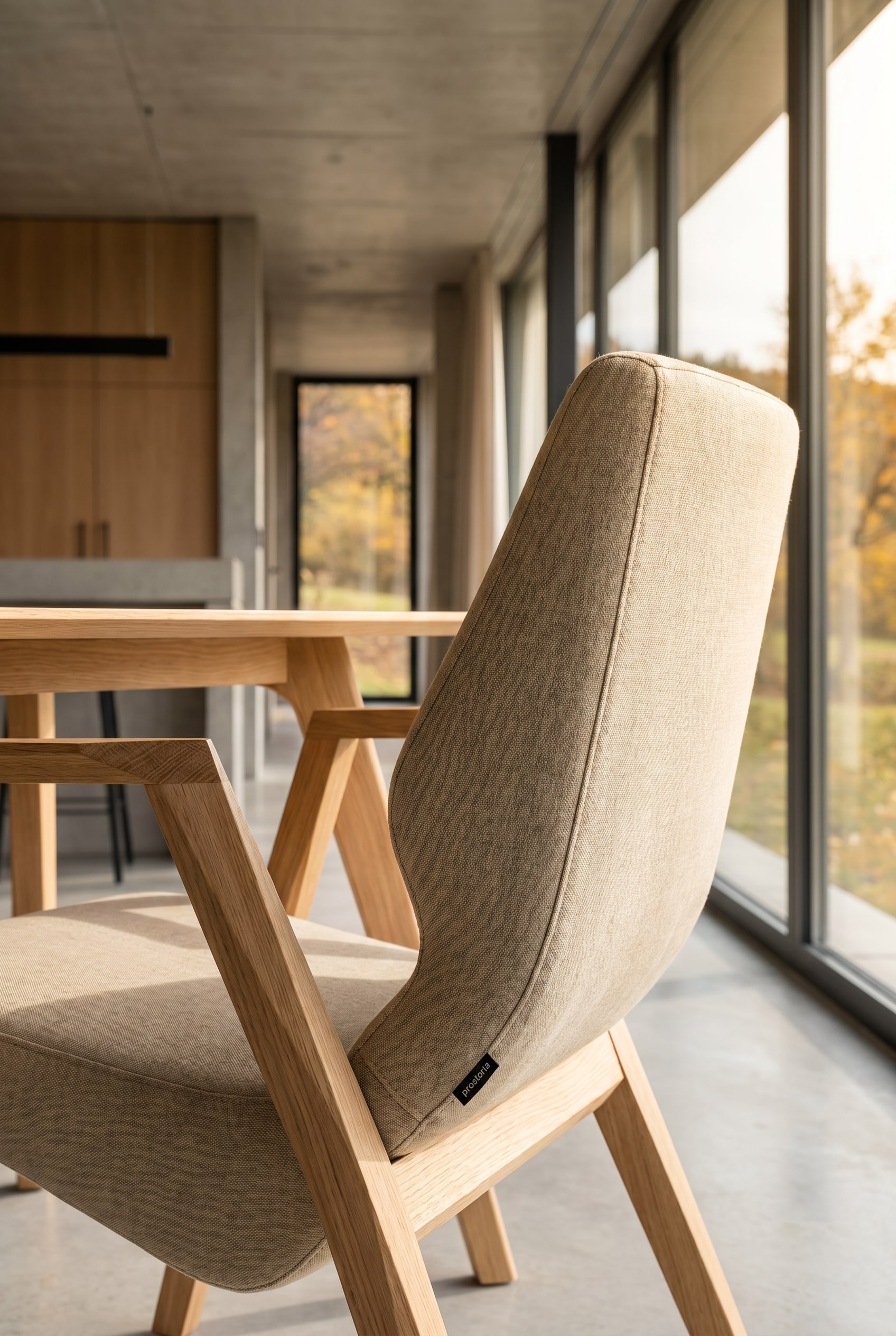
Many people automatically confuse an extremely soft cushion with high seating comfort. However, a stable, anatomically correct base forms the crucial foundation for improving ergonomics in the dining room. A solid, non-springing frame transfers the body's micro-movements directly to the floor, instead of absorbing them unstably. Professional interior design works strictly with the 90-90-90 rule here: ankles, knees, and hips should each form a right angle. Soft evening light falls on the characteristic wood grain, emphasizing the calming atmosphere of the room.
To permanently guarantee this ergonomic posture, the seat height must be precisely matched to the lower edge of the table. With a standard table height of 75 centimeters, the chair surface absolutely requires a height of 45 to 47 centimeters. Every centimeter of deviation inevitably leads to a leverage effect on the lower lumbar spine. Precisely this millimeter-accurate alignment separates average mass-produced goods from masterful craftsmanship. As we also detail in our article Bauhaus Stuhl: Why Professionals No Longer Look at Prices, true value is defined by these exact angles.
Livarea Expert Tip:Ensure a seat depth of maximum 48 centimeters. If the surface is deeper, the backs of the knees will touch the front edge and constrict blood circulation after an hour.
Furniture Tip for Precise Support: Thanks to its precisely calculated angles and uncompromising solid wood construction, the Prostoria Rhomb Holzstuhl promotes a naturally upright posture at the table.