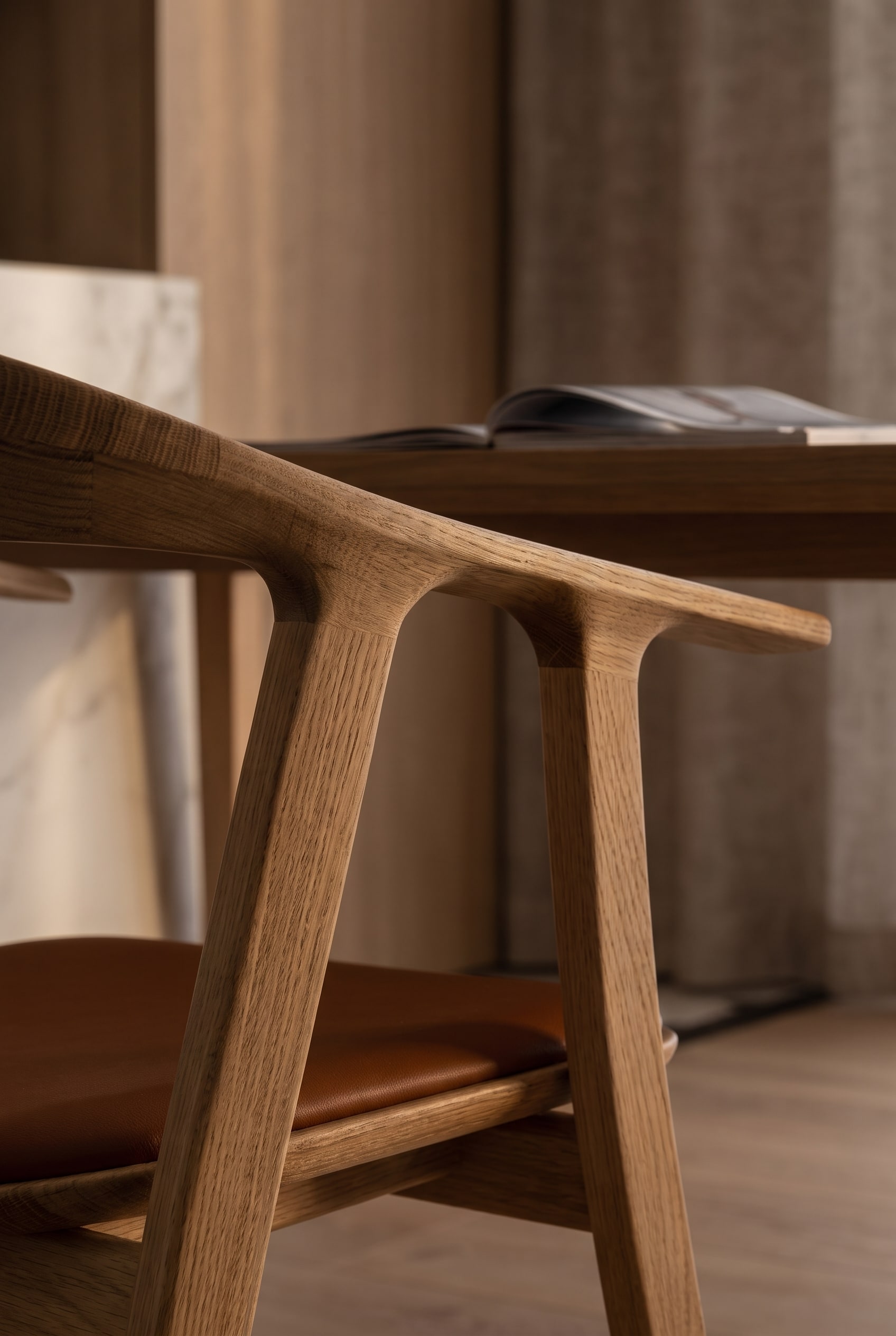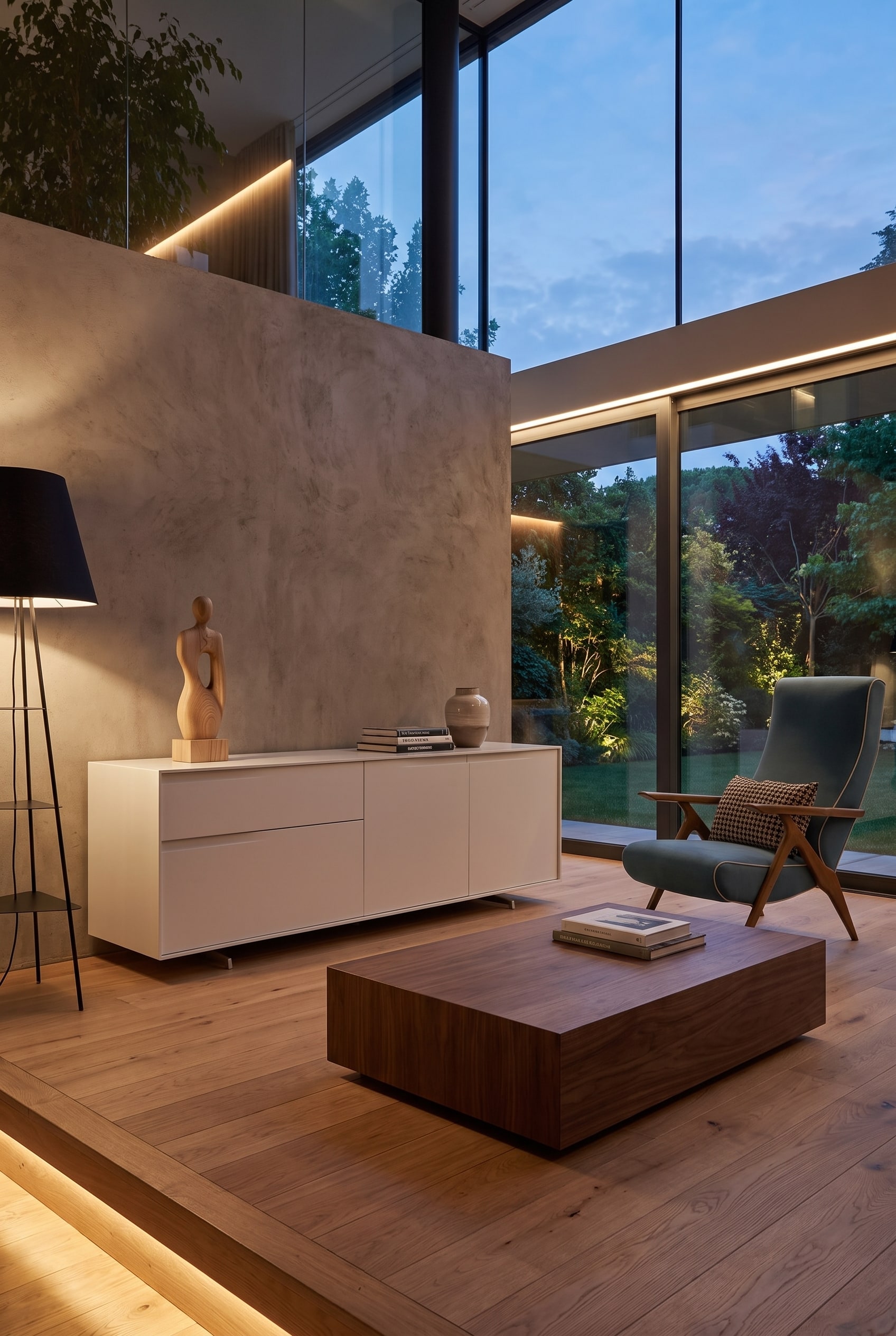











1. Combining Wood Types: Oak, Walnut, and Ash in a Mix – Laying the Foundation
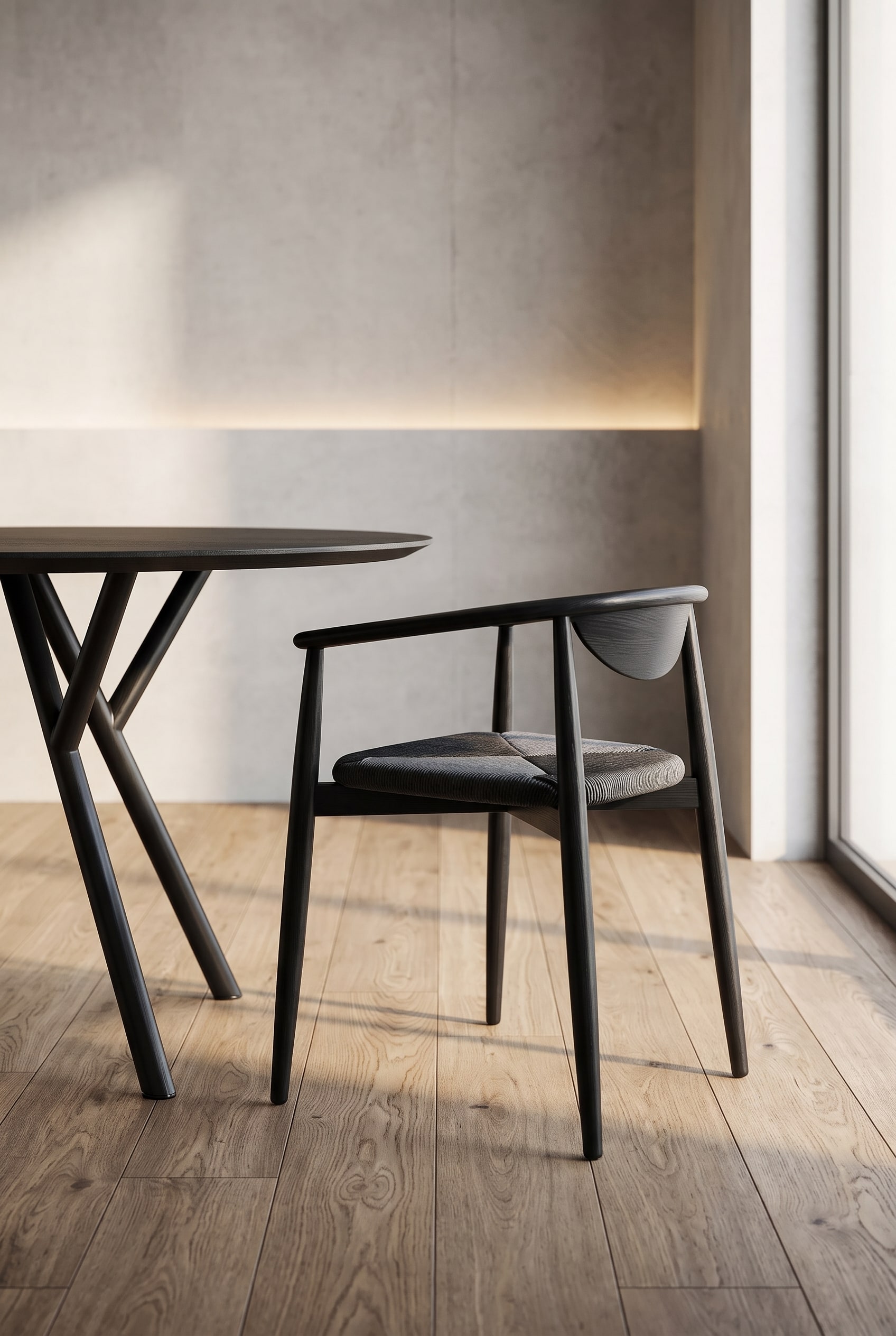
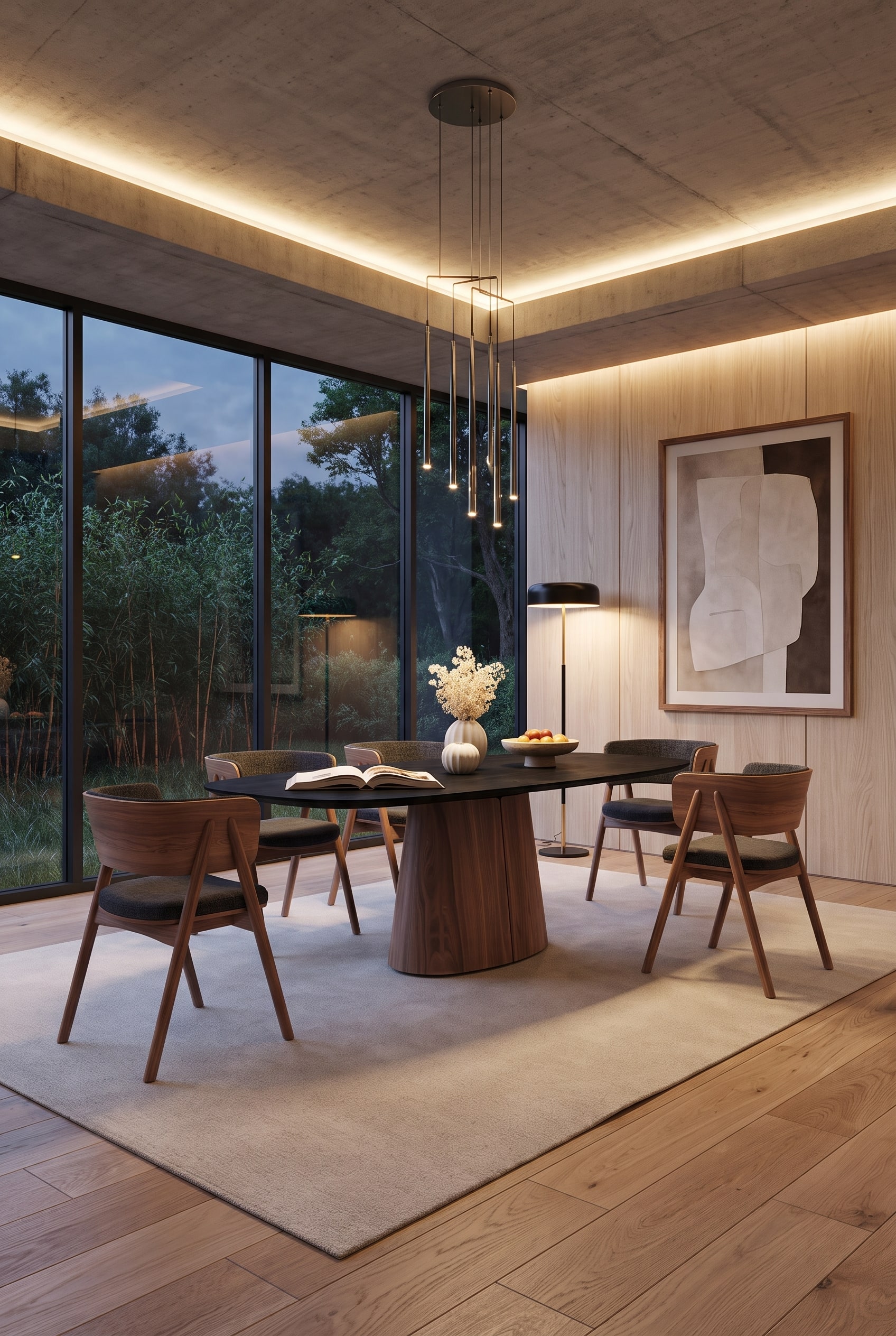
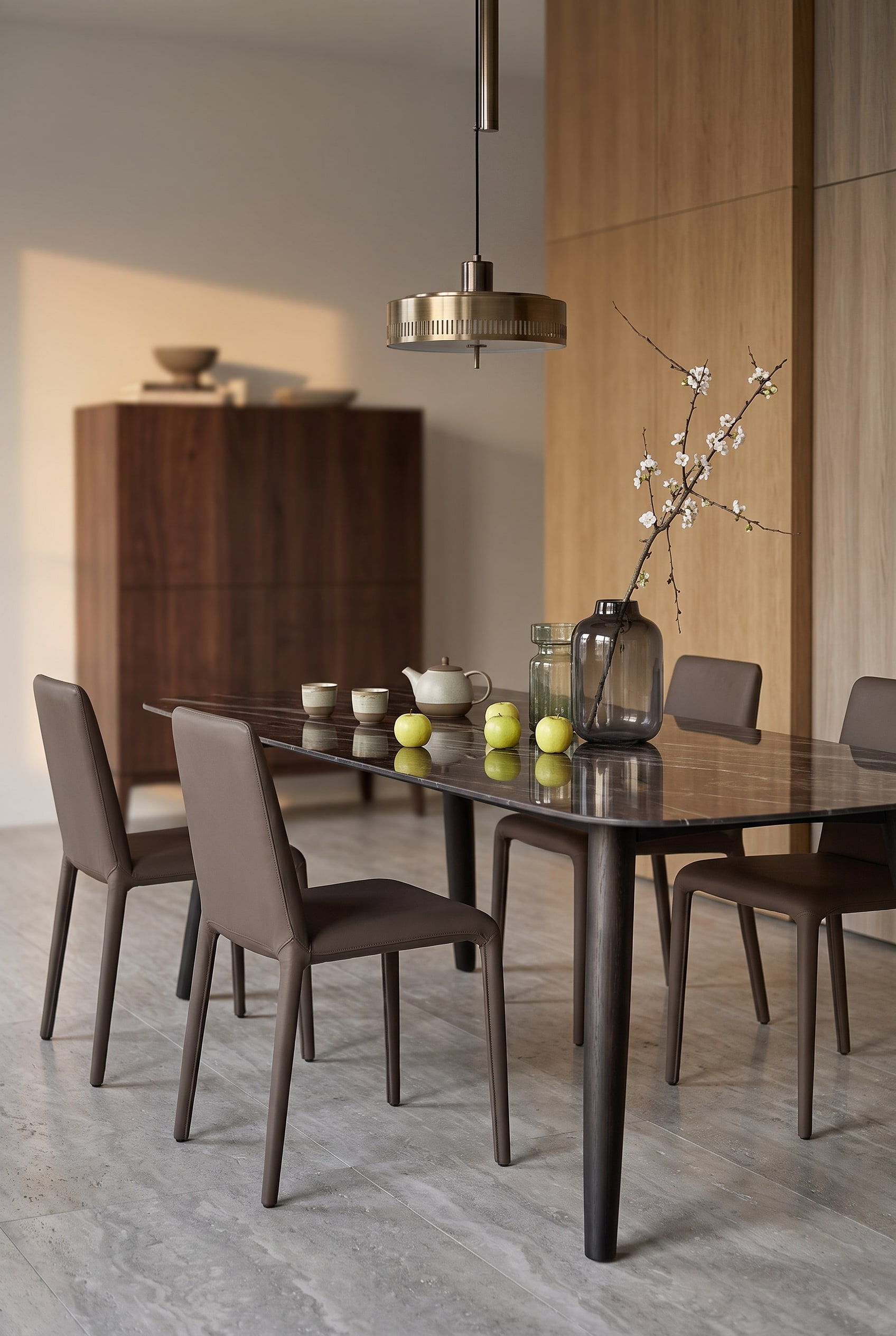
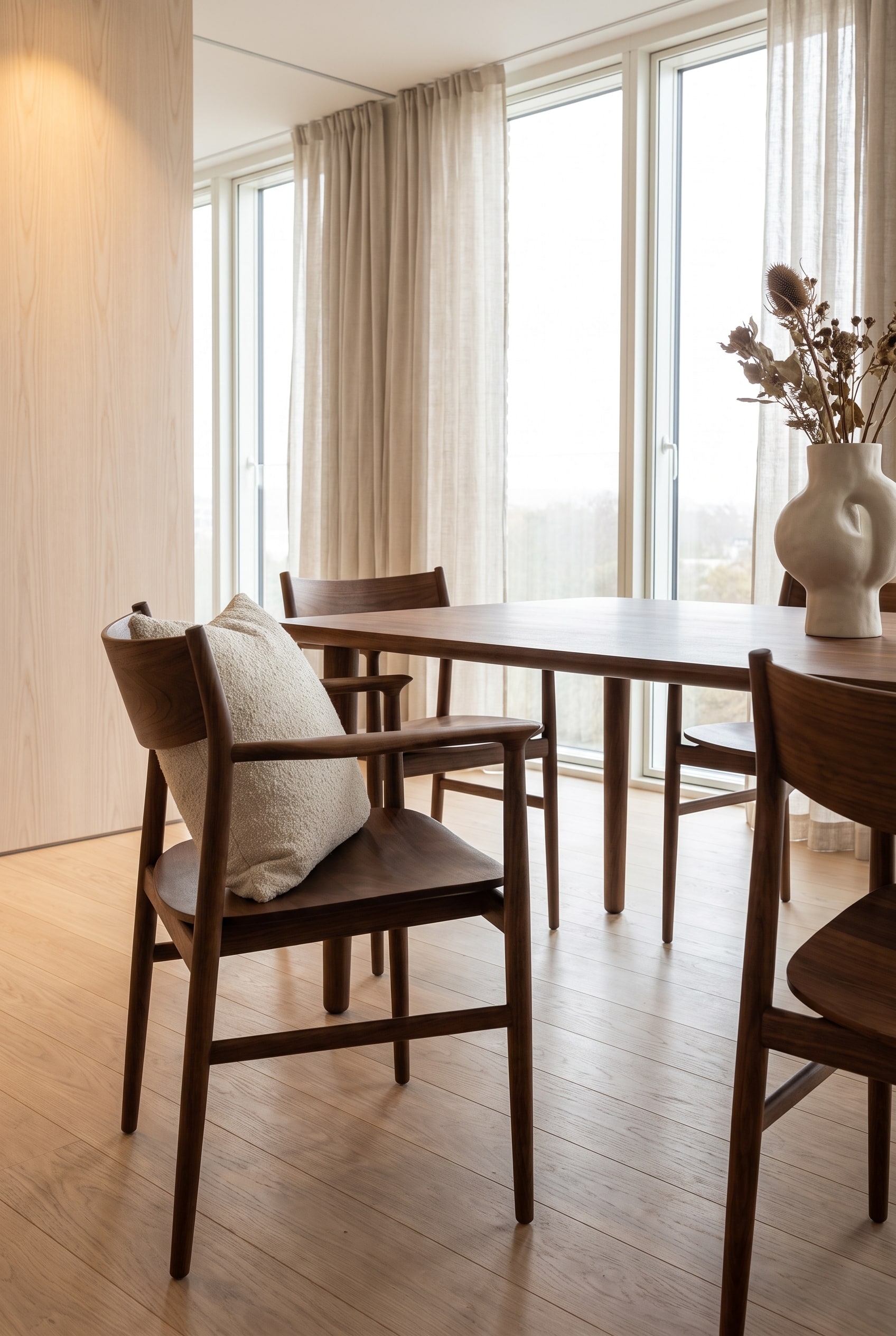
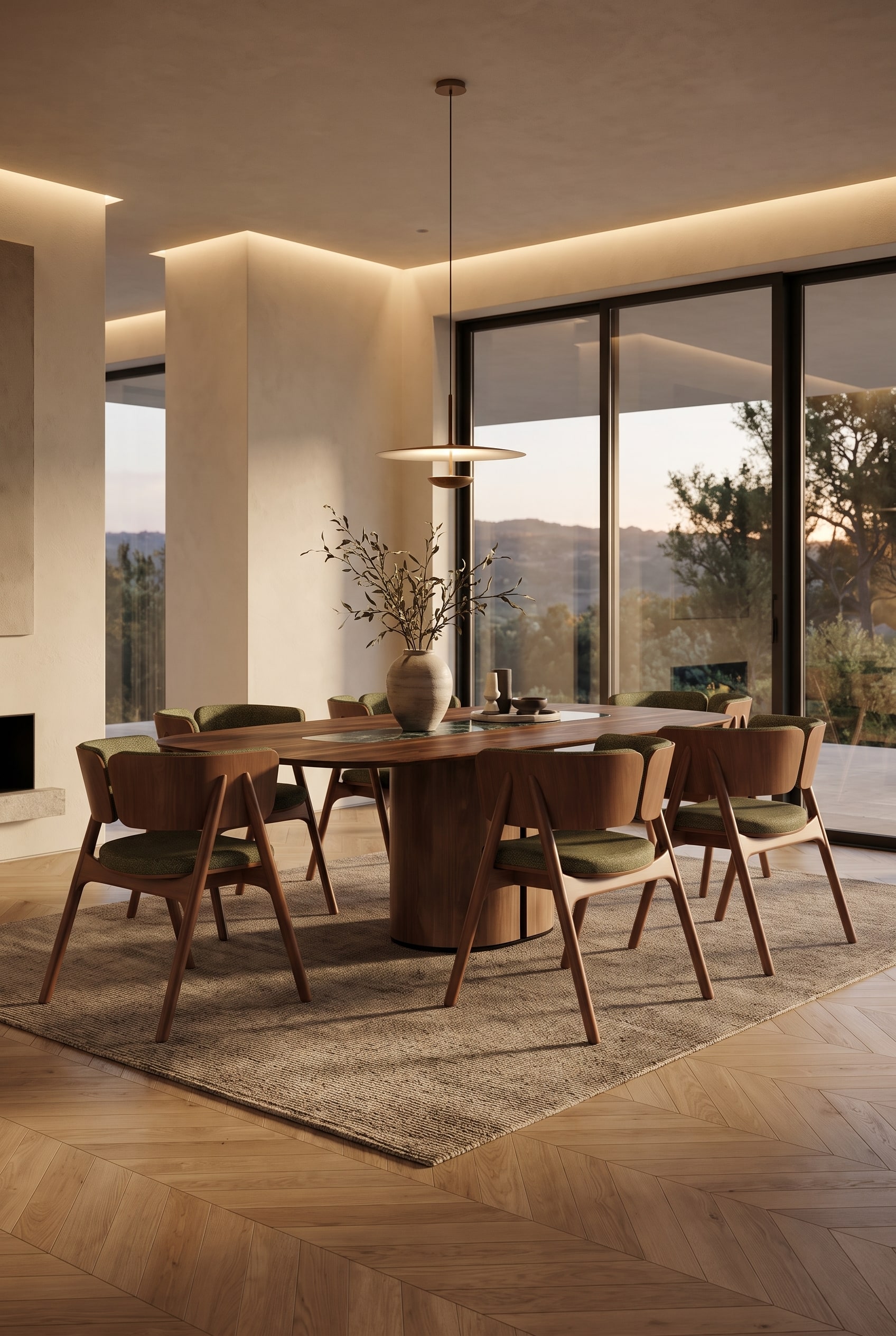 Product shown true to original. Room styling created by digital staging.
Every successful room concept requires a dominant anchor wood that sets the visual direction. Typically, this is the flooring or the most voluminous piece of furniture in the room, such as a sprawling dining table. When you mix different wood types, the room must not break down into equally weighted zones. The anchor wood occupies about 60 to 70 percent of the total wood surface in the room and establishes the basic temperature.
If the floor, for example, is made of light, warm oak, it forms the canvas for darker, characterful statement pieces. The attempt to find a table in the exact color of the floor almost always fails in practice due to differing finishes or natural darkening processes. A deliberate contrast appears much more elegant here than a narrowly missed shade.
How to succeed in 3 steps:
- Determine the largest wood surface in the room (usually the parquet) as the undisputed base.
- Identify the undertone of this base: Is the wood rather yellowish-warm or ashy-cool?
- Deliberately choose the next large piece of furniture in a significantly darker or lighter tone to avoid the outdated set look.
Livarea Expert Tip:Always place a textile buffer between a wooden table and a wooden floor – a generous, plain-colored rug breaks up direct material competition and frames the piece of furniture.
Furniture Tip for a Strong Anchor Point: A prominent table like the al2 el-it c 001 Dining Table in dark wood forms the perfect visual heavyweight to confidently stand out from a light oak floor.