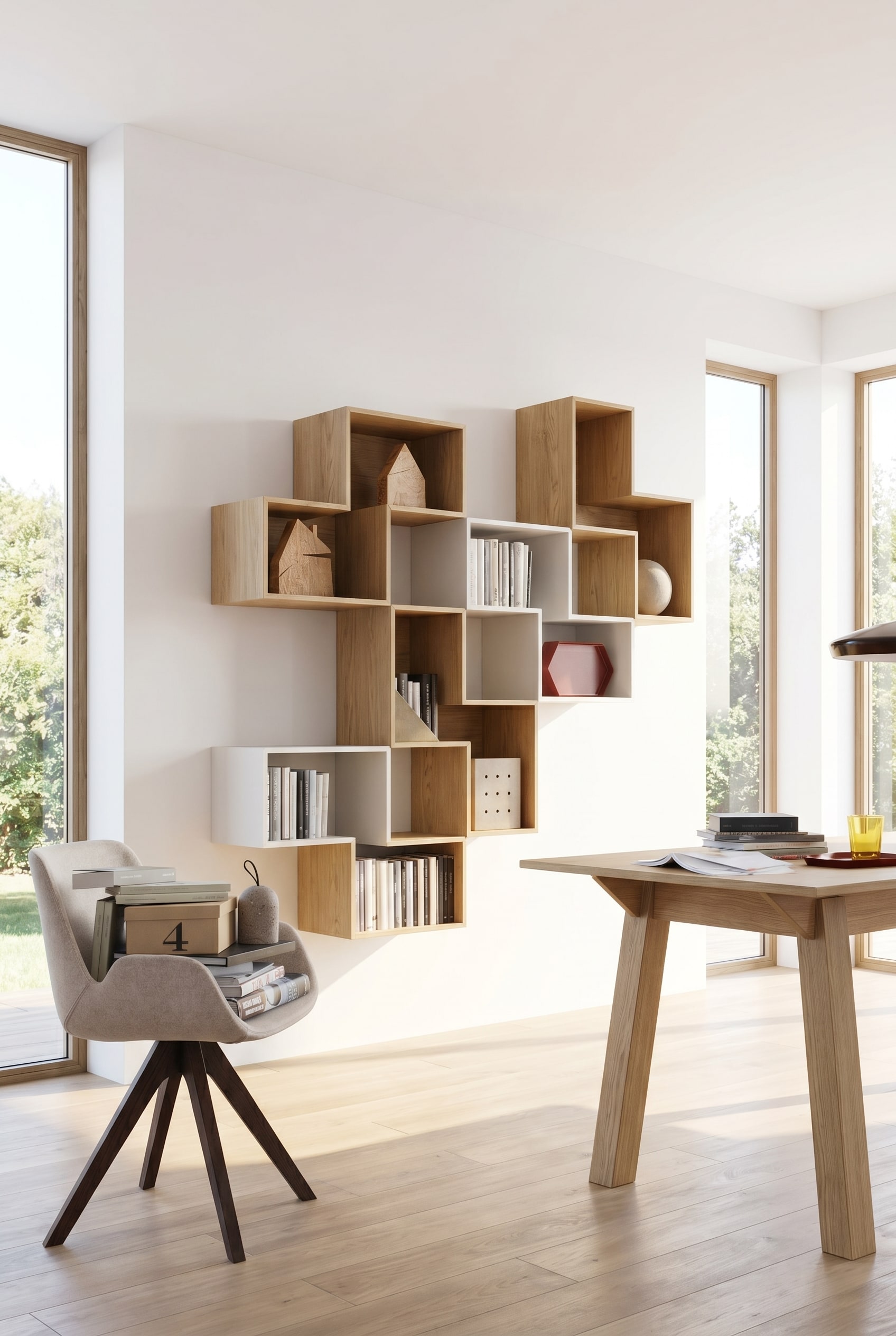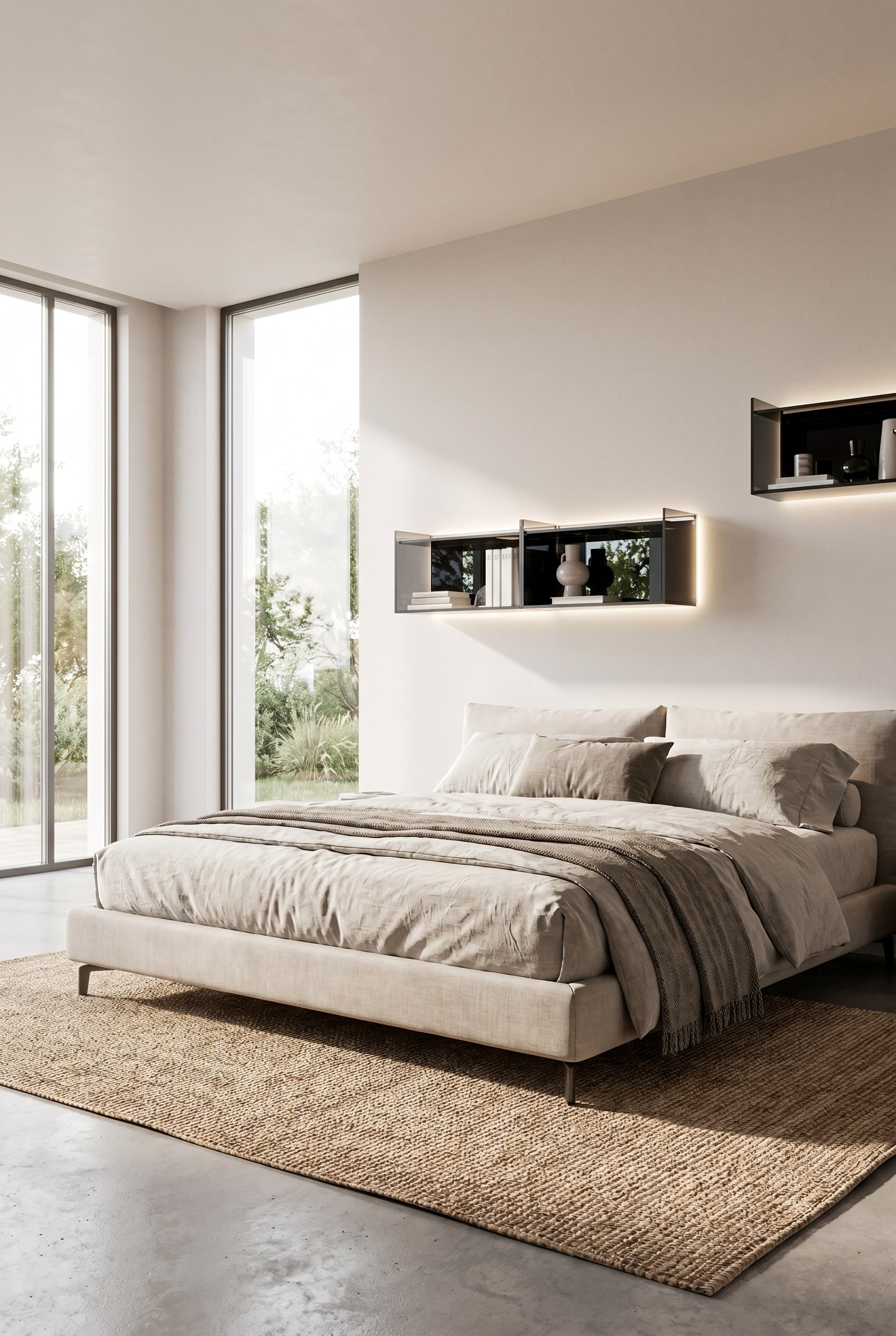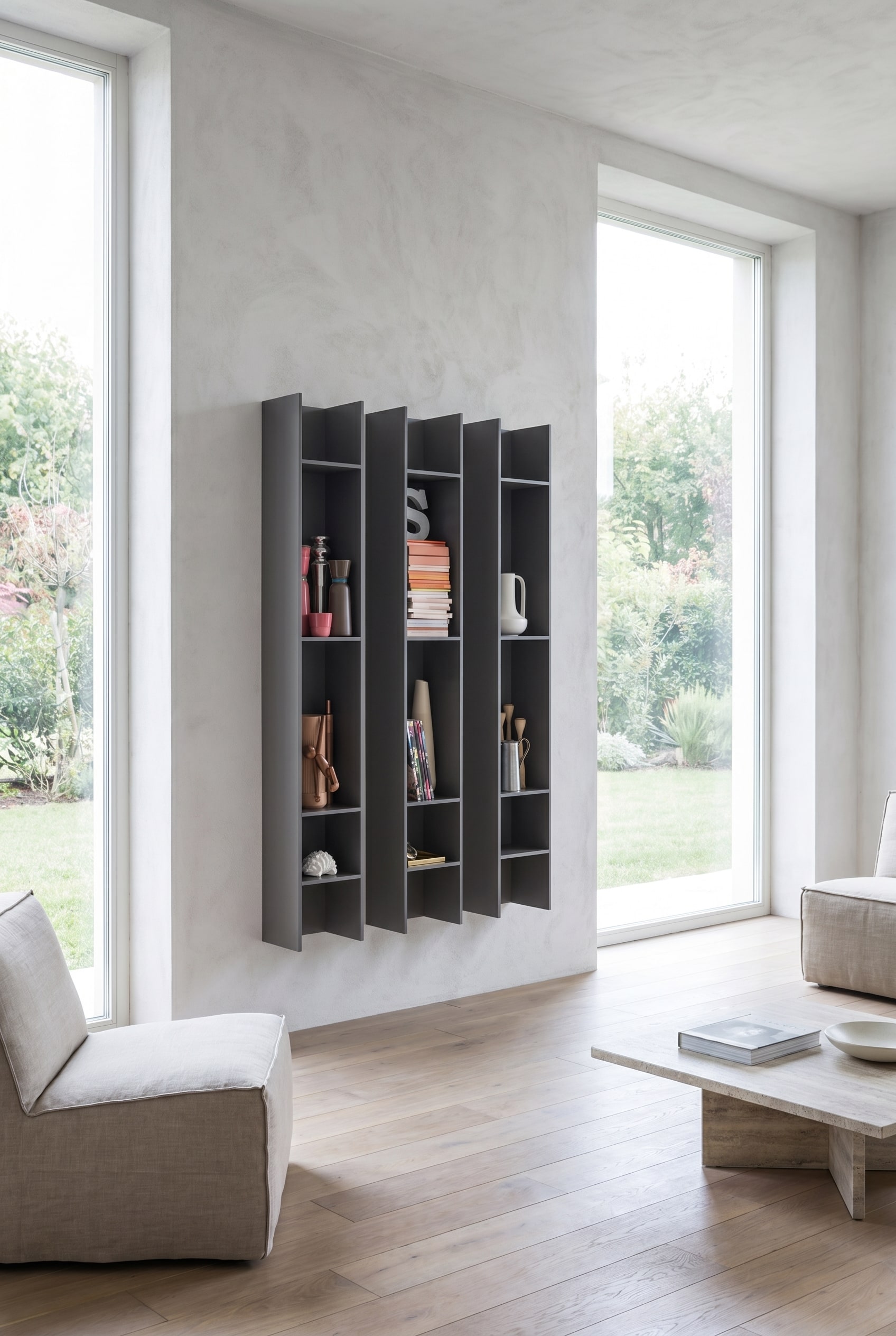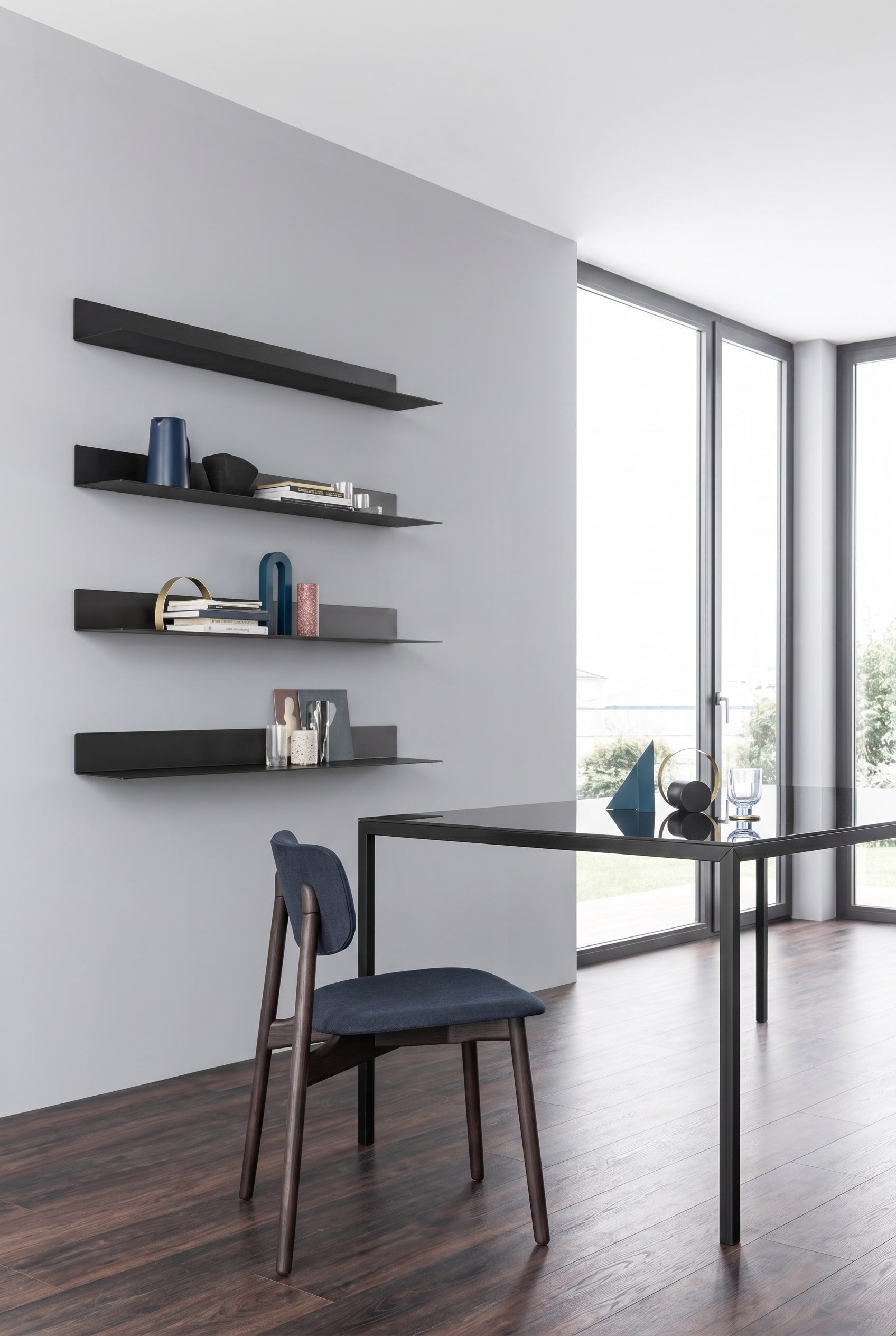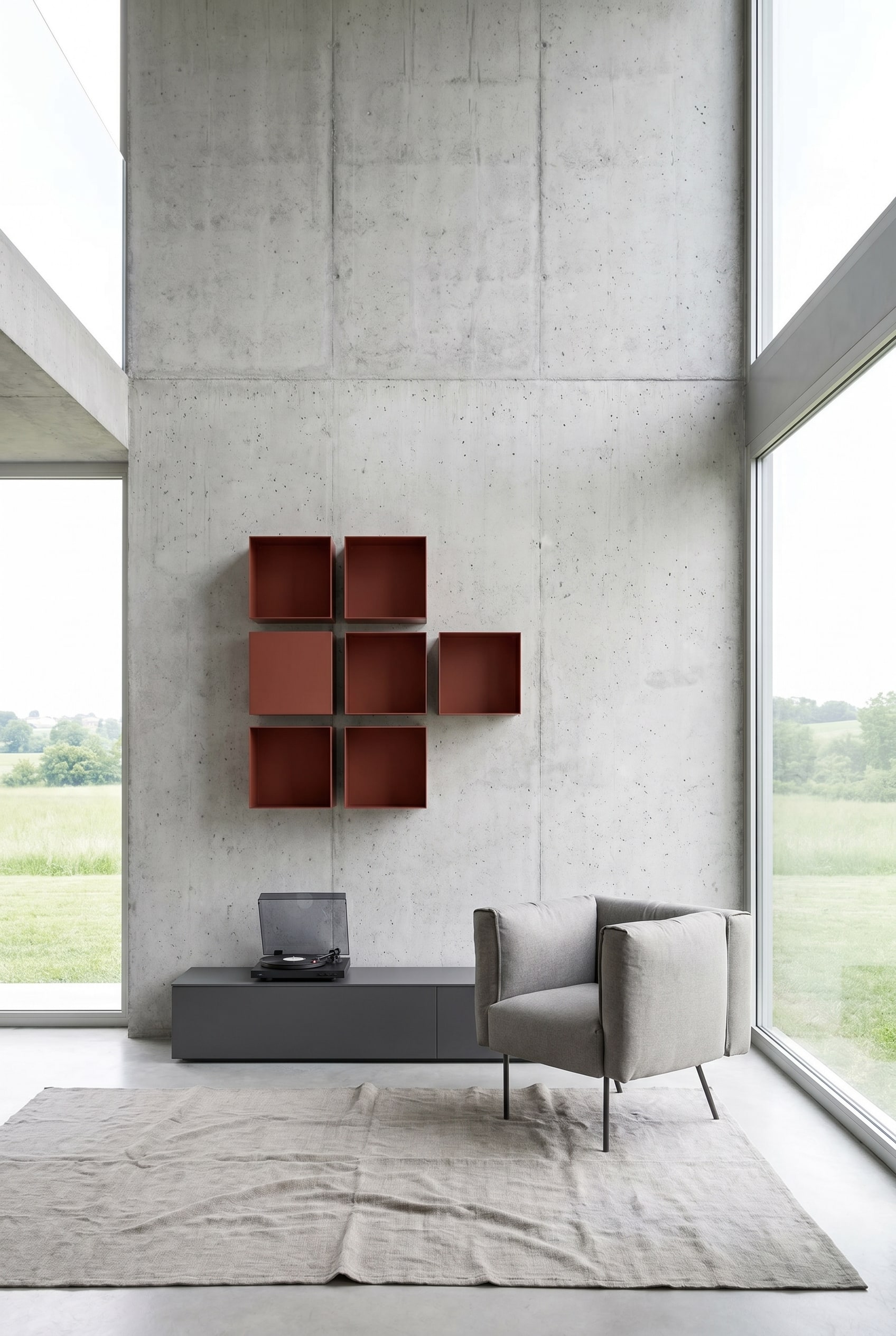











1. Arranging Wall Shelves Asymmetrically: The Invisible Grid as a Foundation
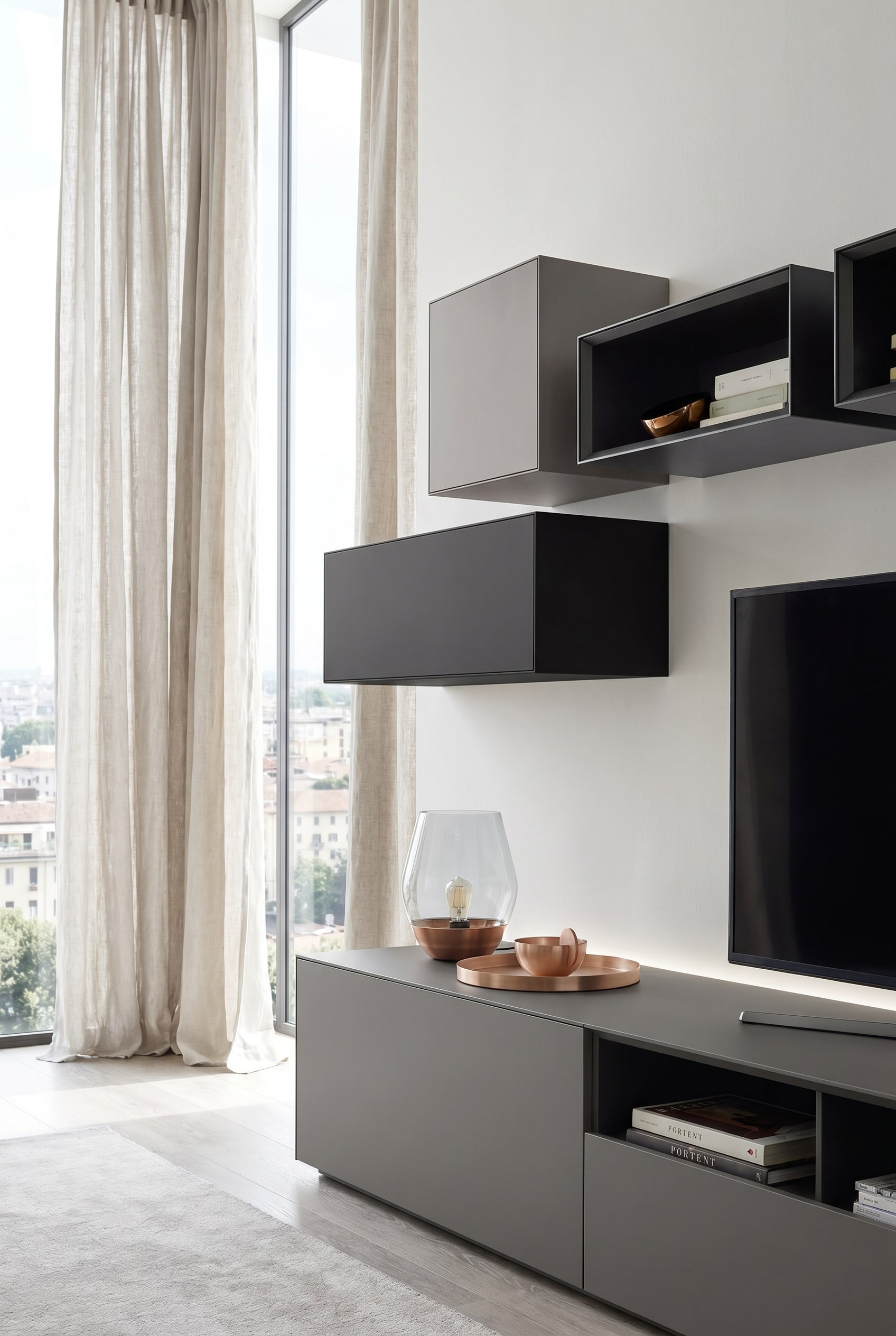
The biggest misconception in free wall design is the assumption that elements can be distributed arbitrarily in the room. True asymmetry requires a strong counterbalance to avoid appearing erratic. This is where the invisible grid comes into play. Interior designers first define a horizontal baseline that the eye can follow. This is usually the sightline of a lowboard or the top edge of an adjacent sofa. From this base, the wall is divided into invisible vertical columns, typically at 60-centimeter intervals.
To make this structure tangible, you need a closed, calm element as a visual anchor point. A compact wall-mounted cabinet with an opaque front removes visual clutter from the arrangement and serves as a center around which lighter shelves can dance. The smooth, handleless fronts reflect the soft afternoon light and bring an unexpected tranquility to the room composition before the eye moves on. Ideally, place this anchor point at eye level in the lower third of the usable wall space.
Livarea Expert Tip: Never place the heaviest, closed element exactly in the center of the wall. Instead, shift it by exactly 30 percent to the left or right of the central axis to create the desired basic tension.
Furniture Tip for Visual Calm: The Livitalia Minimal Wall Cabinet, with its monolithic, reduced design, forms the perfect counterbalance to open, playful shelf constructions and grounds the entire wall composition.