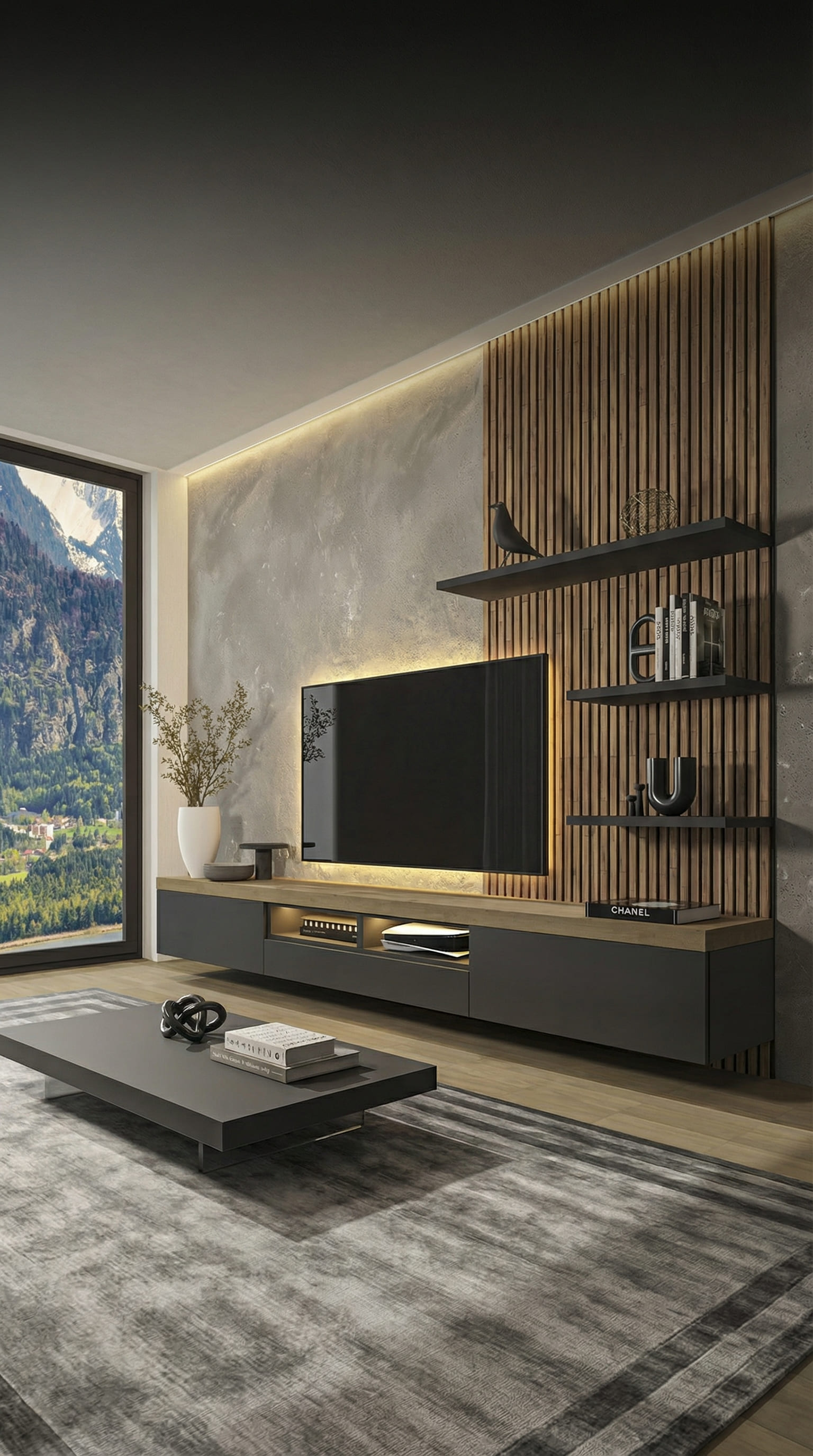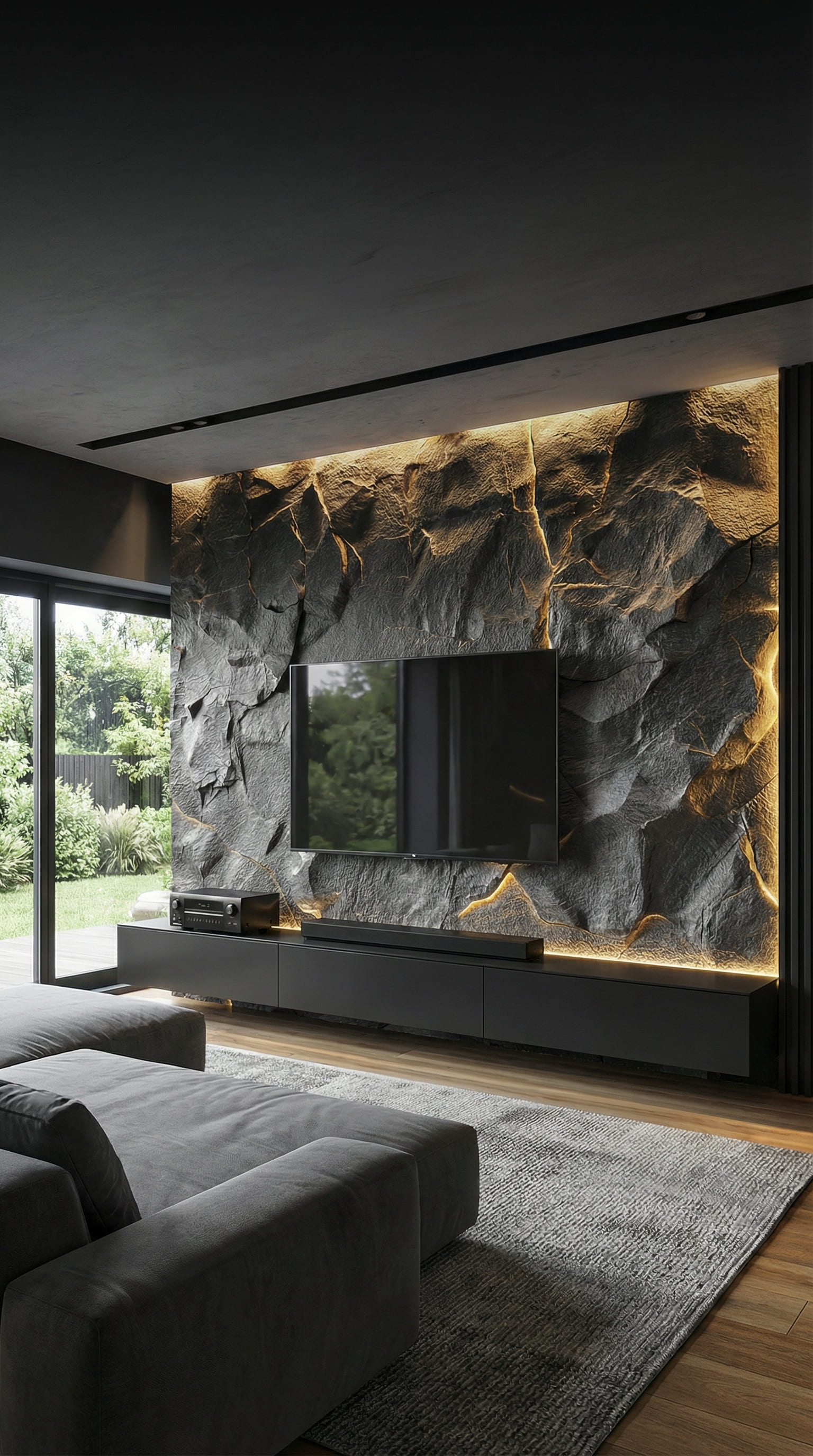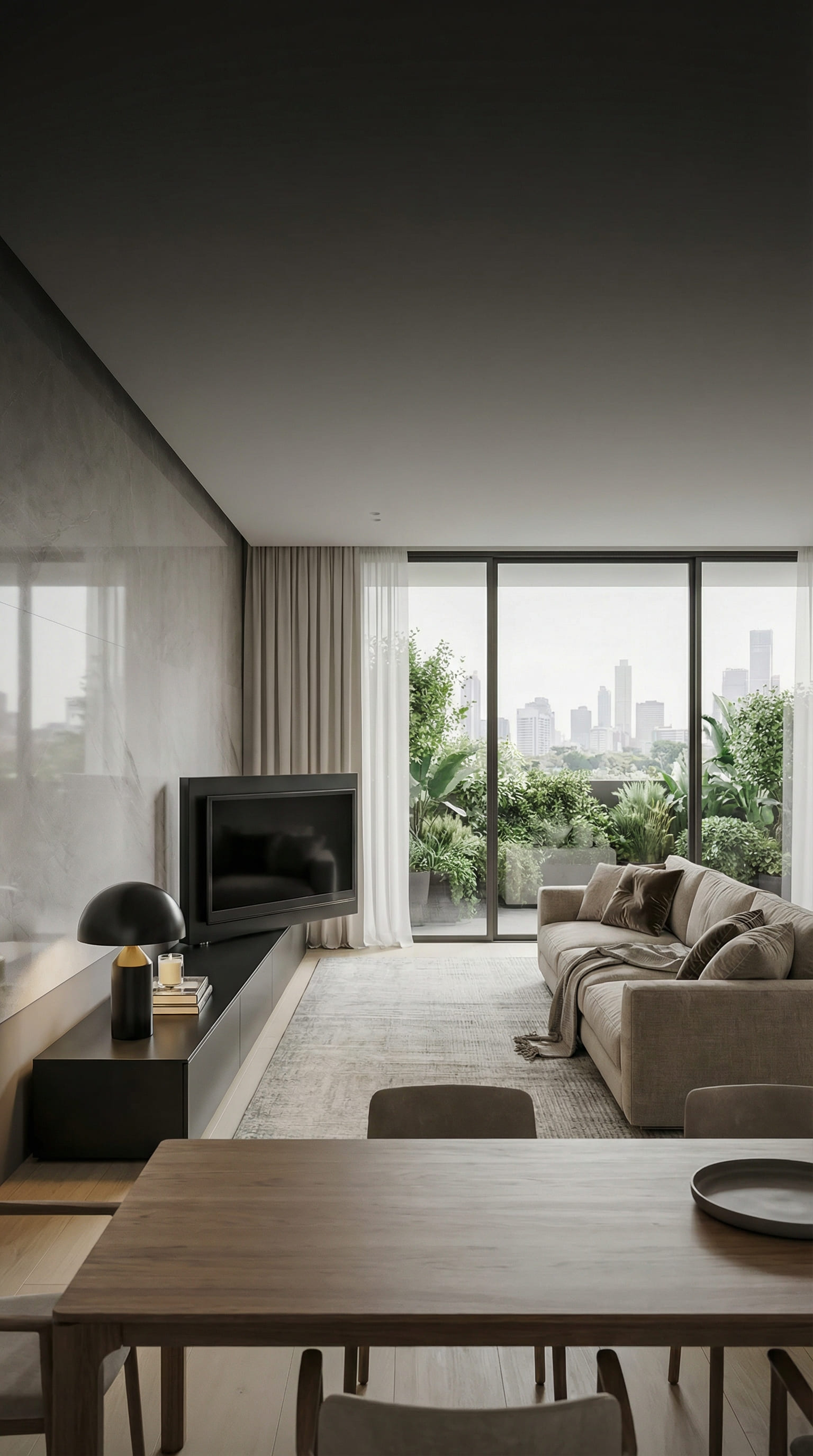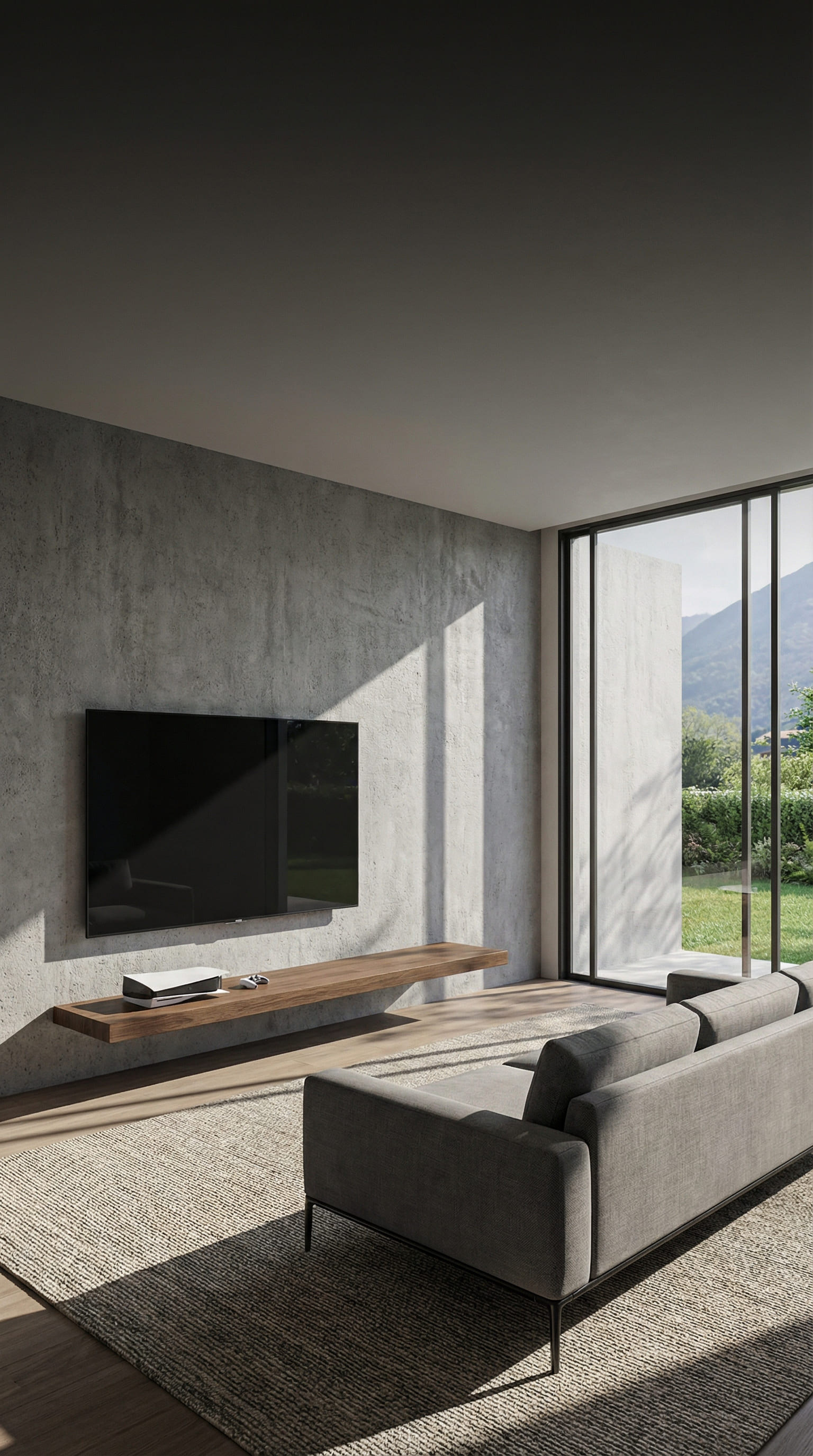









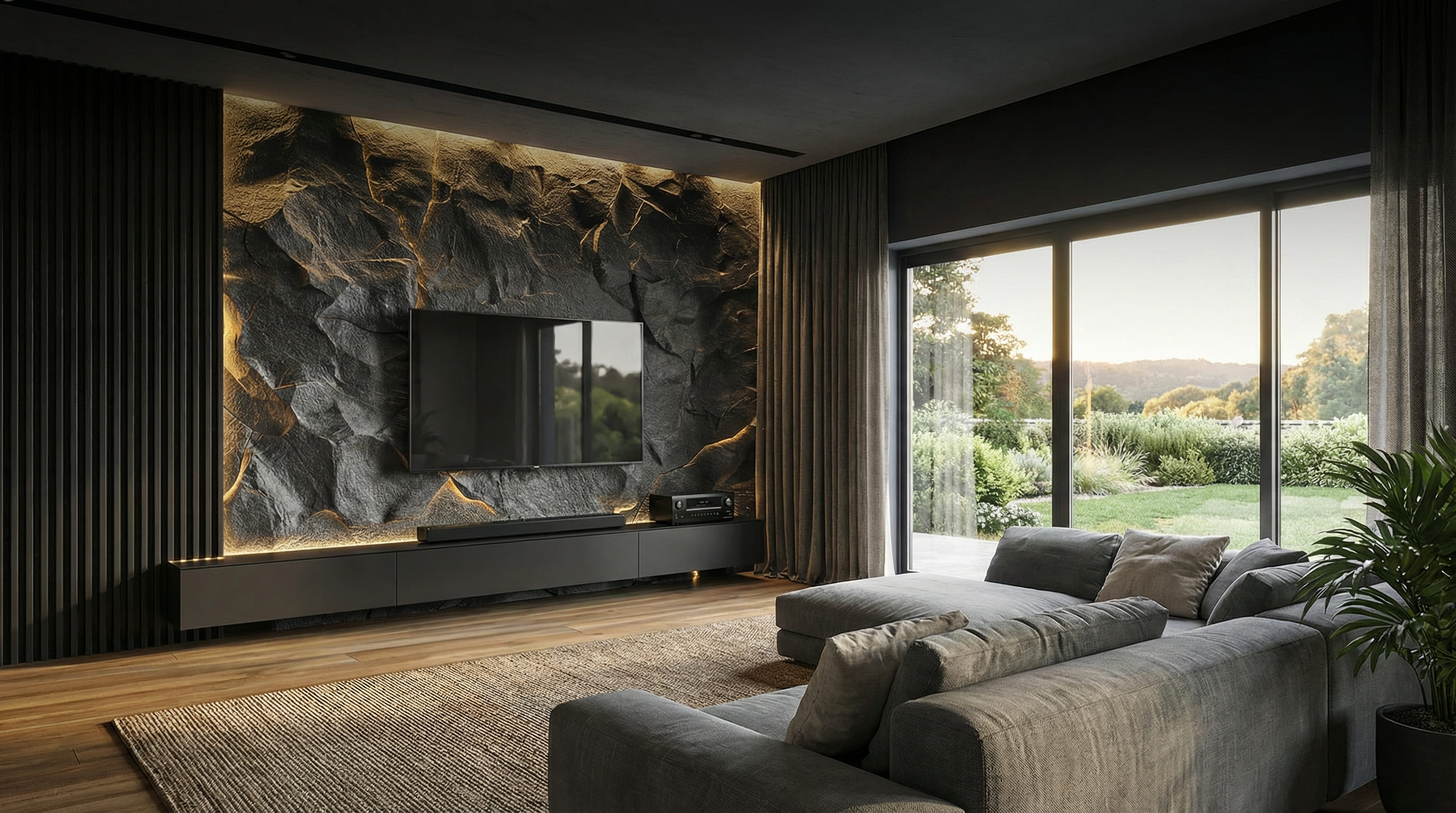


Large, open-plan layouts are the dream of modern living. But anyone living in a loft or a house with floor-to-ceiling windows knows the problem: there are no walls. Where do you put the television if you don't want to obstruct the breathtaking view of the garden and there's no solid wall available?
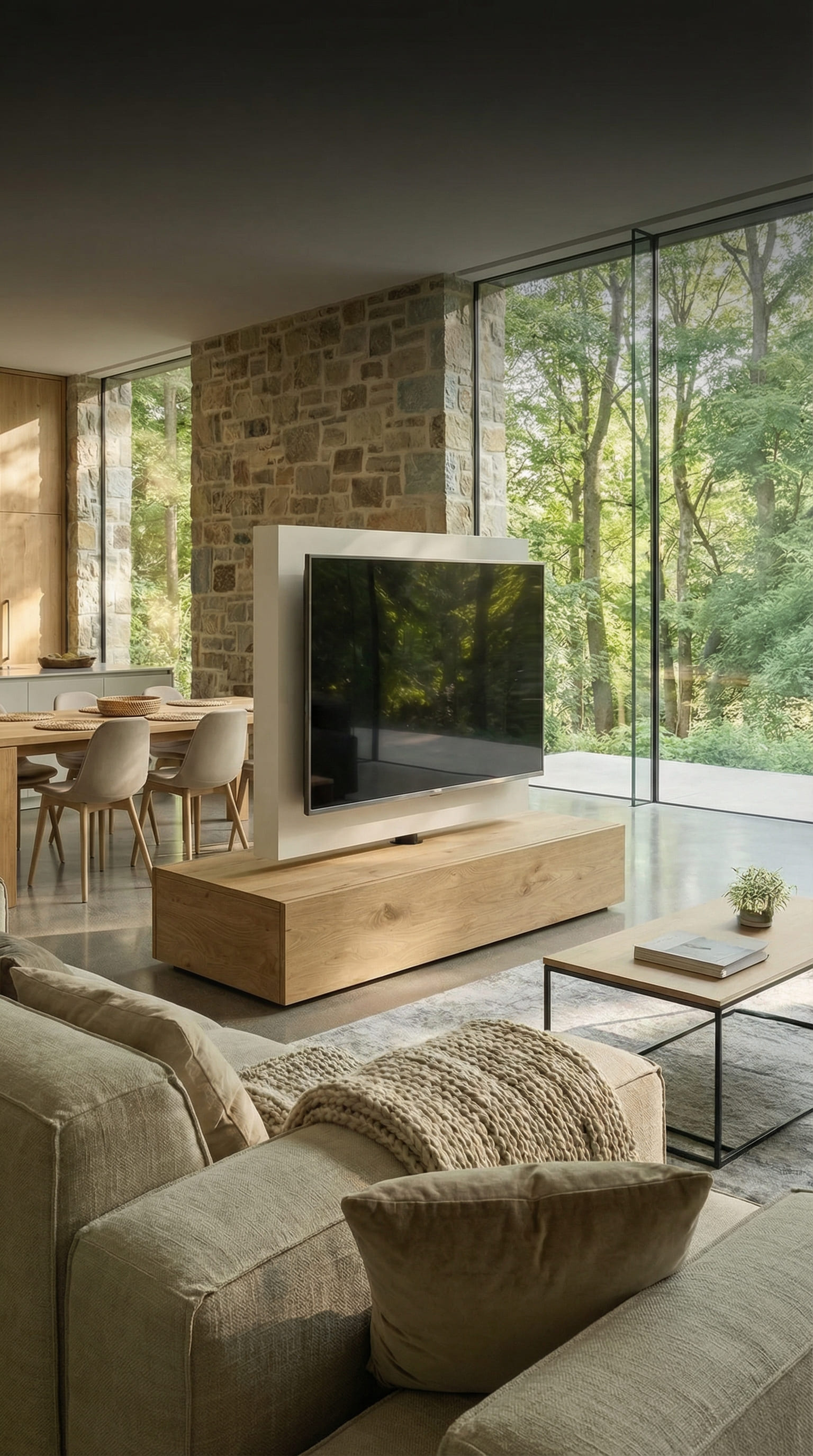
A conventional lowboard would often look lost here or visually cut through the room without giving it structure. The solution lies in furniture that combines architecture and function. A freestanding room divider acts as a central element, zoning the space – for example, between the dining area and lounge – without closing it off.
The decisive advantage of such a system is its mobility. If the TV panel is motorised or manually rotatable by 360 degrees, you no longer have to commit to where your sofa is placed. You can turn the news towards the breakfast table in the morning and swivel the blockbuster towards the sofa landscape in the evening. All cables disappear invisibly into the column, perfecting the illusion of a picture floating freely in the room.
💡 Livarea Expert Tip:When planning a freestanding room divider, be sure to include a floor socket. This avoids tripping hazards from extension cables that would otherwise have to run across the room.
The Roto TV Room Divider model masters this discipline par excellence. With its sculptural character, it appears less like a piece of furniture and more like a part of the architecture. The combination of lacquer and wood veneer also allows the room divider to be harmoniously adapted to your parquet flooring or kitchen fronts.