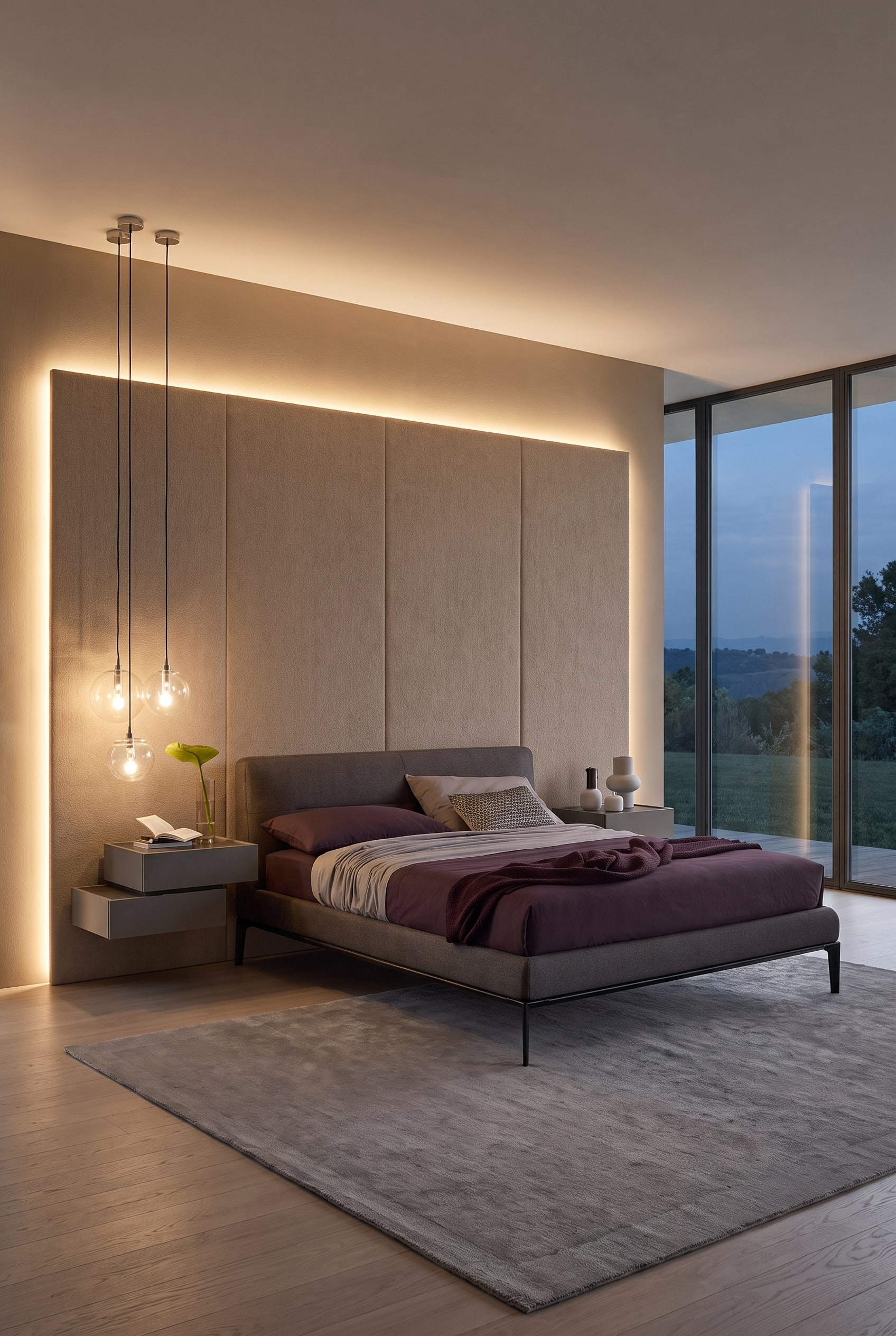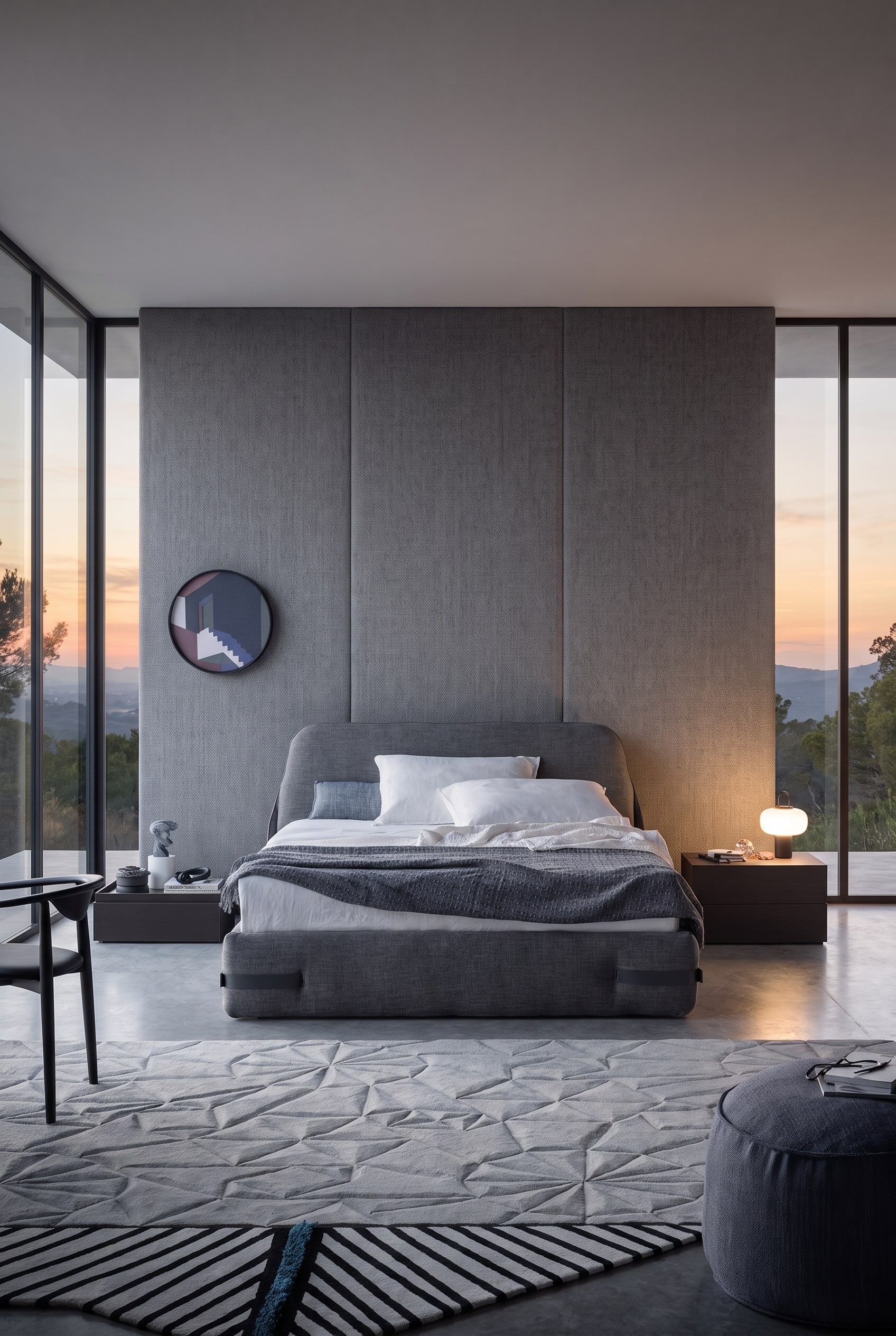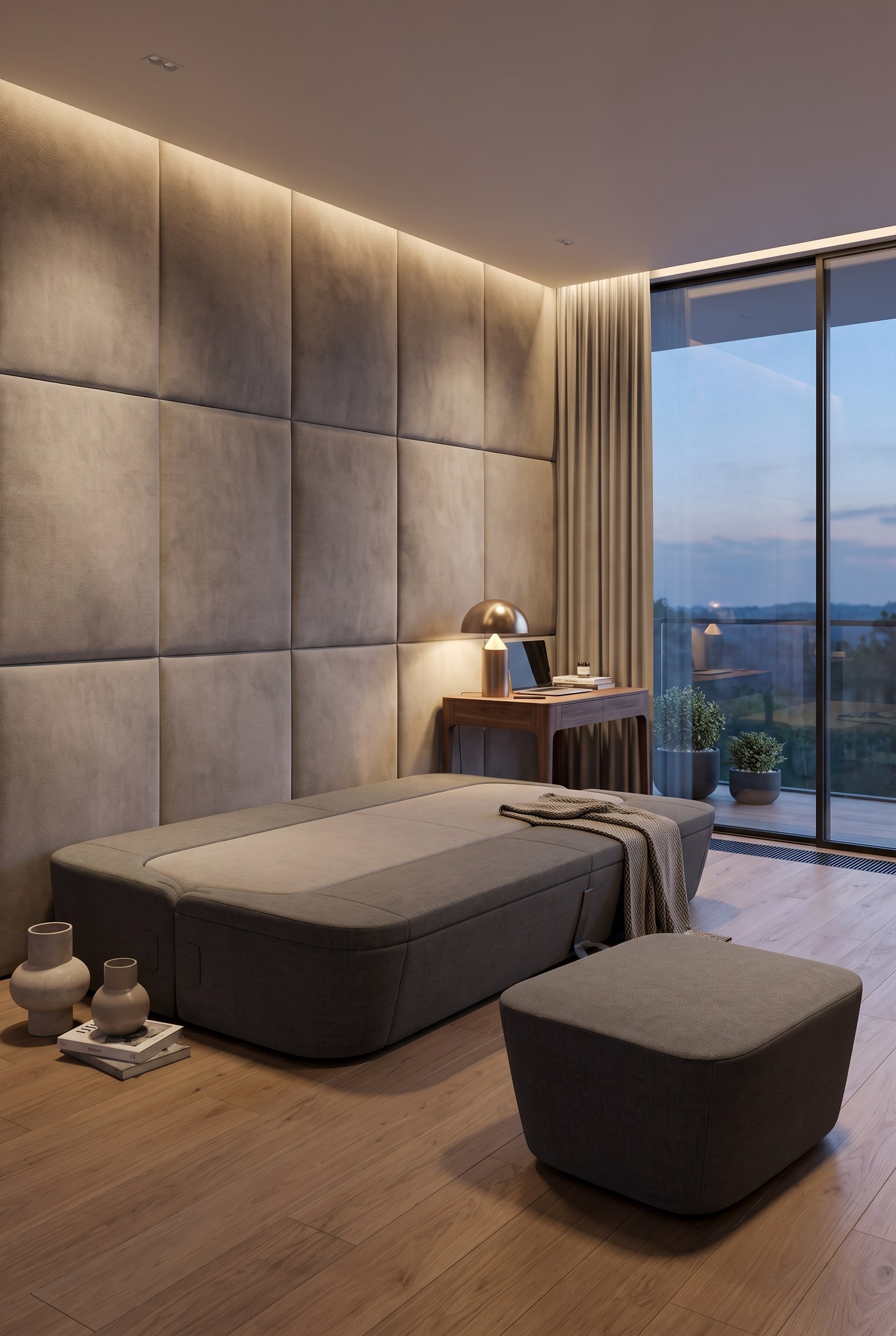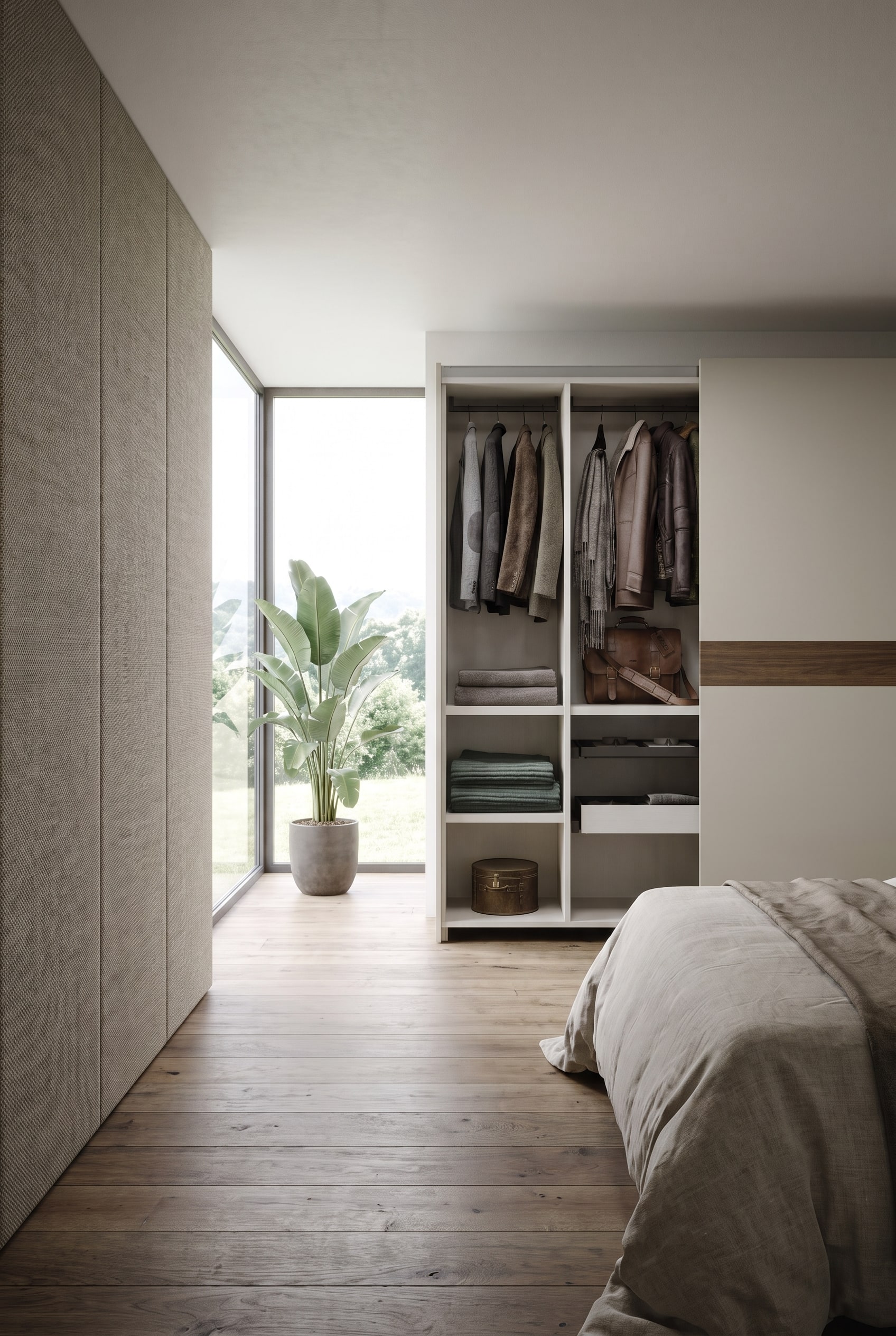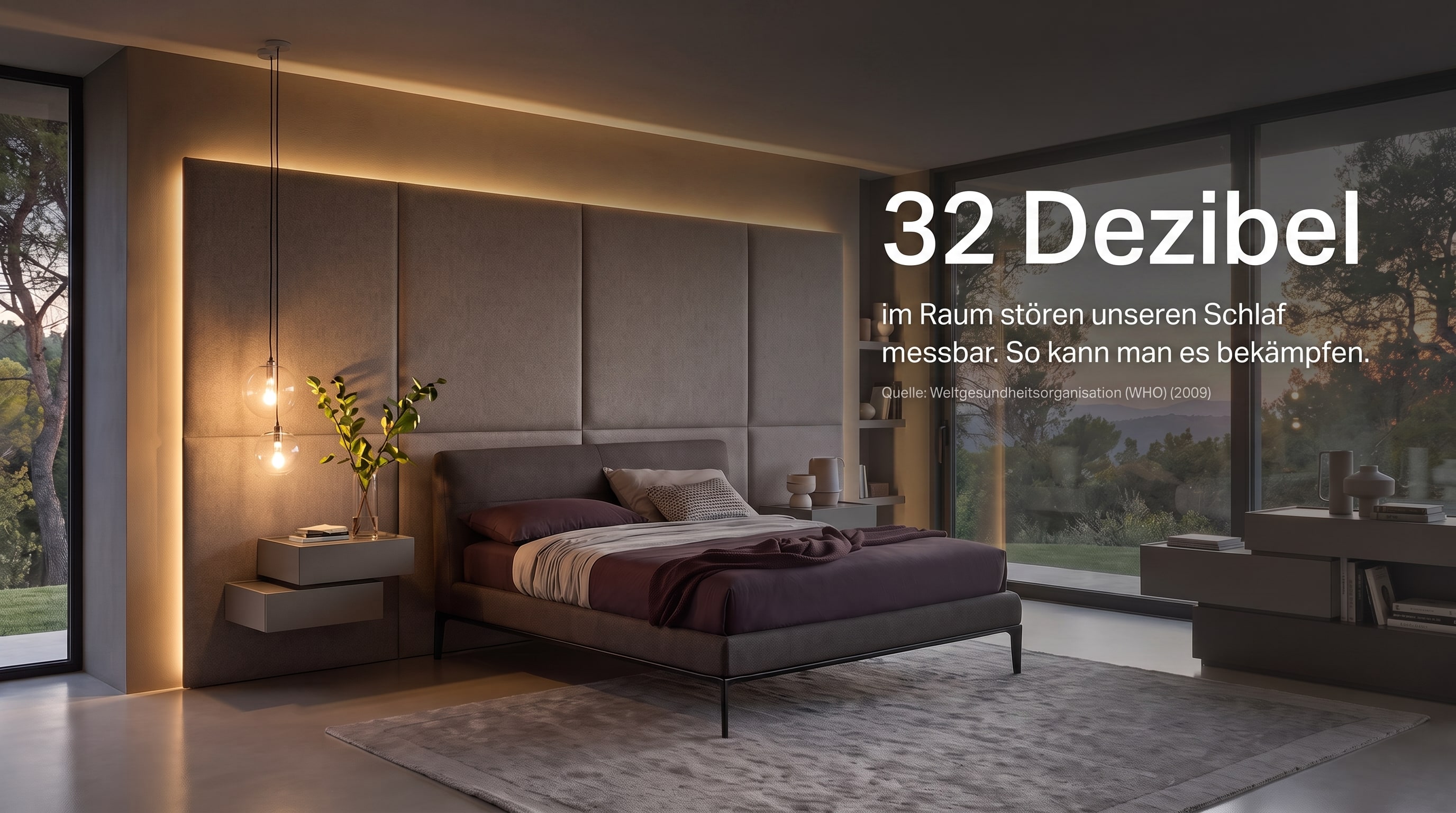











1. The Acoustic Oasis: Why You Should Design Your Bedroom Wall with a Textile Panel
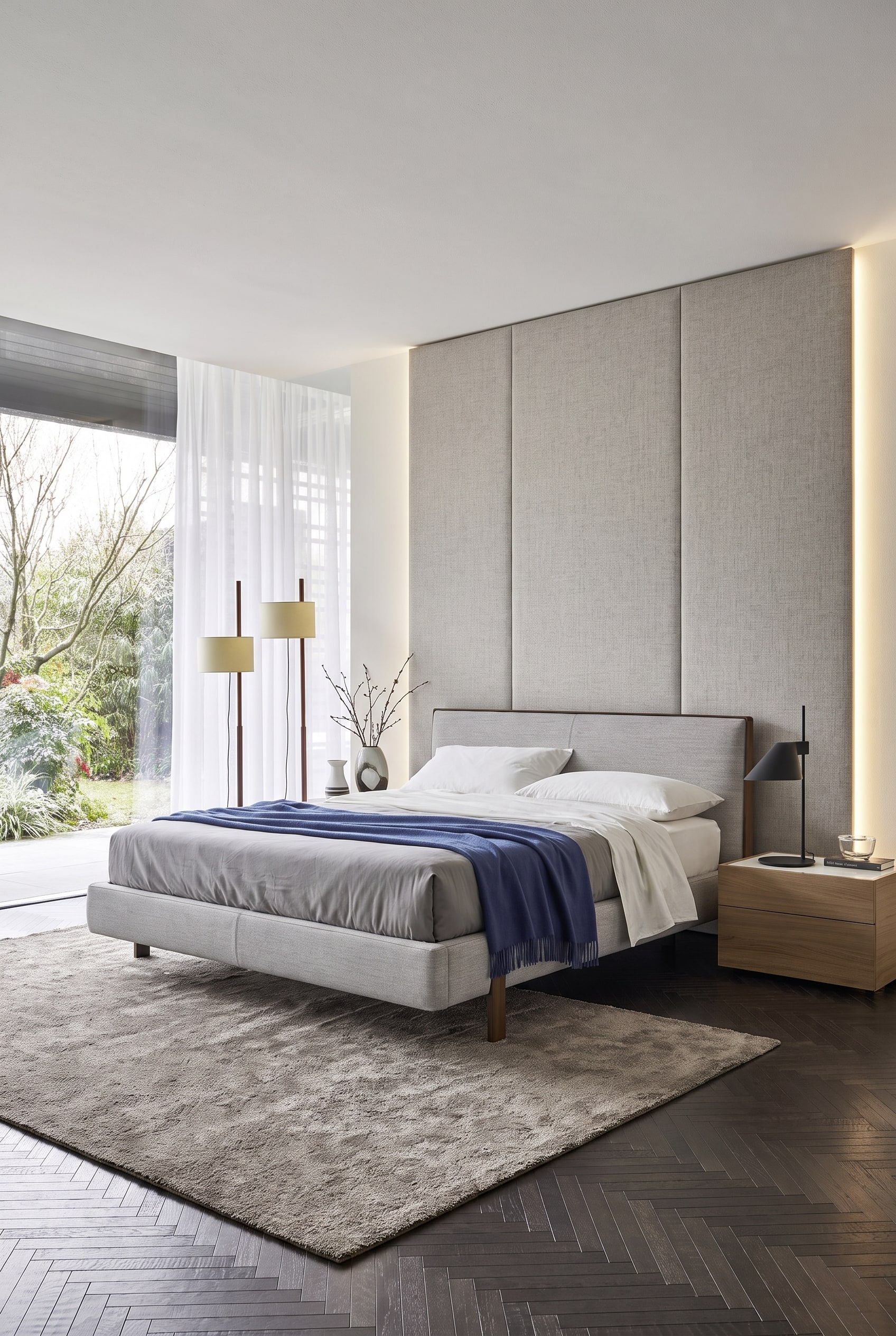
Bare walls create a so-called flutter echo effect, where sound waves build up between parallel, hard surfaces. A padded wall cladding physically interrupts this cycle. A high-quality fabric panel with a 4-centimeter thick acoustic foam core achieves a Noise Reduction Coefficient (NRC) of approximately 0.70. This means that 70 percent of the incident sound energy in the frequency range of human speech is absorbed. The room instantly loses its reverberant coolness and gains acoustic depth.
Especially in rooms with floor-to-ceiling glass fronts, which strongly reflect sound, the textile panel acts as a balancing absorber. The effect is amplified when you combine the panel with a generous upholstered bed. The soft surfaces absorb the remaining energy and reduce the reverberation time in the room to the ideal 0.4 seconds for bedrooms. We explain in detail how to match the rest of the interior when we design a modern bedroom.
How to achieve acoustic planning in 3 steps:
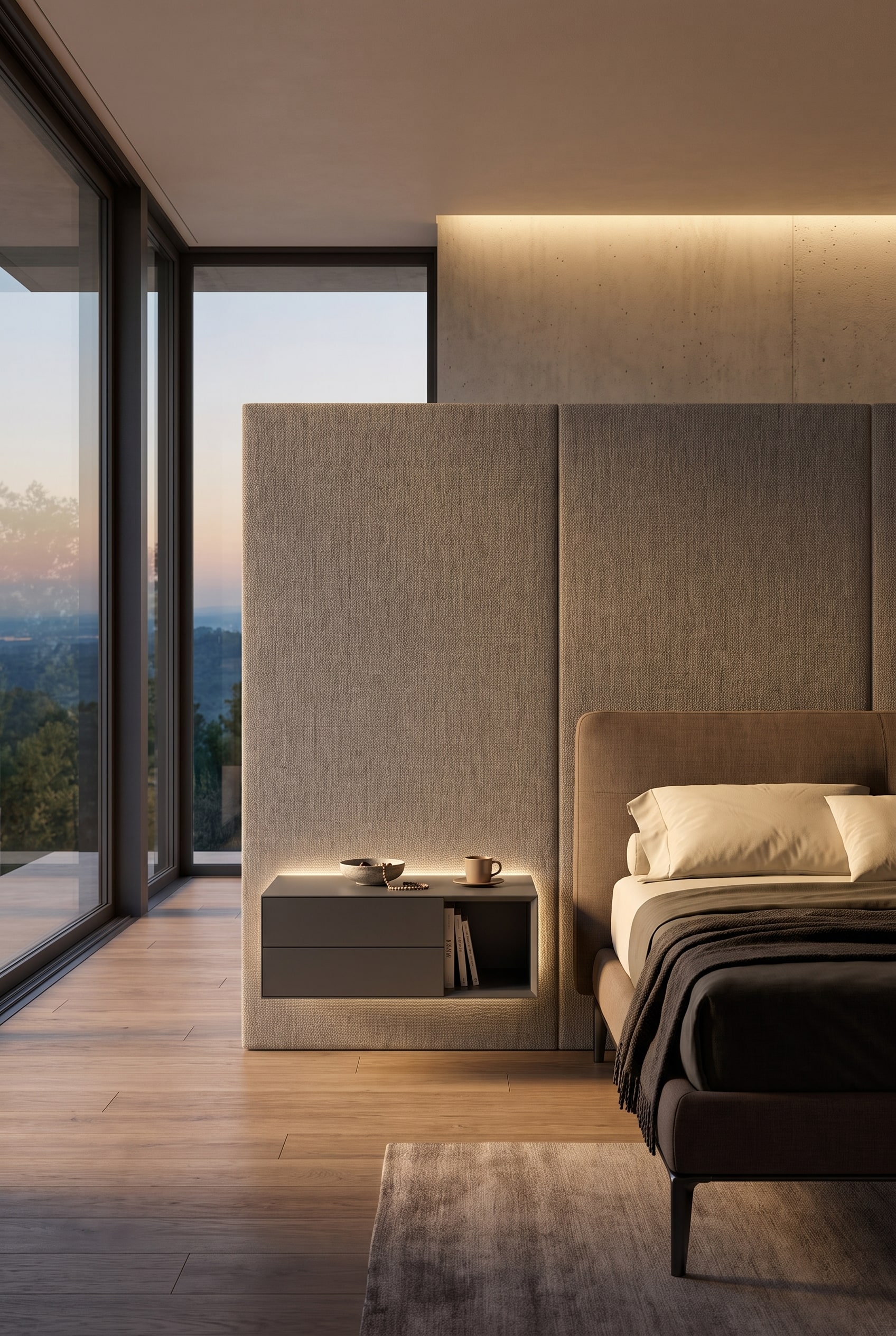
- Identify the main reflection surface: This is usually the wall directly behind the headboard of the bed.
- Choose a panel with at least 3 cm of padding; thinner fabric coverings only dampen the high-frequency range.
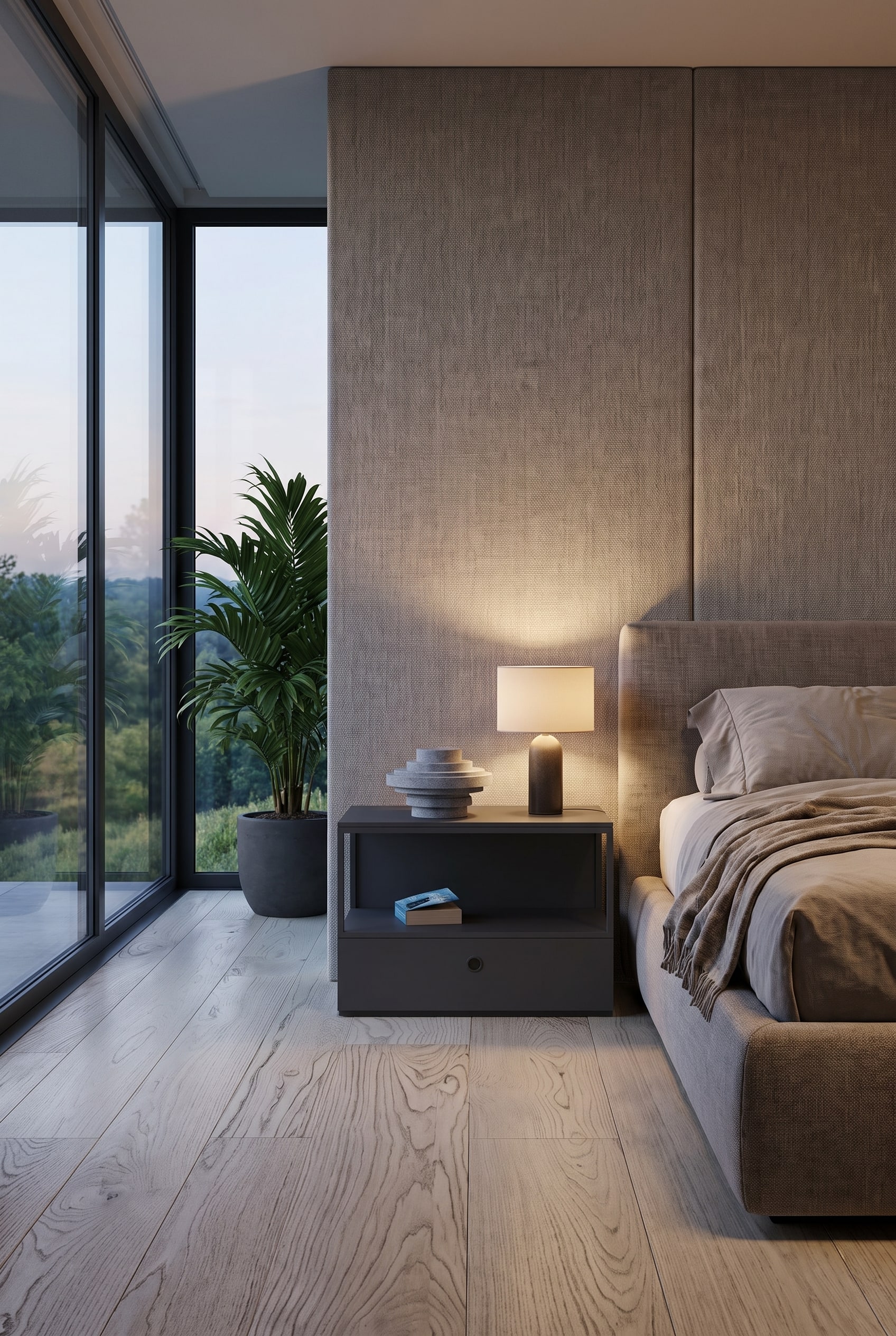
- Opt for open-pored upholstery fabrics like coarse linen or bouclé, as these allow sound to penetrate deep into the core.
Livarea Expert Tip:Avoid heavily coated, washable fabrics for the acoustic panel. The fine polyurethane layer seals the pores of the fabric and reflects sound almost like a painted wall.
Furniture Tip for noticeable room tranquility: The Livitalia Decor Bed The Livarea Decor Bed, with its soft lines and voluminous upholstery, perfectly integrates into this sound-dampened environment and elegantly enhances the cozy, quiet basic atmosphere of the room.