










1. The Perfect Easter Dinner with Family: Why Round Tables Prevent Arguments
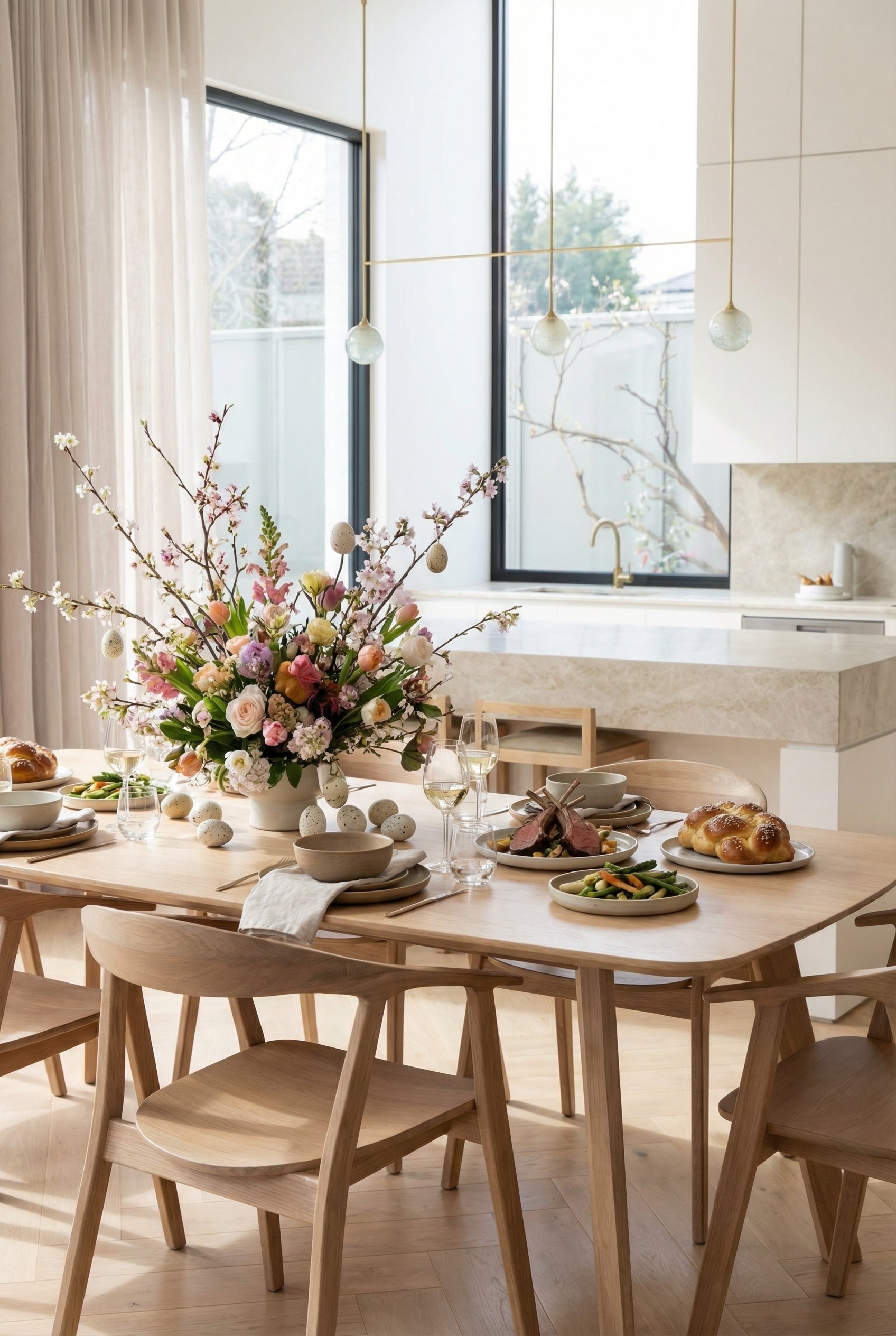
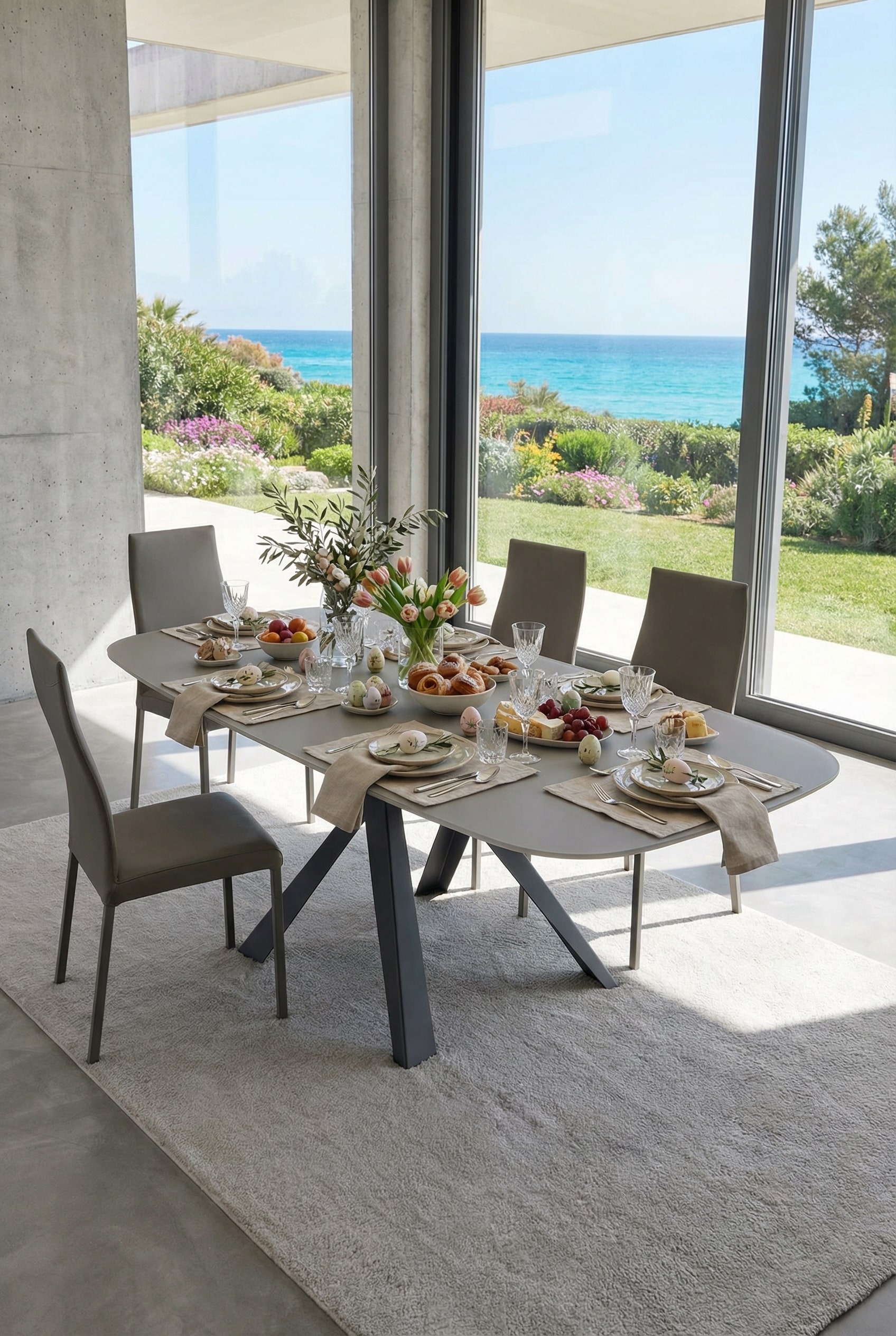
The classic rectangular table harbors a psychological trap that often unconsciously strikes during Easter dinner with family: the power of the head of the table. Whoever sits here automatically assumes a hierarchical position, which immediately and noticeably changes the dynamic at the table. Neighbors on the sides have to twist to talk to each other, while slightly isolated groups form at the other end. This asymmetrical communication is a common, but rarely recognized, trigger for family tension.
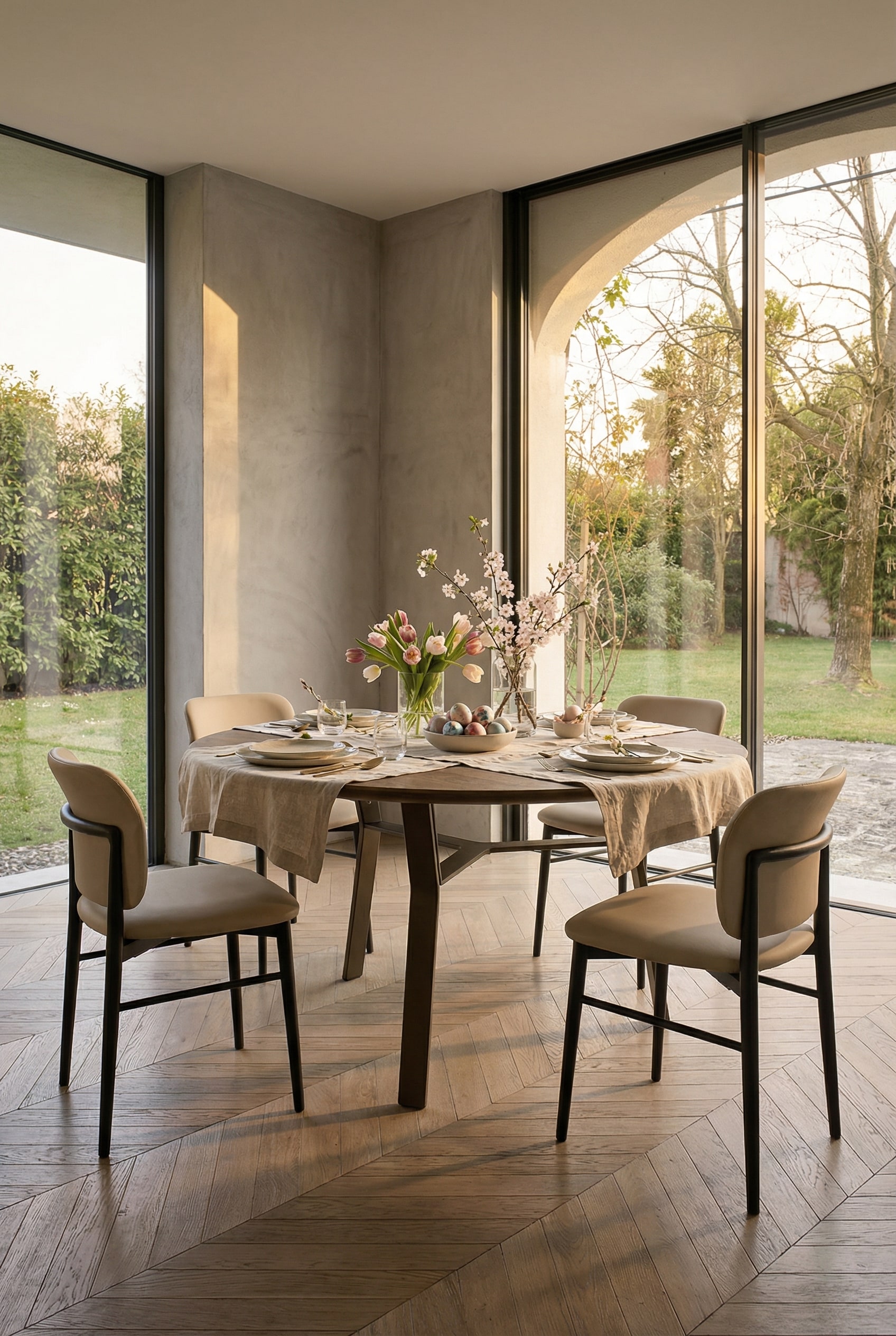
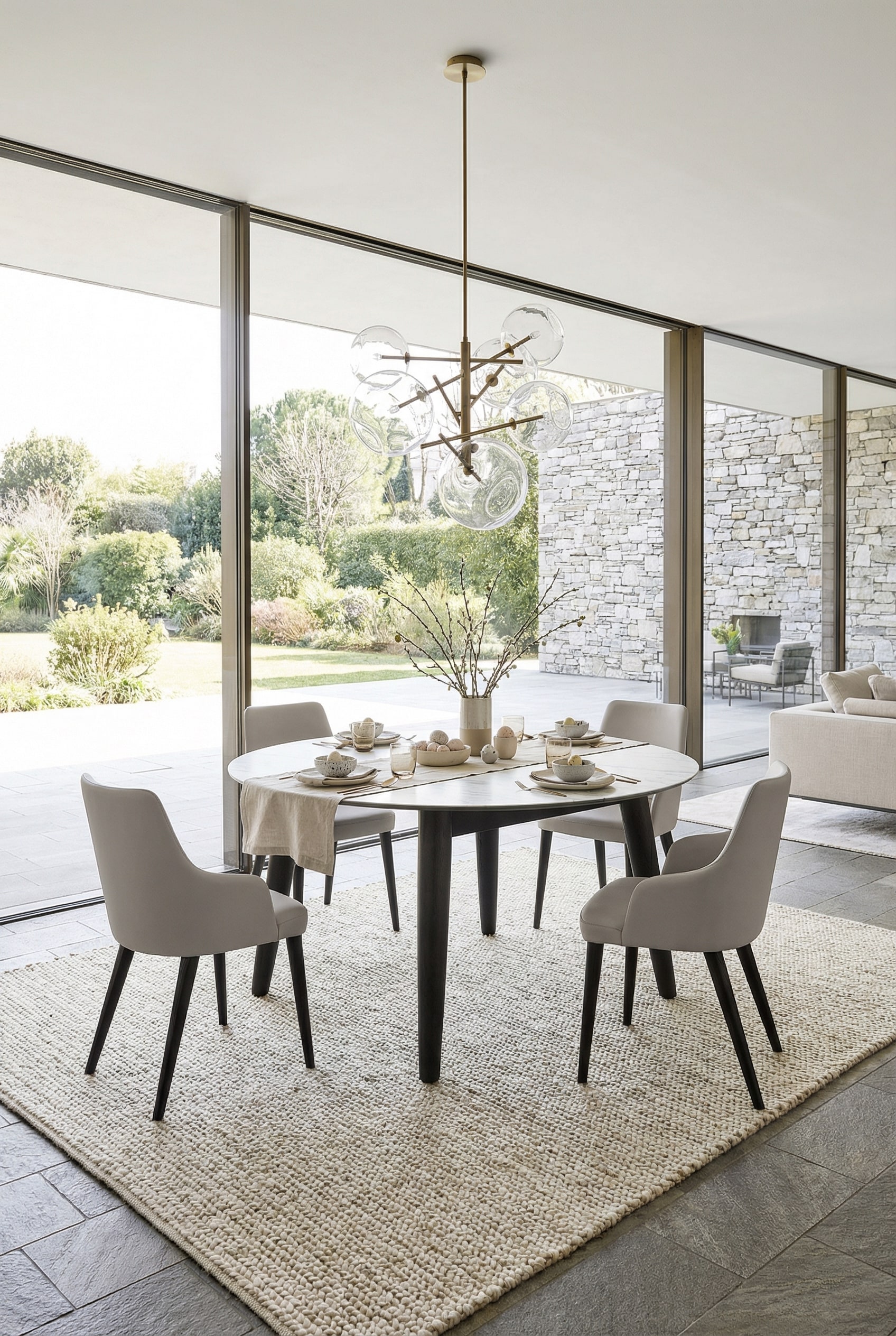
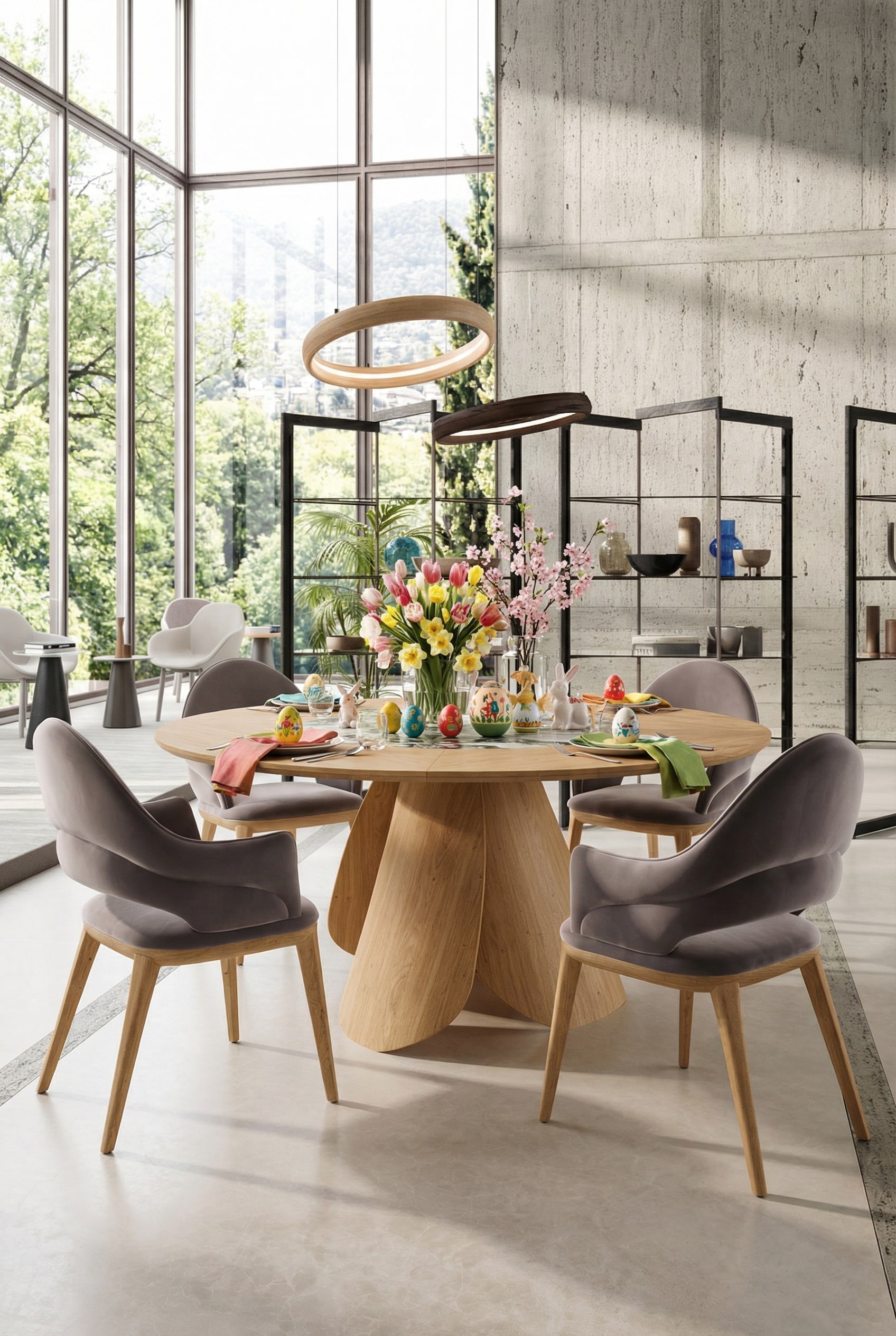
The solution from modern interior design is as simple as it is elegant: the return to the round table shape. Here, there is no top and no bottom. Every guest is equidistant from the center, and every eye contact can be effortlessly returned. This geometric equal treatment immediately signals relaxation to our brain. The velvety-soft real wood surface takes the unconscious tension of everyday life off your shoulders and invites you to linger for hours.
Especially in square or slightly asymmetrical rooms, the round table unfolds its full magic. It breaks through the hard, straight lines of architecture and acts like a soft island of conviviality. No one feels pushed aside, and even large gatherings suddenly feel intimate and familial. It is precisely this subtle design trick that interior professionals use for communicative zones.
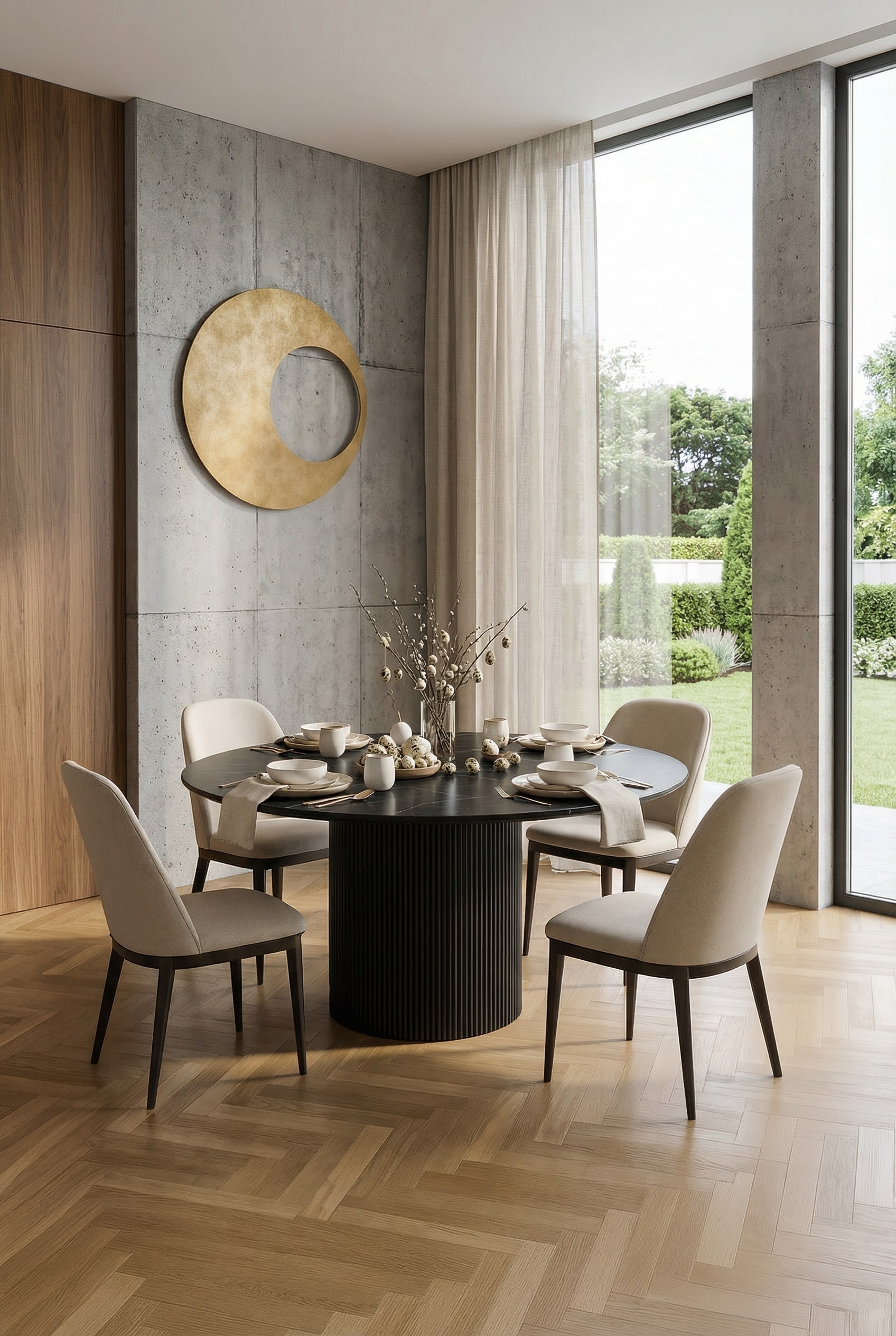
💡 Livarea Expert Tip:For round tables with a diameter of 140 centimeters or more, always ensure a central pedestal base. This way, no one will collide with annoying table legs, which maximizes legroom and noticeably lifts the guests' mood.
🛋️ Furniture Tip for Flowing Communication: The Ozzio Veliero Round Dining Table masterfully solves this very problem with its sculptural, central base and brings weightless, organic harmony to any upscale dining room.