













- Floating Elegance: 4 Ingenious Styling Ideas for the Floating Dresser
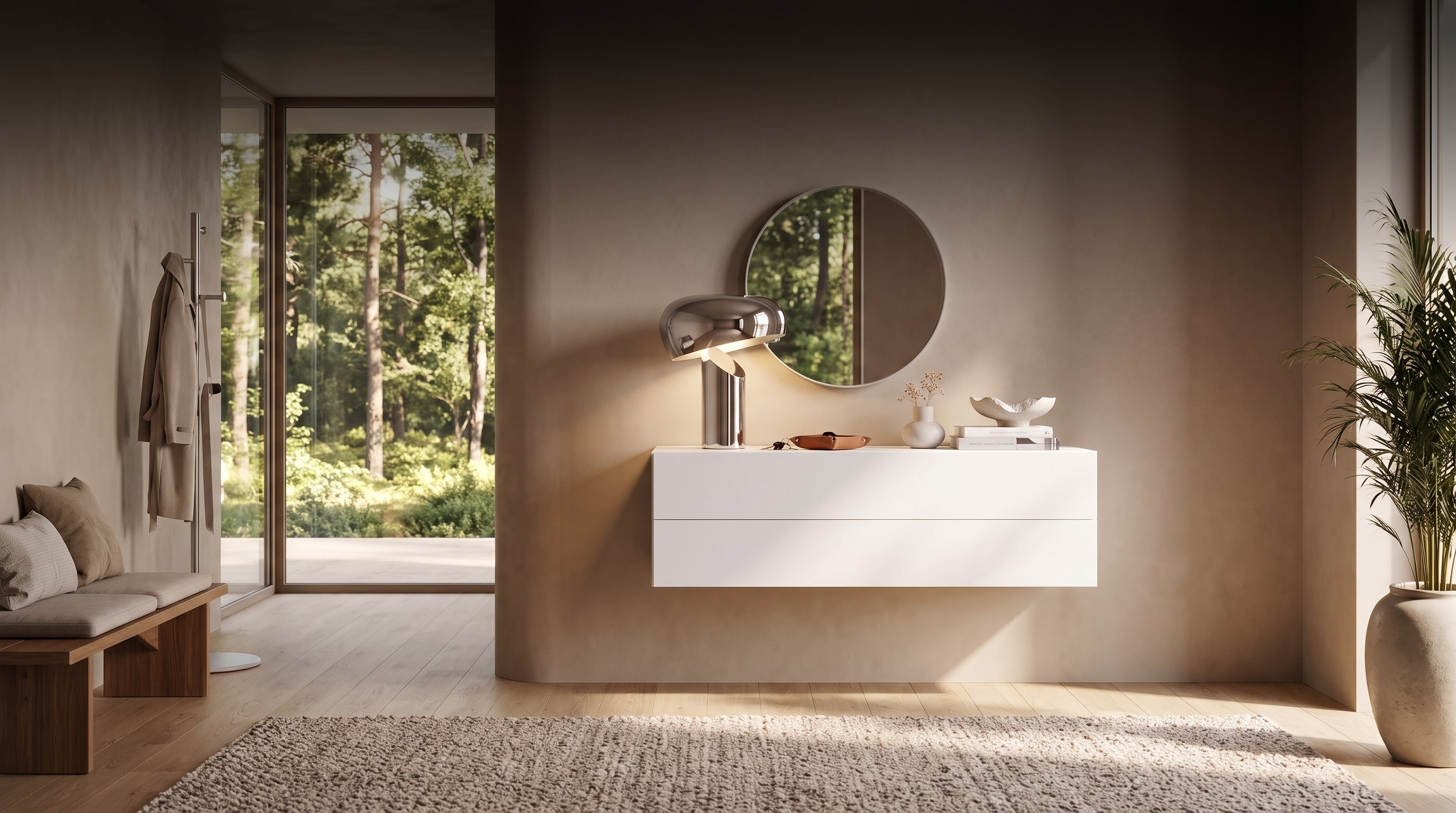 Floating Elegance: 4 Ingenious Styling Ideas for the Floating DresserDiscover four smart styling ideas for how floating furniture can enlarge narrow hallways and transform into an elegant vanity in the bedroom.
 - New in Store: Livitalia Fiocco Coffee Table & The Organic Design Trend
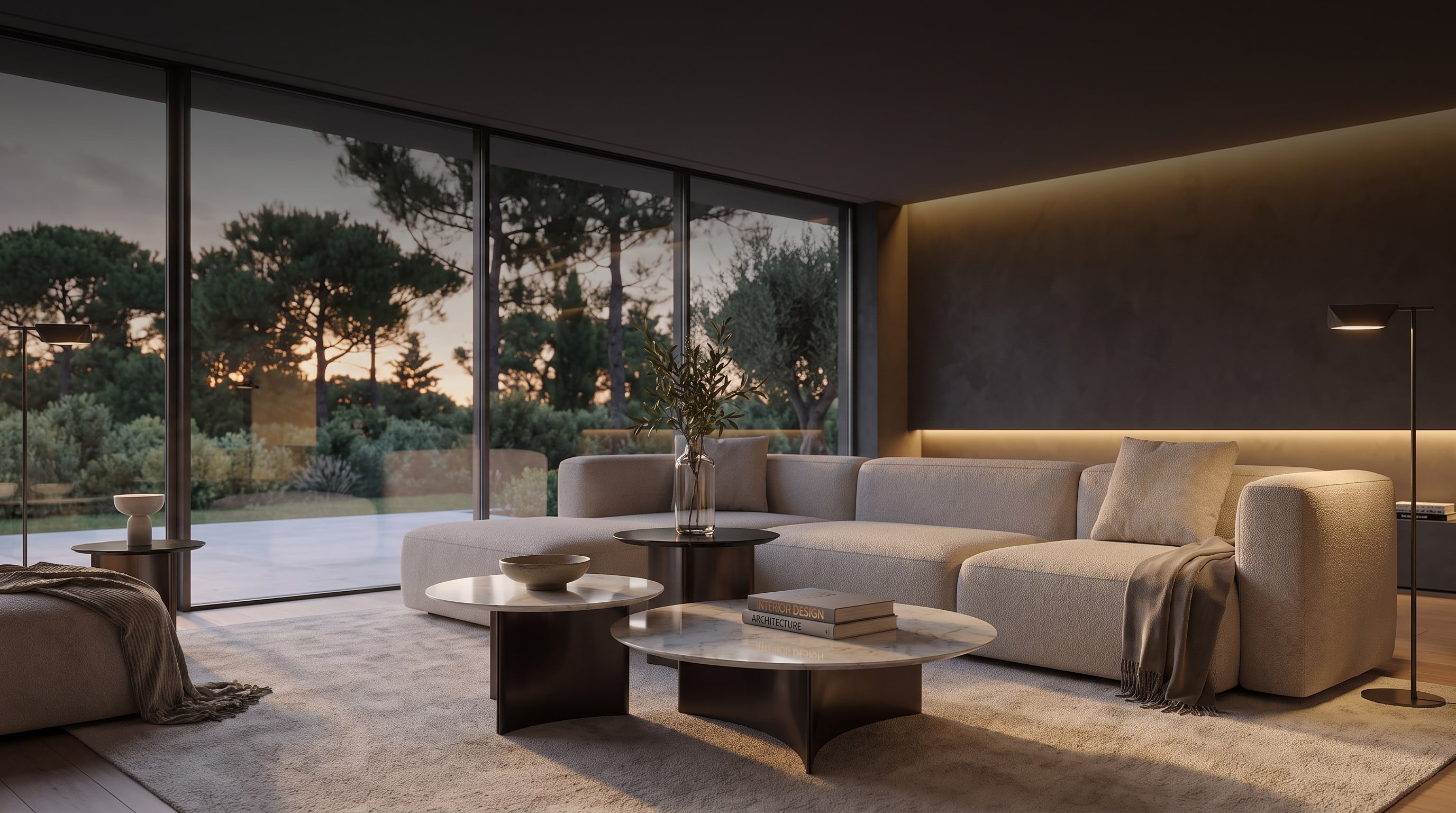 New in Store: Livitalia Fiocco Coffee Table & The Organic Design TrendDiscover how sculptural design and robust high-tech ceramic merge in an exclusive furniture piece. The Livitalia Fiocco coffee table redefines living space aesthetics.
 - Designing a Modern Dining Room: 14 Ideas from Table to Sideboard
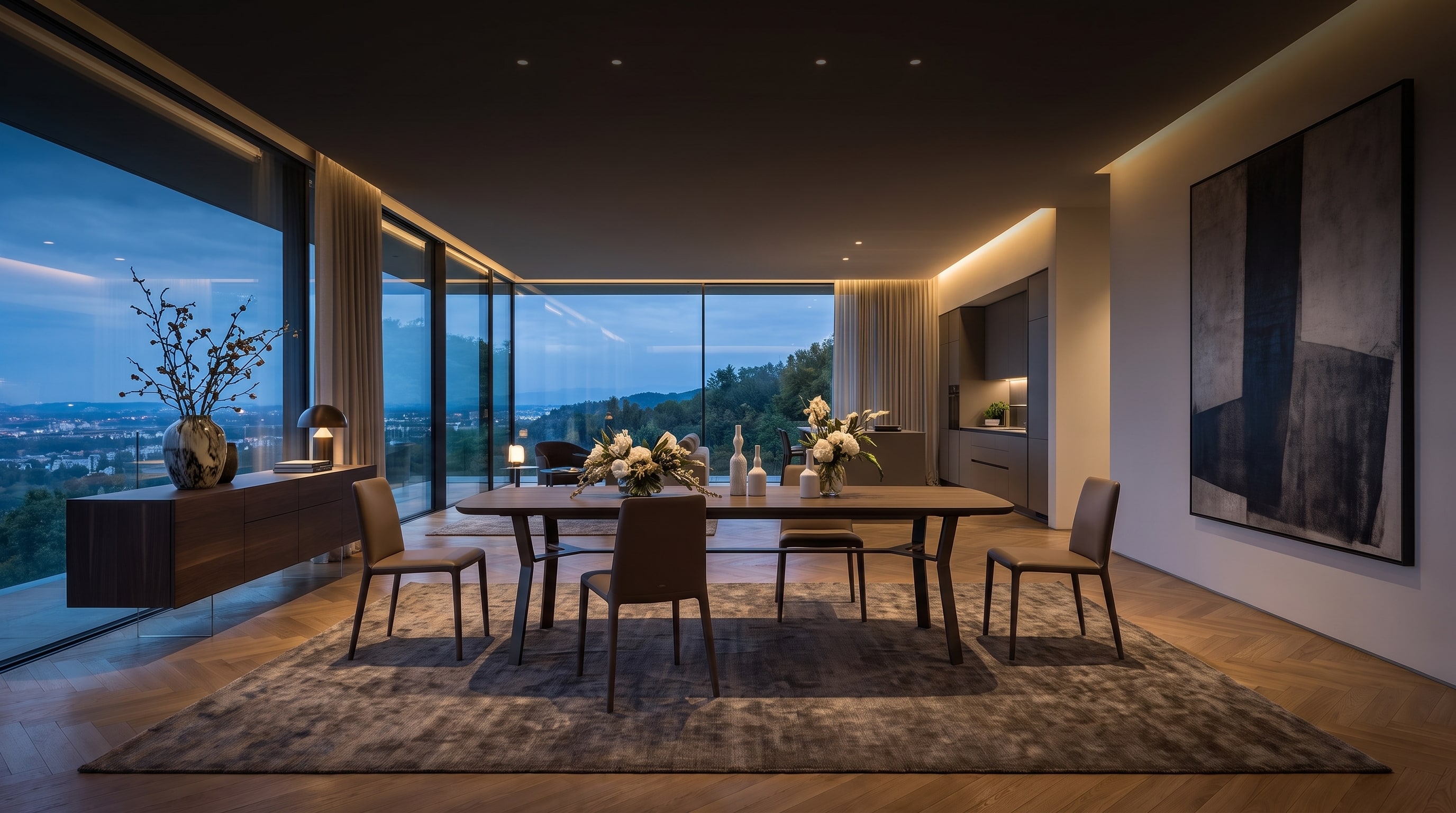 Designing a Modern Dining Room: 14 Ideas from Table to SideboardThe modern dining room has transformed from a purely functional space into the stylish heart of the home. Discover concrete guidelines and furniture choices to create a luxurious, inviting design, from the perfect dining table to the matching side board.
 - Media Wall Fireplace: The Designers' Hidden Rule
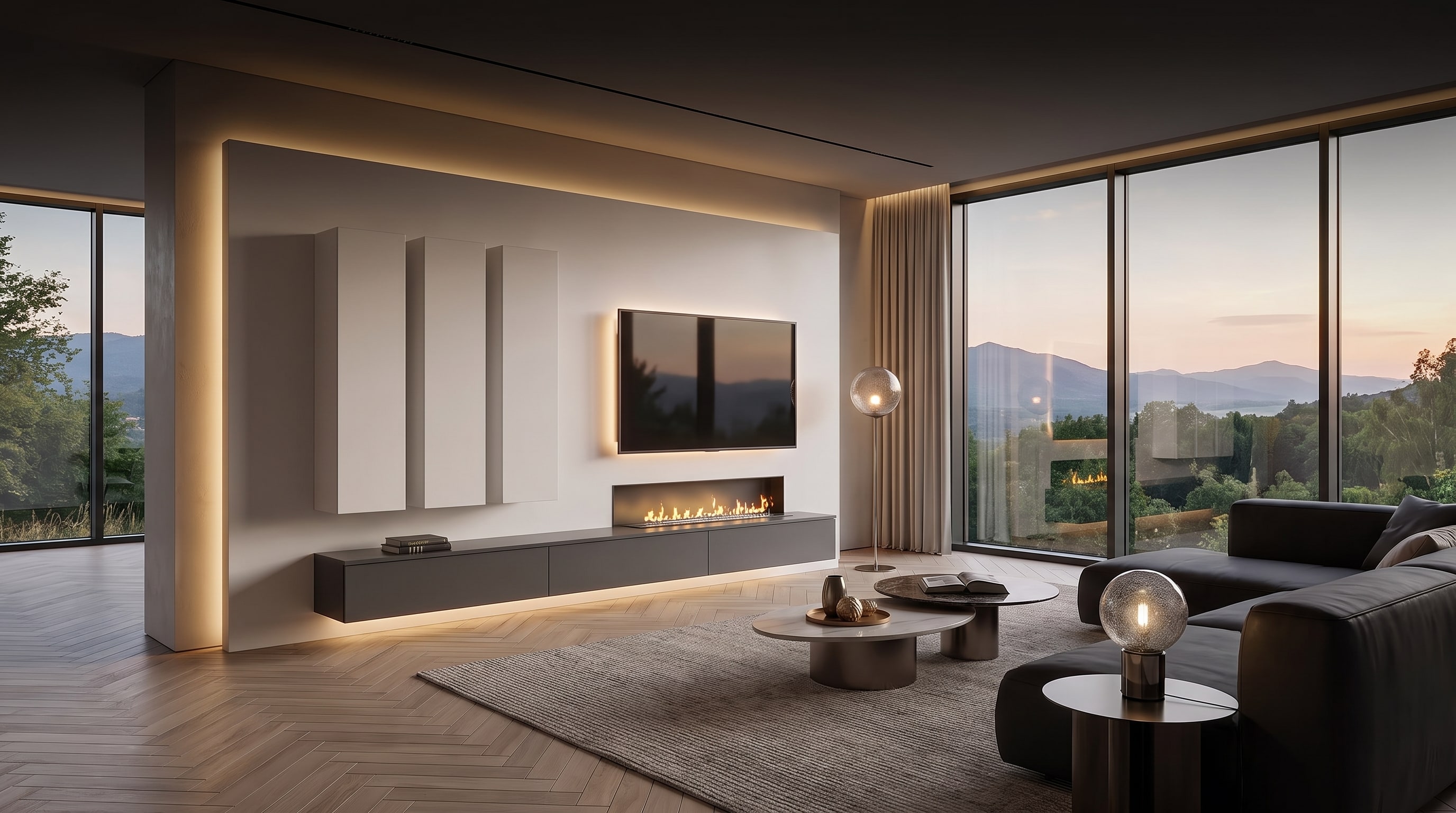 Media Wall Fireplace: The Designers' Hidden RuleFireplace and television are the strongest visual focal points in a room. This practical guide reveals how to elegantly combine them in a media wall and which materials achieve the best architectural effect.
 - Premium Office Furniture: The Hidden Design for Deep Focus
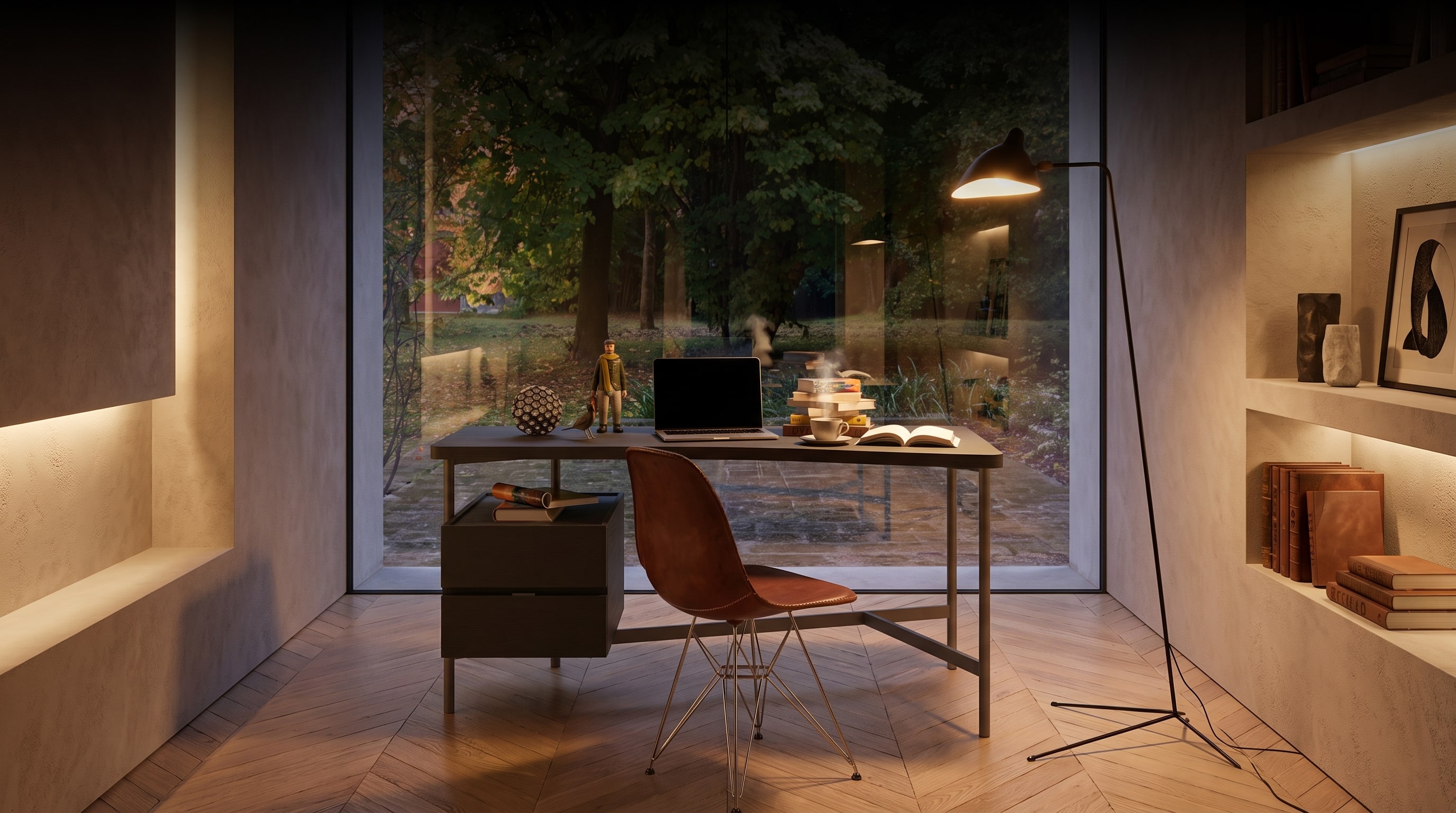 Premium Office Furniture: The Hidden Design for Deep FocusThe workspace as a luxurious statement: How dark oak, flush design, and ergonomic perfection transform the home office into a place of absolute focus.


What are the advantages of veneered chipboard/MDF over solid wood?
When it comes to furniture, wood isn't always just wood. This often leads to misunderstandings when shopping in-store or on an online shop's website. Two camps often emerge: some consider solid wood to be superior, while others deem veneered chipboard to be inferior. In this trend blog post, we aim to shed light on and explain why veneered wood panels – especially for designer furniture – have advantages over their solid wood counterparts.
Old Clichés about Chipboard
When it comes to "chipboard", everyone thinks of harmful emissions. However, the current formaldehyde content of such a wood panel is extremely low. It doesn't even reach the value of an apple (approx. 7 mg). Modern chipboard is sold with E1 class quality. This means for the customer that no more health-hazardous emissions are released. As a certified wood-based material, it must not emit more than 0.124 mg/m³ (0.1 ppm) of formaldehyde.
We live in a time where great importance is placed on increased environmental awareness. Here, chipboard is often considered harmful. However, the opposite is true: more chipboard panels can be produced from a single tree than solid wood panels. They were developed precisely to maximise the utilisation of wood material. As a result, chipboard is much more sustainable than solid wood and its products. While the utilisation rate of a tree used to be only 40%, this value can now be increased to 80%. This demonstrates the efficiency in handling the renewable resource wood.
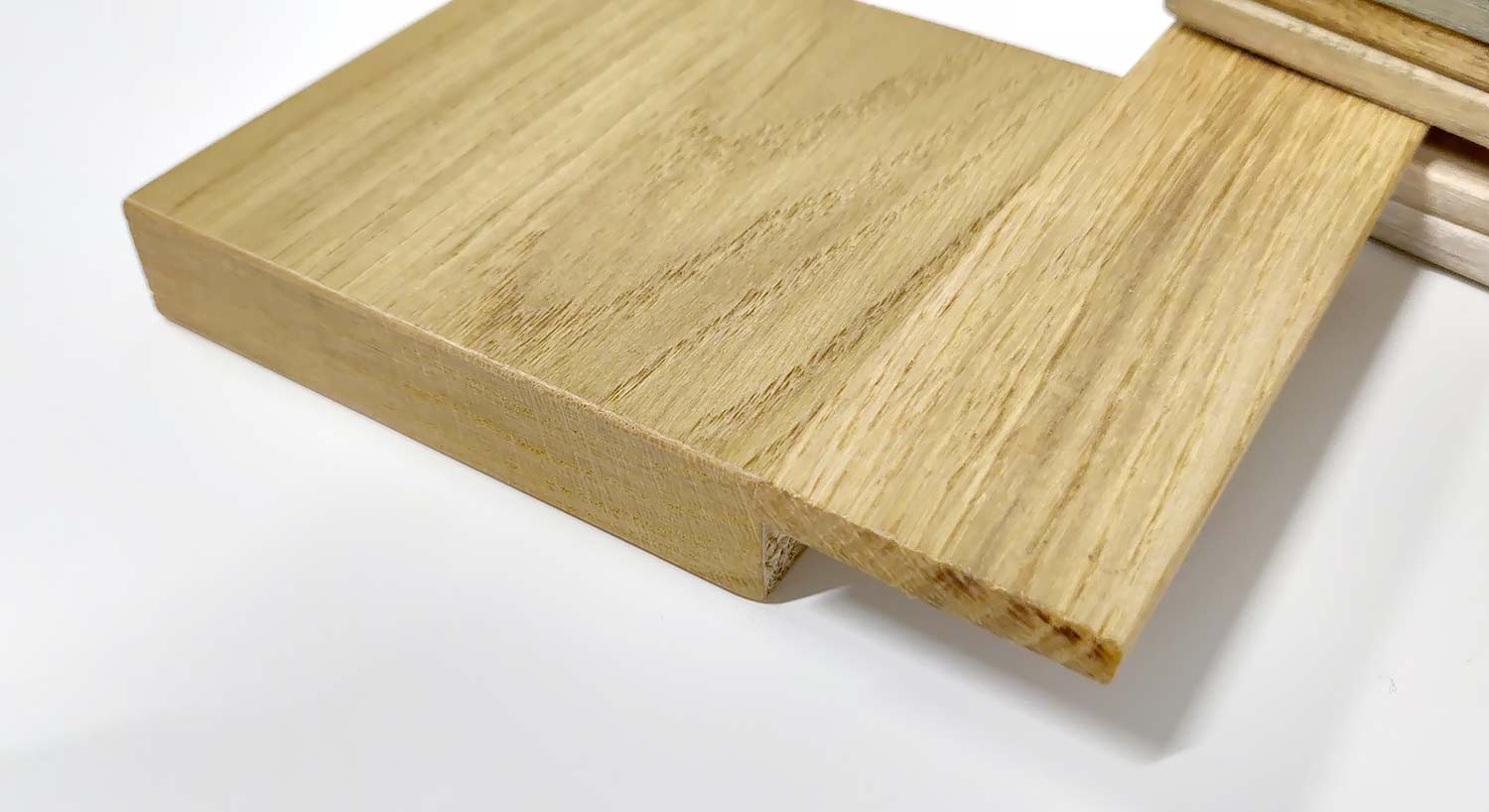
Veneer Solid Wood Comparison – left veneer, right solid wood
What is the difference between chipboard and MDF?
Chipboard consists of glued wood chips. They are pressed into shape during manufacturing. In contrast, MDF panels are made of glued fibres, which are also pressed into panels. For the customer, the visual difference is not apparent from the outside. However, this doesn't matter, as only the area of application and purpose are important here. One cannot say that a chipboard or an MDF panel is better, because it depends on the application area.
Advantages
- of chipboard:
- low weight (e.g. for high-quality wall cabinets)
- thin thickness possible (e.g. for panels, delicate fronts)
Advantages of MDF panels:
- high load-bearing capacity/stability due to high density (e.g. for table tops, large wardrobe doors, shelves)
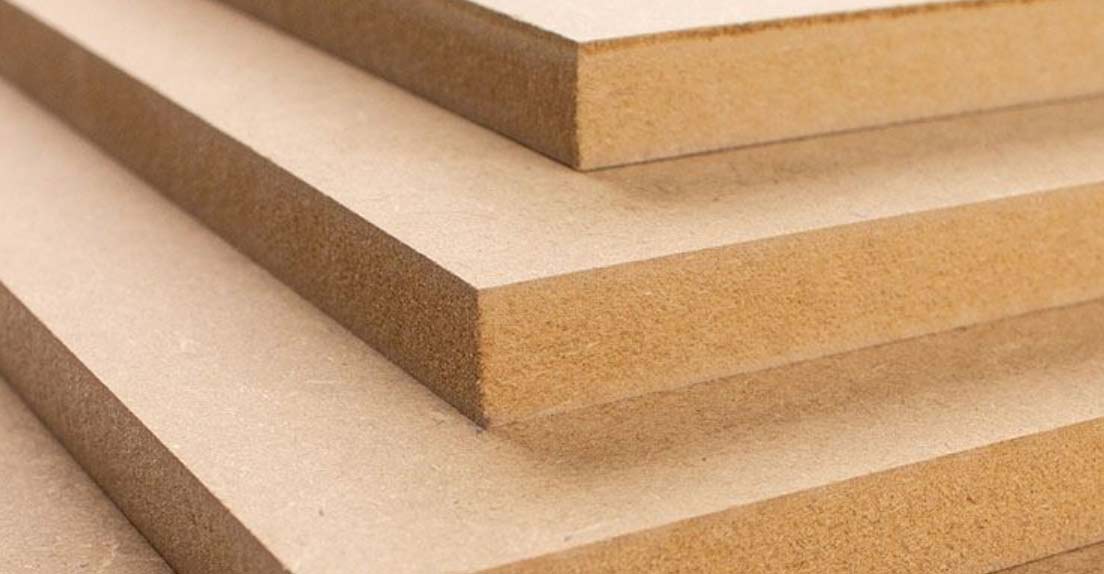
MDF Cross-section – without veneer
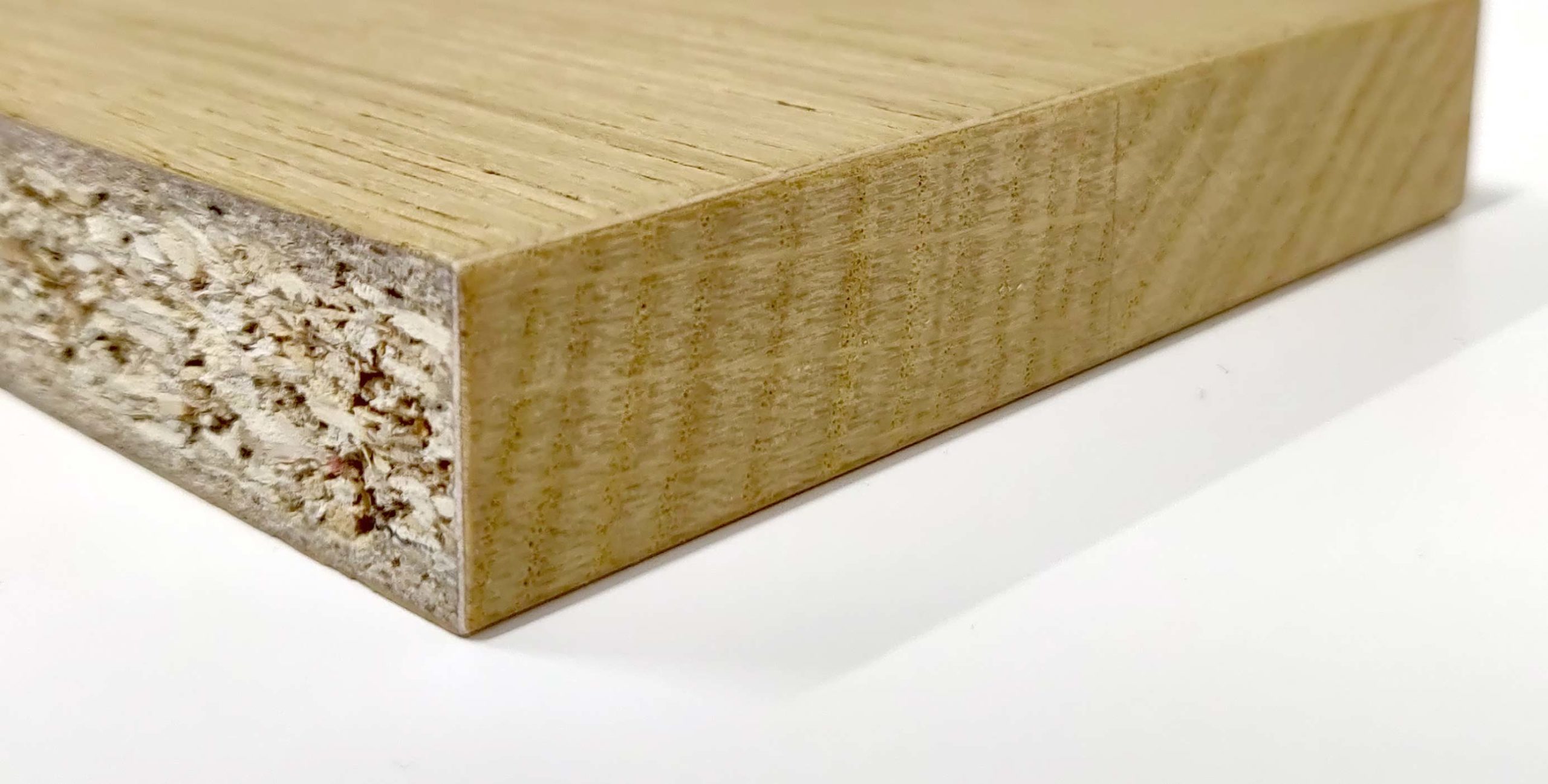
Veneered Chipboard Cross-section
Current State of Production Technology
Chipboard is a German invention. In the 1930s, Max Himmelheber developed a way to increase the utilisation rate of trees. This involved using branches, sawdust, and wood chips. The basic principle remains the same today, only the production process has changed. Nowadays, there are fewer chips and less glue in the panels. This leads to a weight saving of 30%. In addition, the ingredients have been optimised, and the pollutant content reduced. European legislation has further favoured this direction and development.
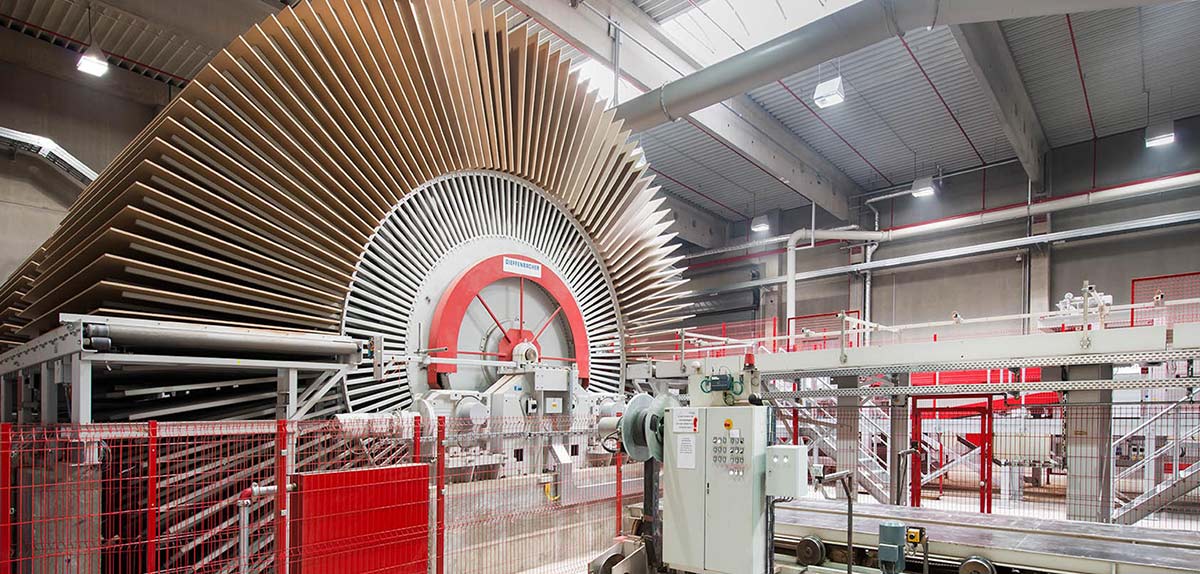
Chipboard Production Pfleiderer Holzwerkstoffe GmbH – Source: www.pfleiderer.com
Why is Chipboard so Popular?
Lacquered furniture is not made of solid wood, because one wants to see the naturalness of this wood. Many customers would like to acquire such a piece of furniture. But the effort would be much higher, and after such a measure, nothing of the beautiful solid wood would be visible.
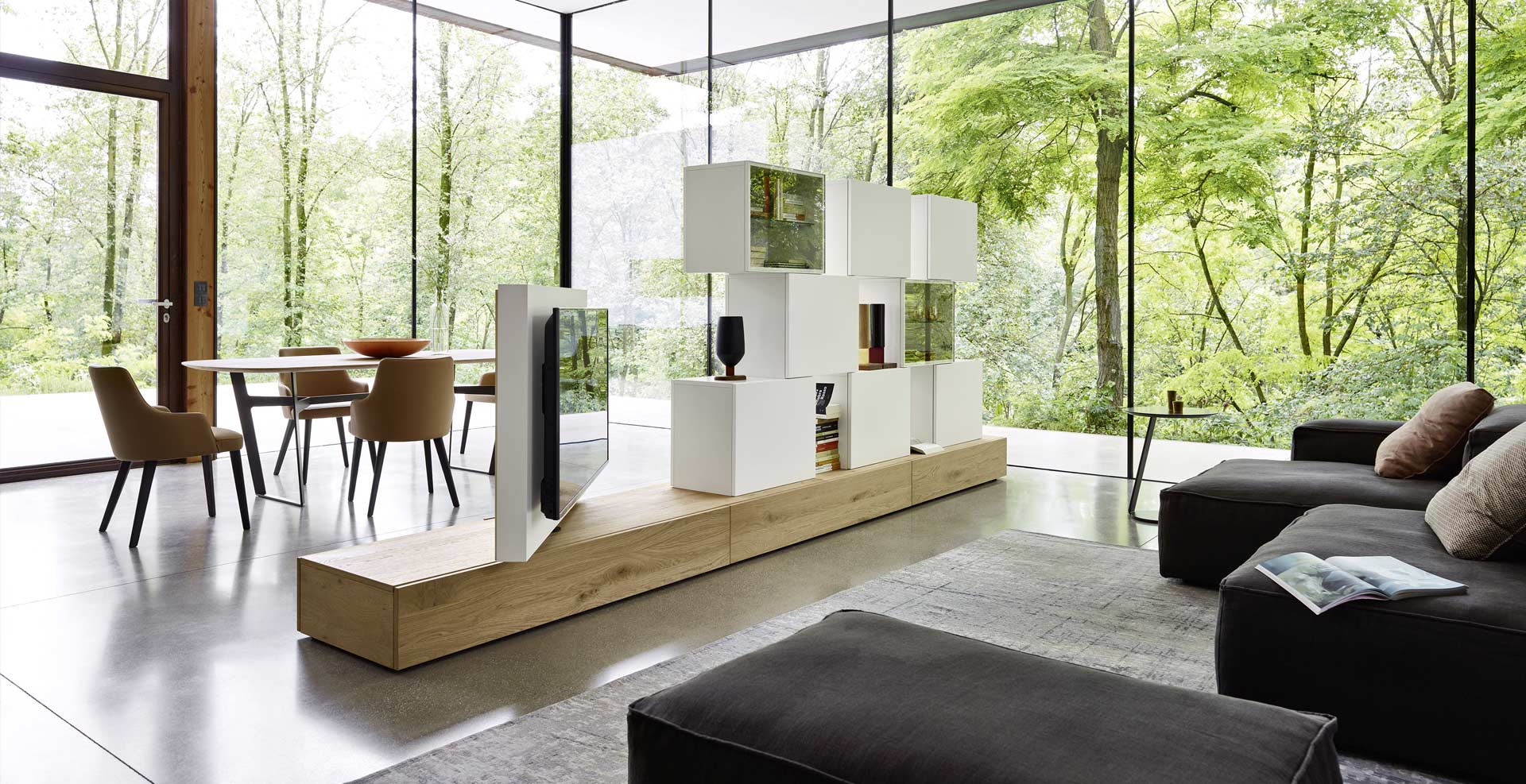
Chipboard is better and more popular due to two things: bonding with pore-free melamine or veneering with real wood. Both variants offer versatile application possibilities depending on the area. Pore-free melamine forms the perfect base for a good lacquer finish. The refinement of a wood chip-pressed panel with real wood veneer is a good alternative to solid wood panels. Real wood veneer is a high-quality natural product. The wafer-thin wood sheets cut from tree trunks form the basis for veneering. Here, lightweight wood panels are glued with the veneer wood and thus refined. The beautiful wood look is particularly evident through the visible grain and a tactile structure on the piece of furniture.
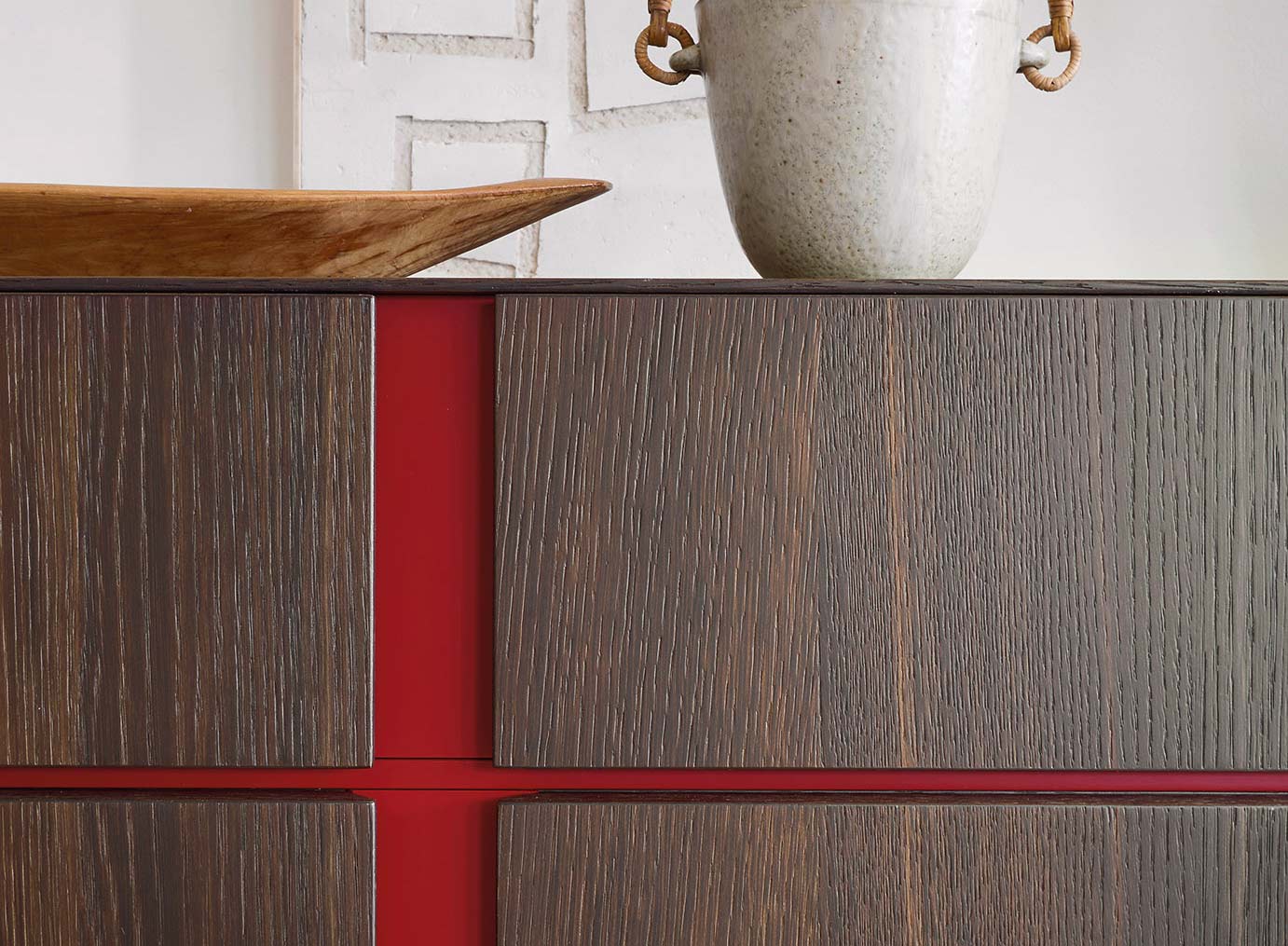
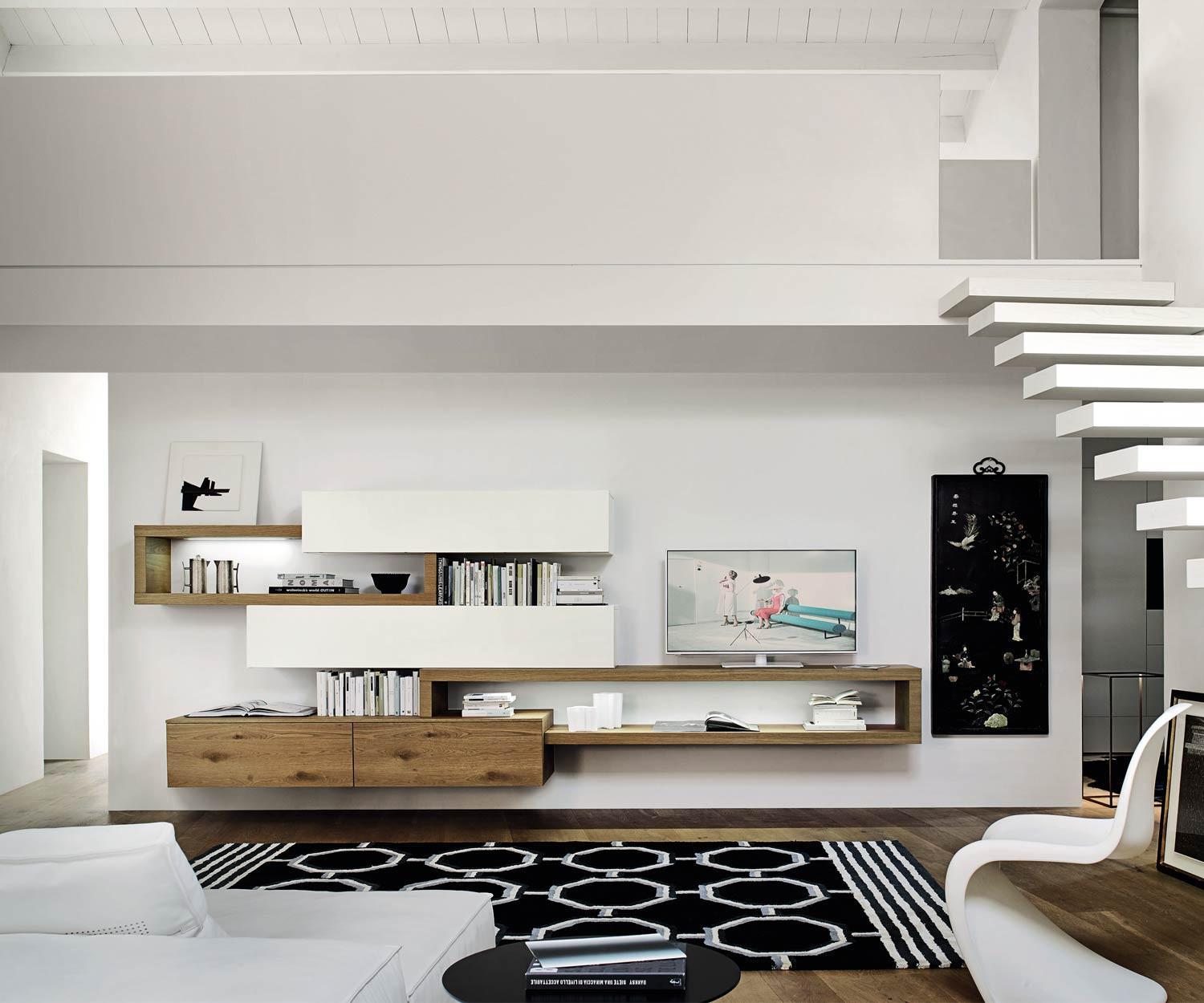
Veneered Front of a Designer Sideboard
Why is Veneered Chipboard Better than Solid Wood in Some Areas?
Designer furniture involves very specific constructions and forms. Here, veneered chipboard scores with its flexibility. In contrast to solid wood, it allows for the production of different thicknesses and easier processing. The result is more functional products. Furthermore, wall-mounted furniture also plays a significant role. A shelf or wall cabinet made entirely of solid wood would be too heavy. Veneered chipboards have a lower weight. Therefore, veneered furniture is also lighter compared to solid wood furniture. Due to their special static properties, they do not warp with temperature fluctuations and do not develop cracks. Thus, drawers and doors remain permanently operable even with small gaps. This is in contrast to solid wood, where the "wood works".
Another aspect is the already mentioned environmental protection, meaning that veneered chipboard is more ecological than solid wood panels.
Solid Woods: Are beautiful for nature lovers, otherwise durable, robust, and improve the indoor climate.
Veneered Chipboards: Are versatile, lightweight, surface-finished, coated, compacted, sealed, water-repellent, sustainable, and low-emission.
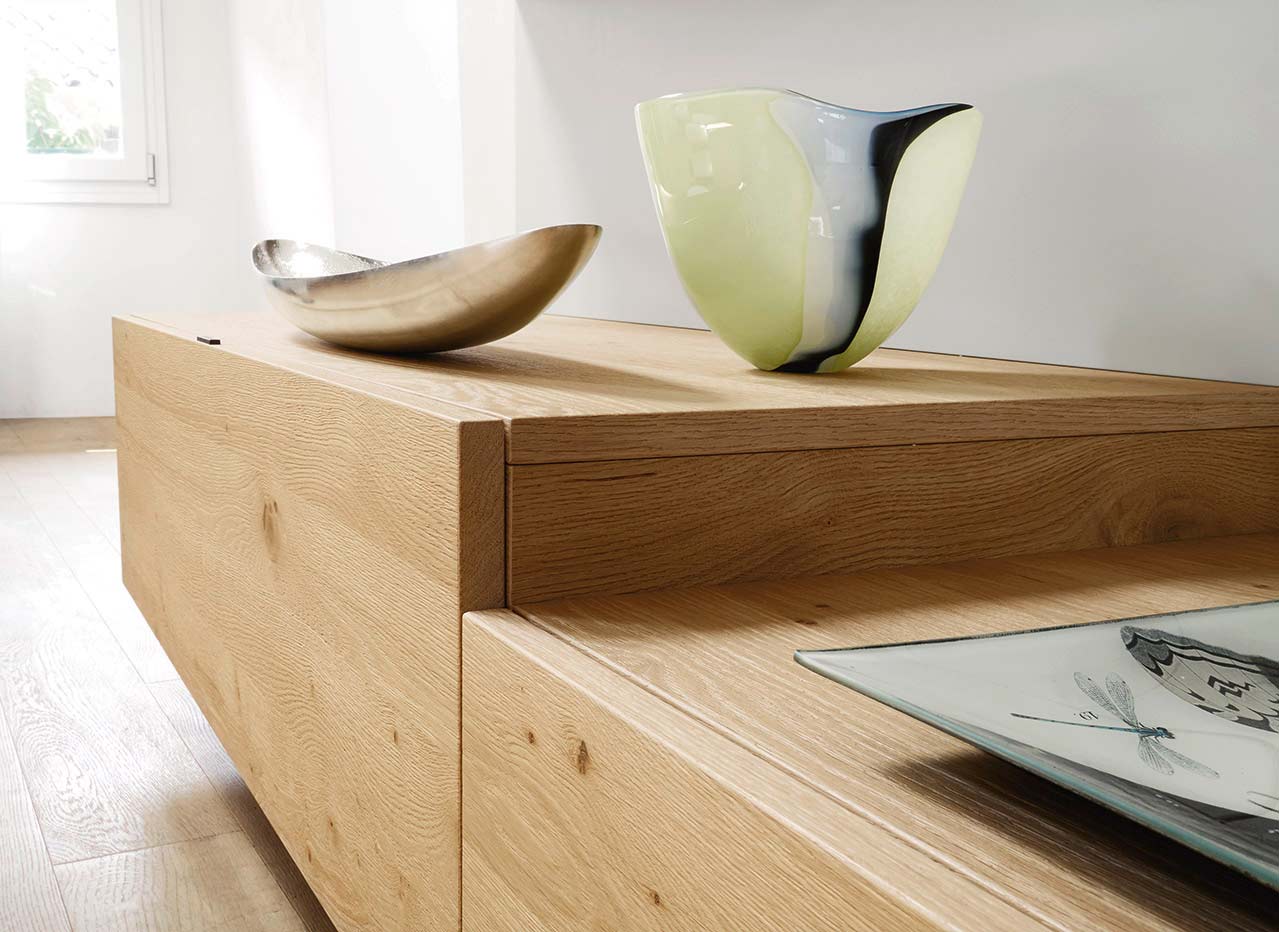
Veneered furniture piece with natural grain and knot inclusion
Conclusion: Today's veneered chipboards enable lightweight yet stable veneered wood furniture for very specific designs and requirements. These pieces of furniture do not warp and do not develop cracks. The quality has been greatly improved, and the pollutant content extremely reduced. Therefore, it is no coincidence that 71% of furniture produced in Europe is made from refined chipboard or MDF panels.

Mira Celini
Interior Designer at LivareaAs an interior designer at Livarea – since 2012 one of Germany's leading online shops for designer furniture – I help customers create their dream homes. My tips come straight from practice: honest, inspiring, and always with an eye for the extraordinary.
→ View all Trendblog articles