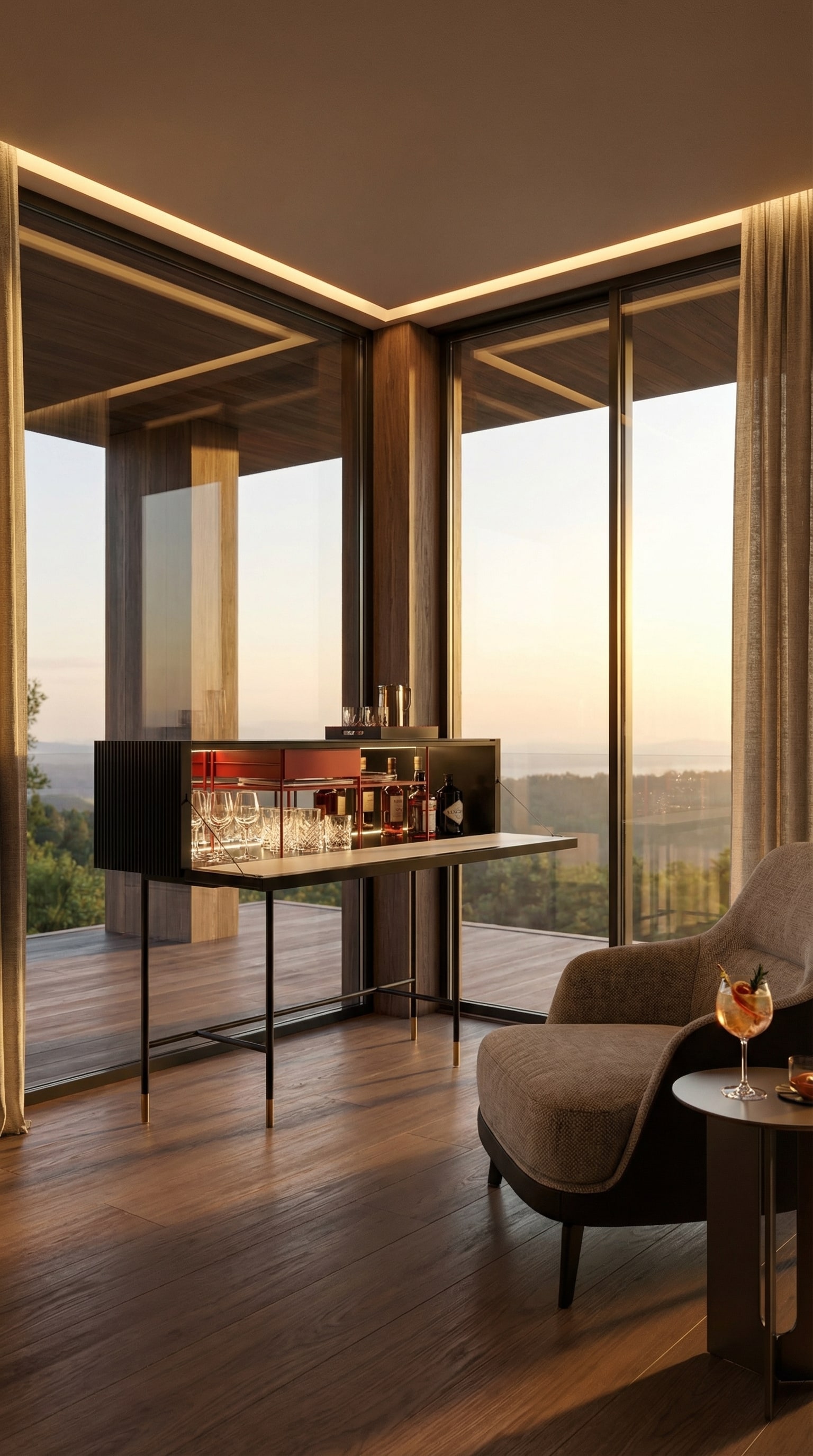











1. The 120-Centimeter Secret That Saves Empty Walls
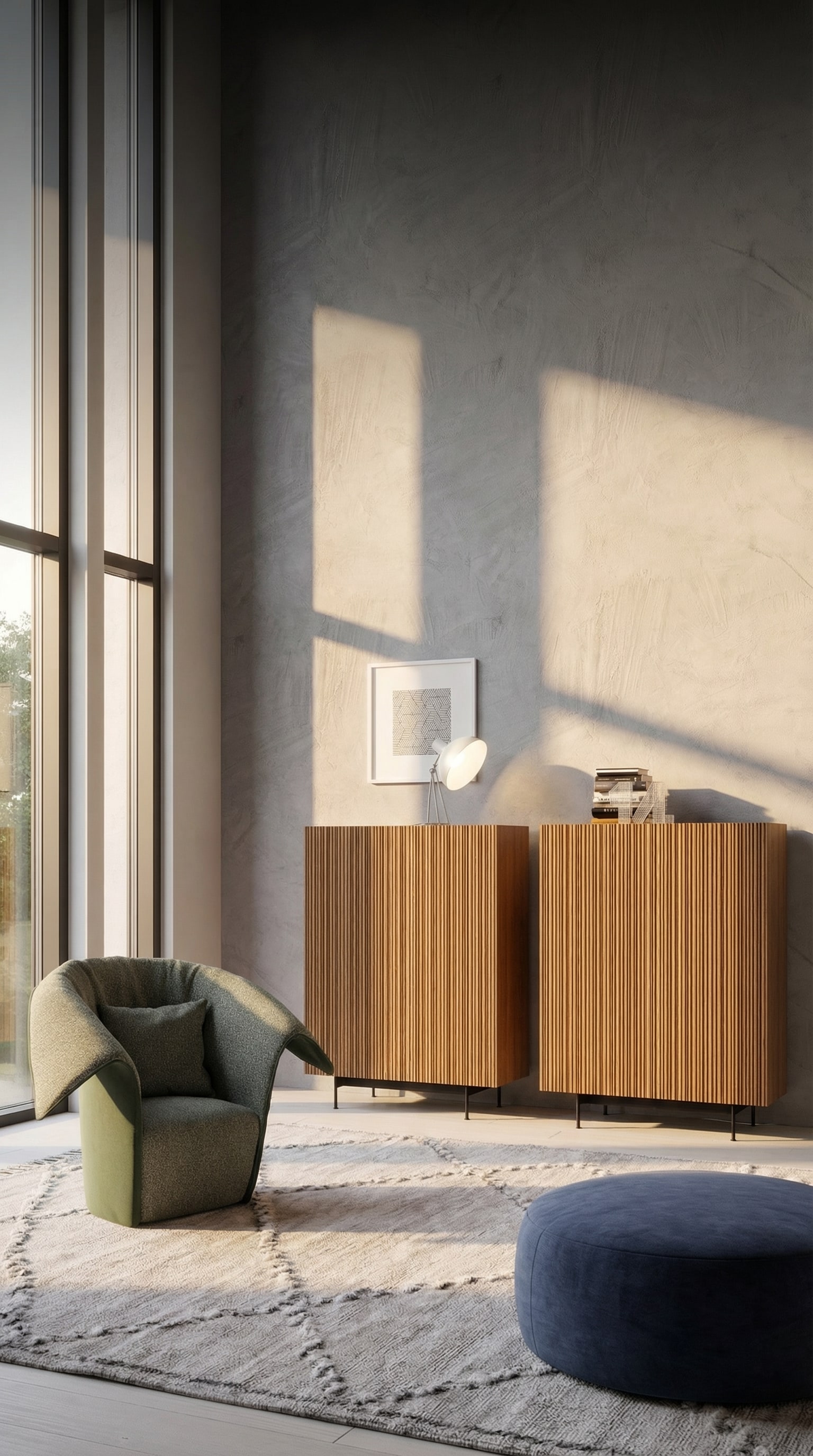
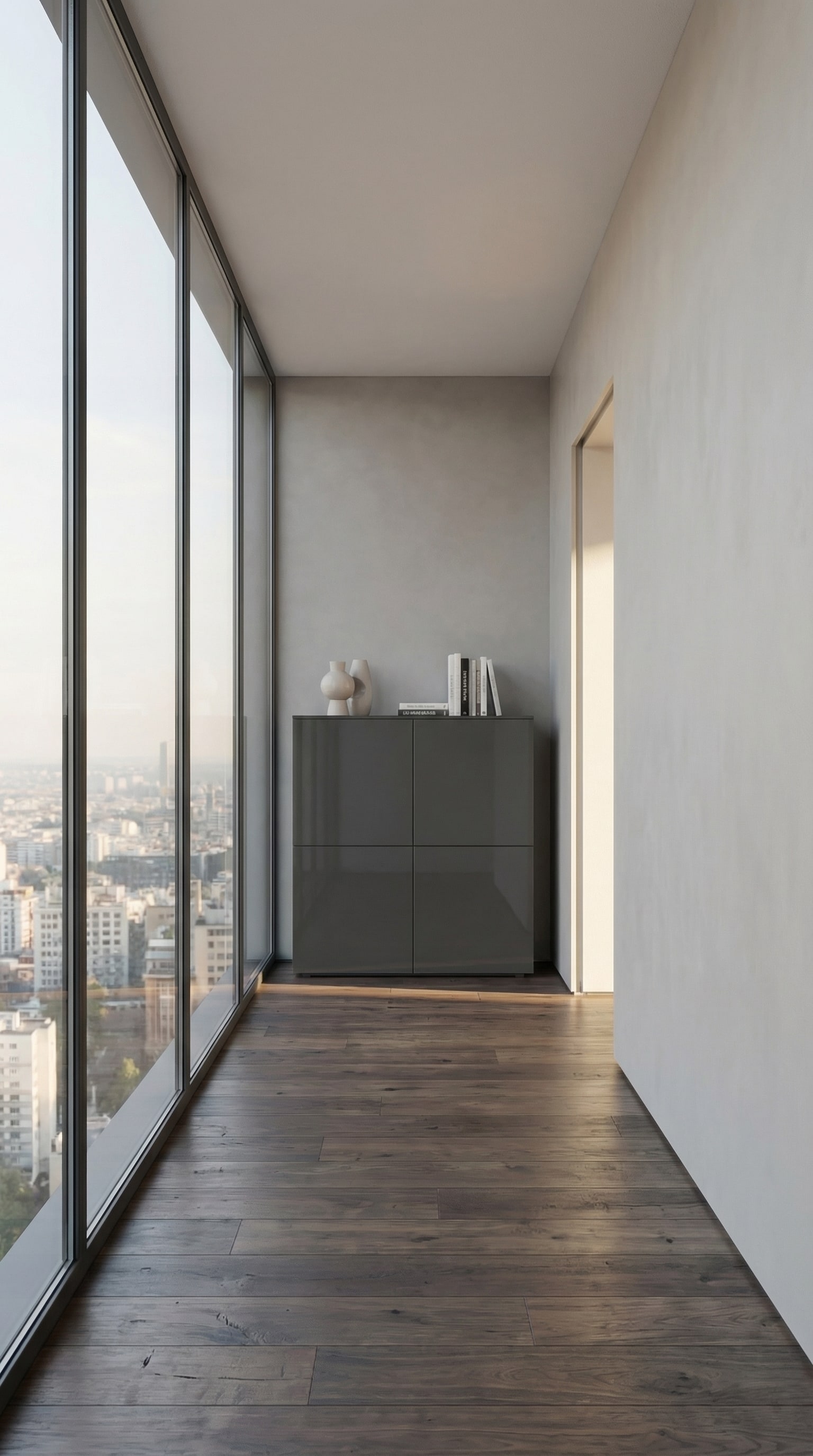
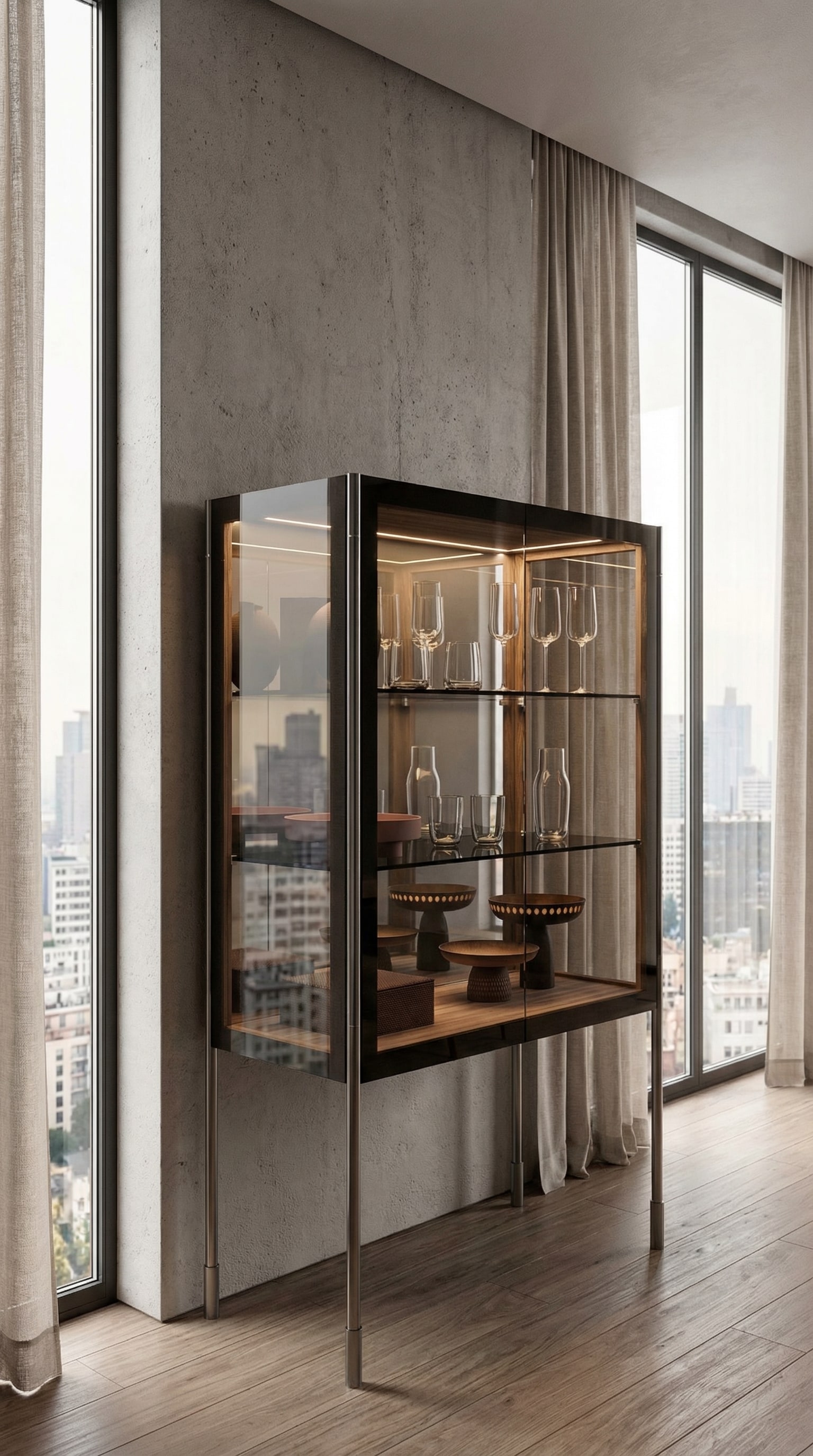
Have you ever wondered why walls in magazines always look so harmonious? The reason is a strict rule of proportion. Furniture pieces with a height of approximately 100 to 130 centimeters form the perfect visual bridge between floor and ceiling.
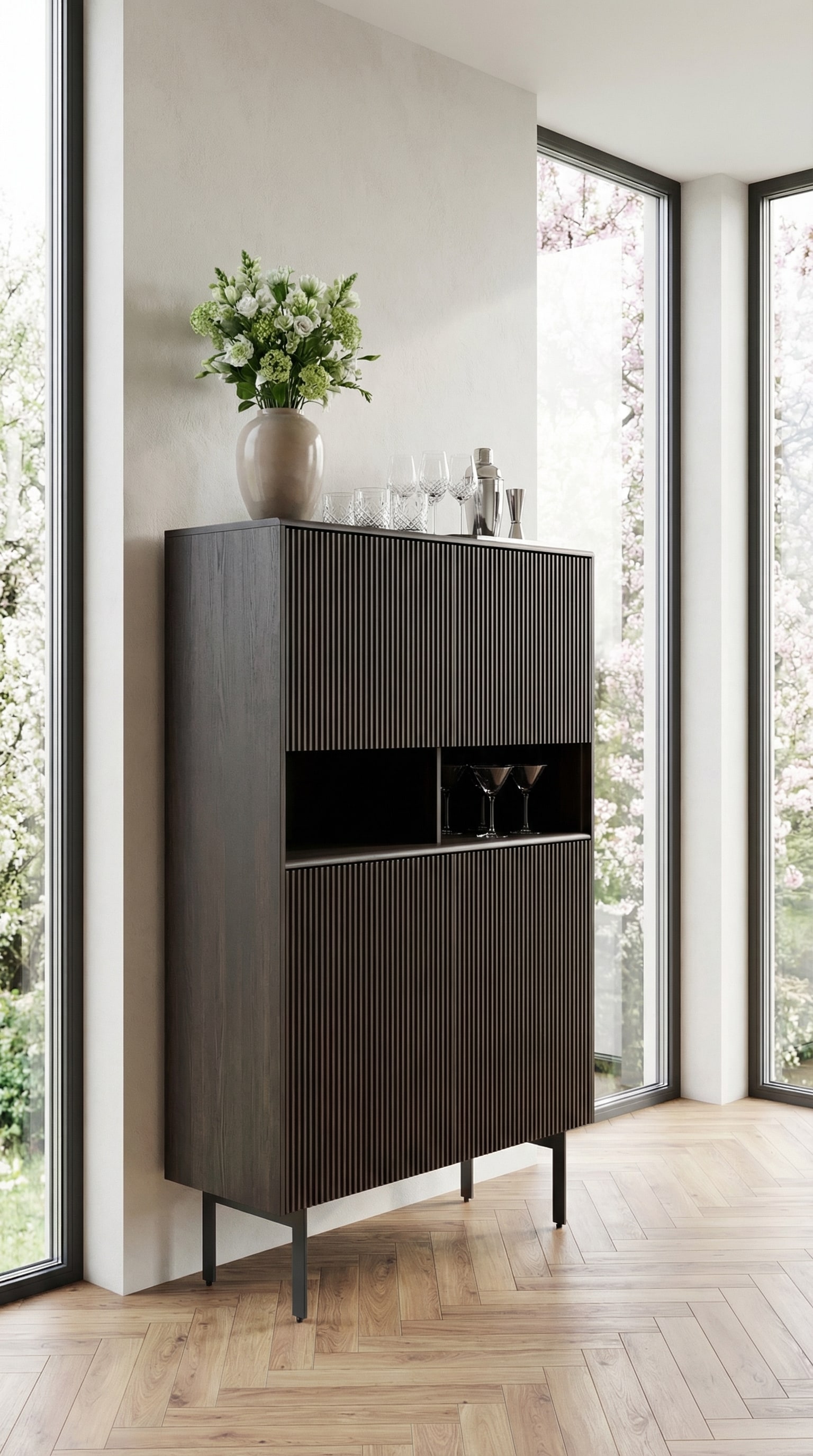
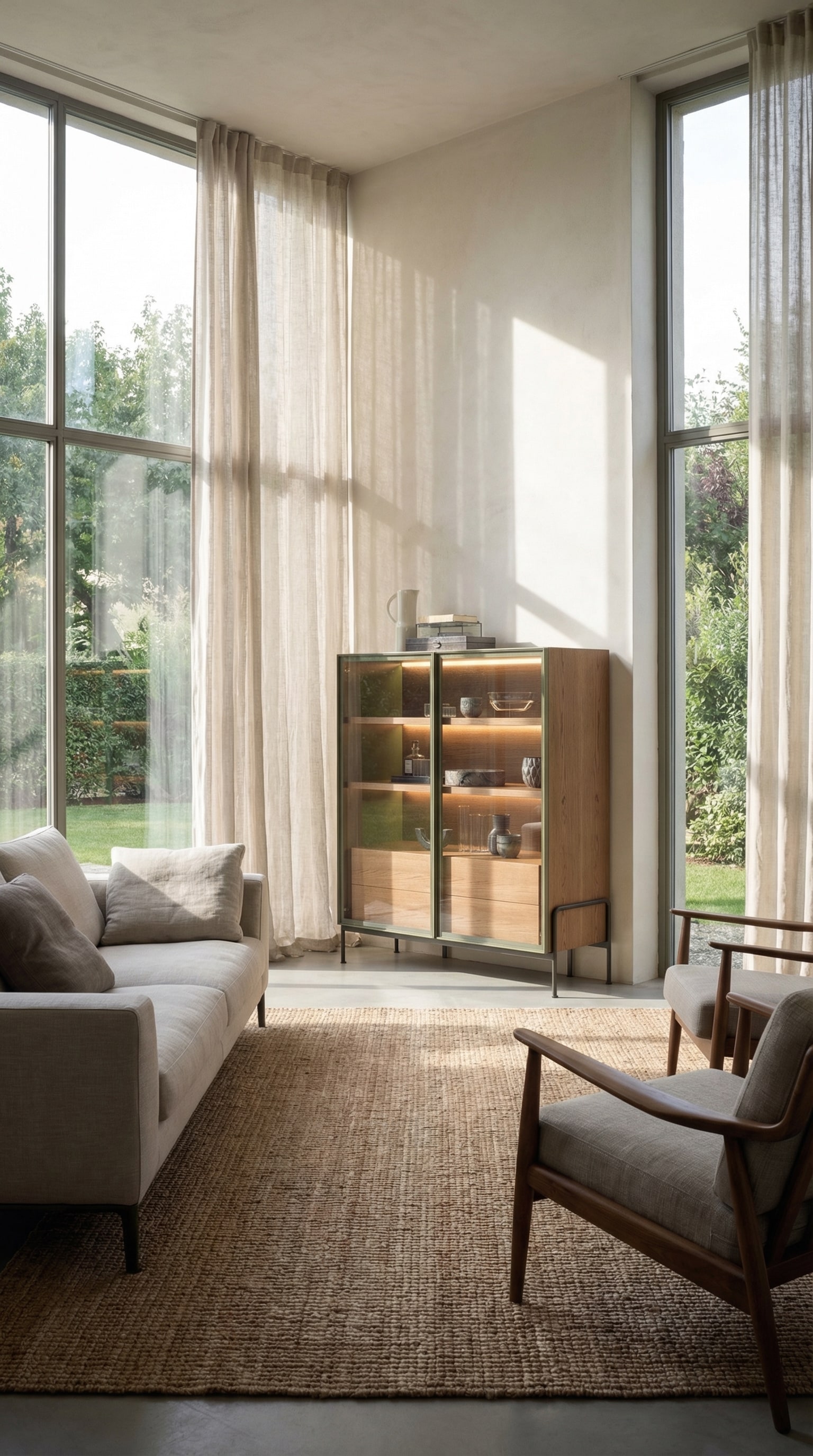
A classic low sideboard often creates too much white space above it. The eye desperately searches for an anchor point on the wall, making the room feel out of place. Soft evening light falls on the distinctive wood grain of the furniture, gently guiding the gaze into the room without compressing the ceiling height.
Especially in the dining area or a spacious living room, a living room highboard is the ideal choice. It keeps crockery within reach and elegantly breaks up the wall surface. This creates a flowing transition that allows the room to breathe, as we also show in our article on why floating furniture fascinates minimalists.
💡 Livarea Expert Tip:Do not place large-format artworks too high above the furniture piece. Leave a maximum of 15 to 20 centimeters of space so that the cabinet and picture form a visual unit.
🛠️ Here's how to do it in 3 steps:
- Measure the wall height and mark the 120-centimeter line with tape.
- From your seating position, check if the height is comfortably within your line of sight.
- Choose a piece of furniture whose top edge ends precisely in this balanced area.
🛋️ Furniture Tip for Dynamic Room Structures: The Novamobili Sideboard / Highboard Bay, with its gently rounded edges and precise fluted look, embodies precisely that weightless presence that transforms empty walls into a true design statement.