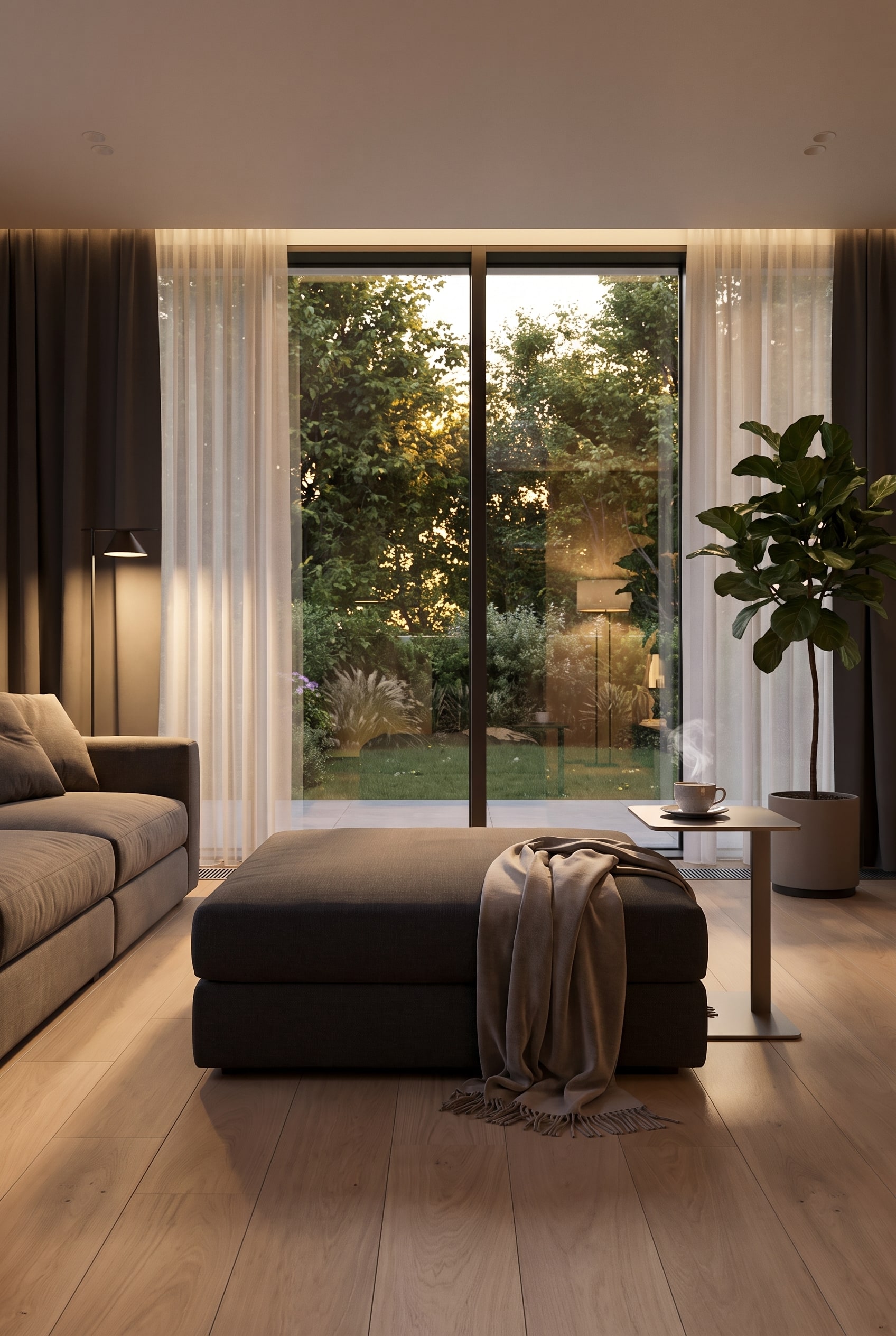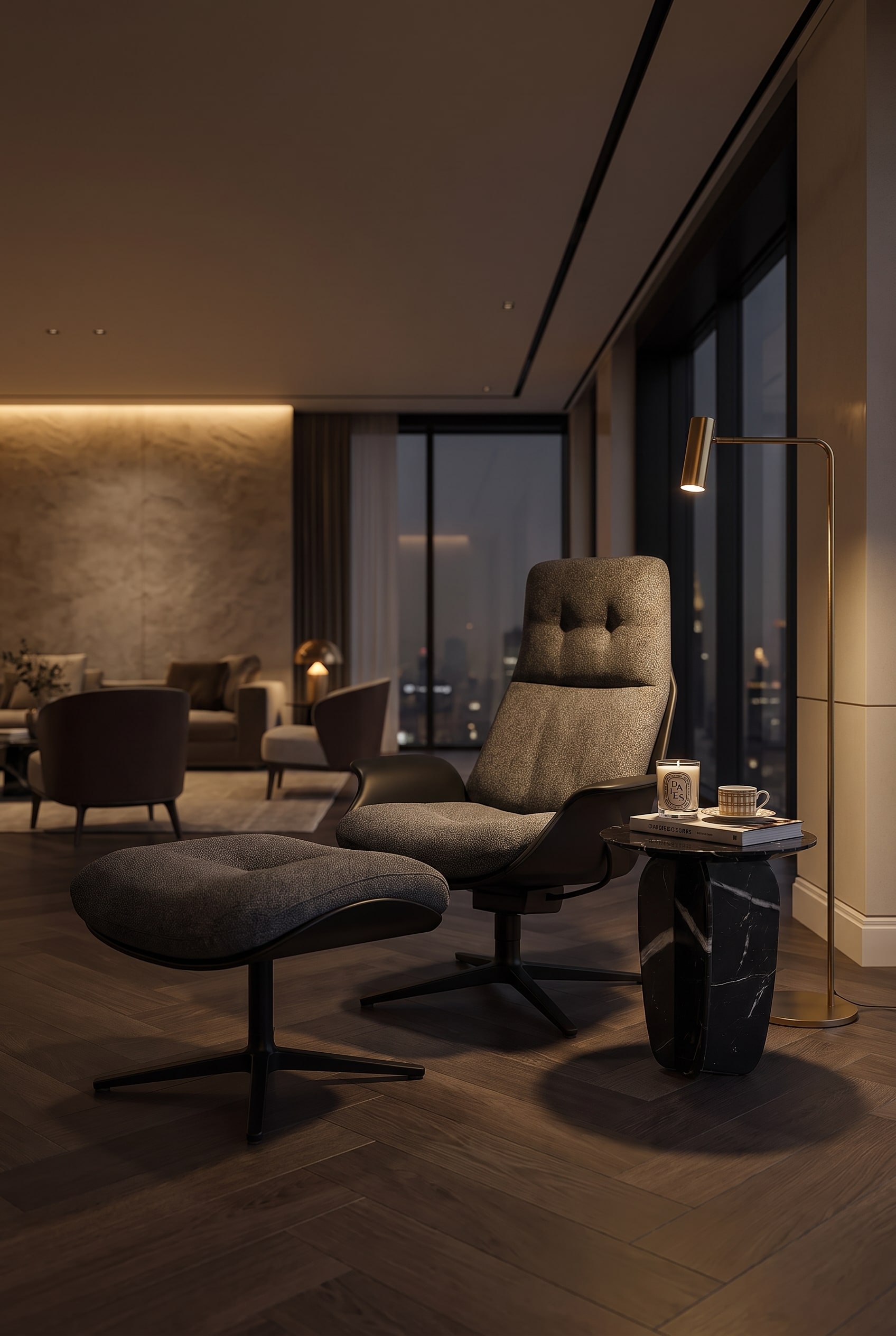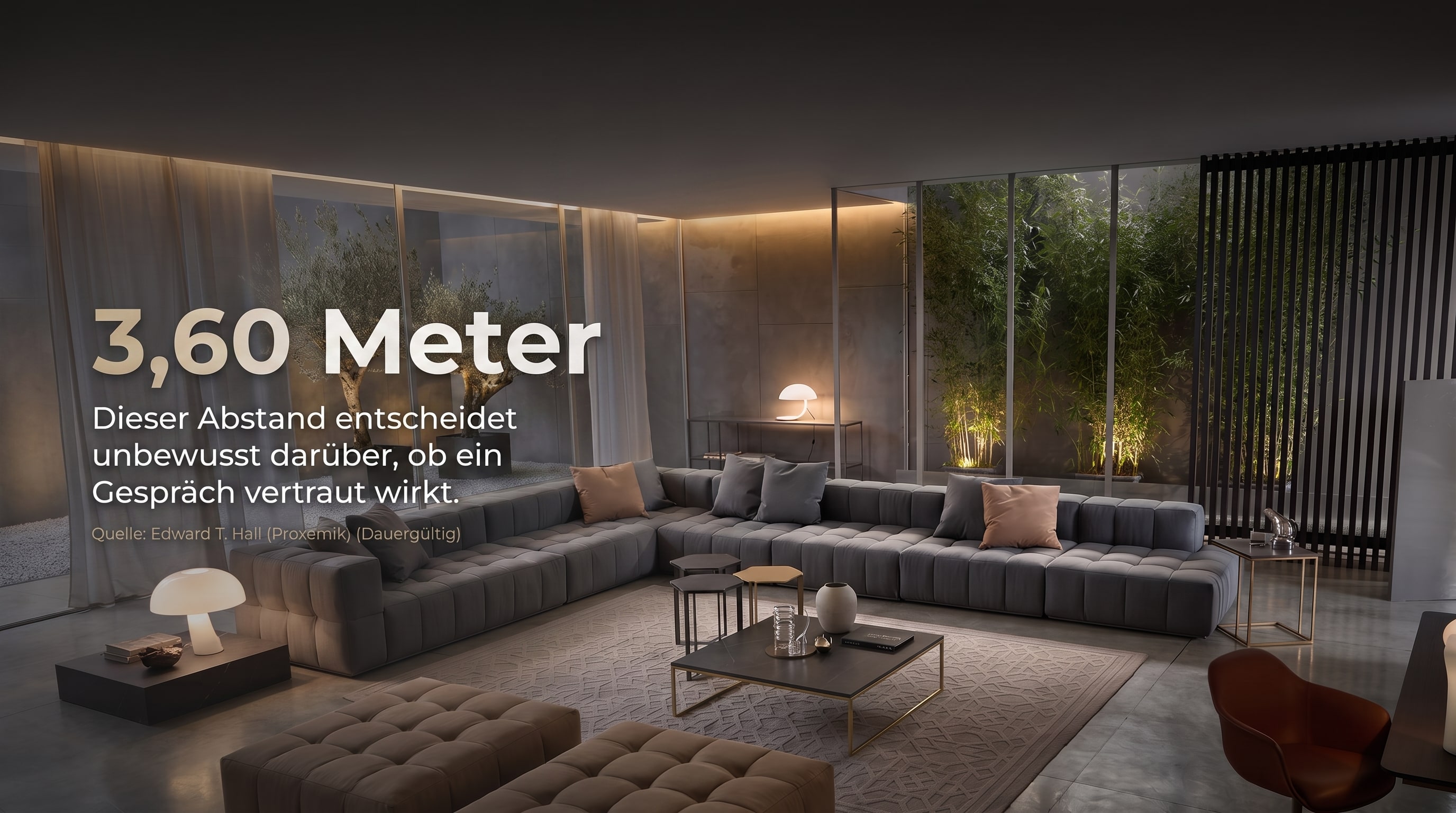











1. Create Living Islands: The Sofa Moves to the Center of the Room
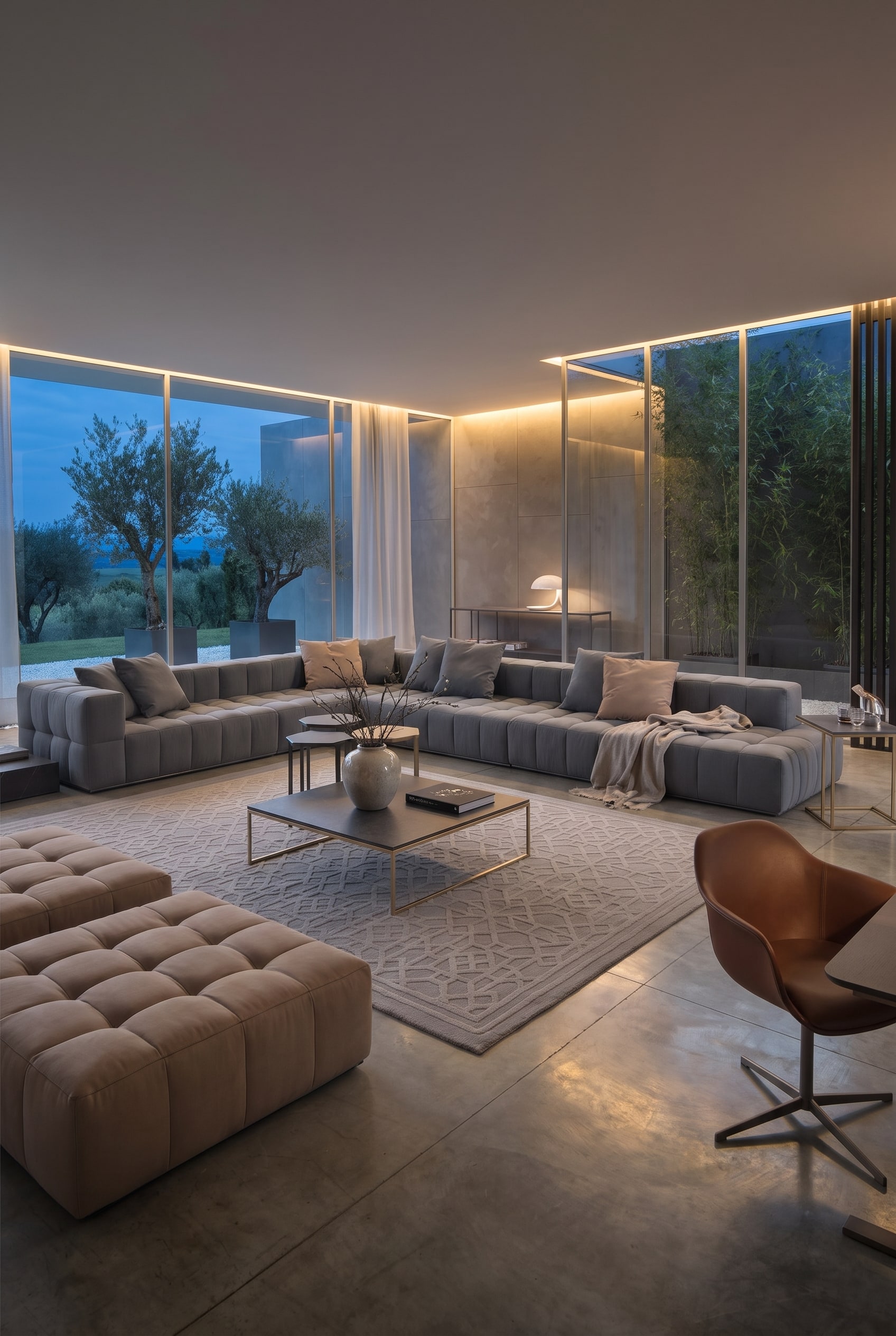
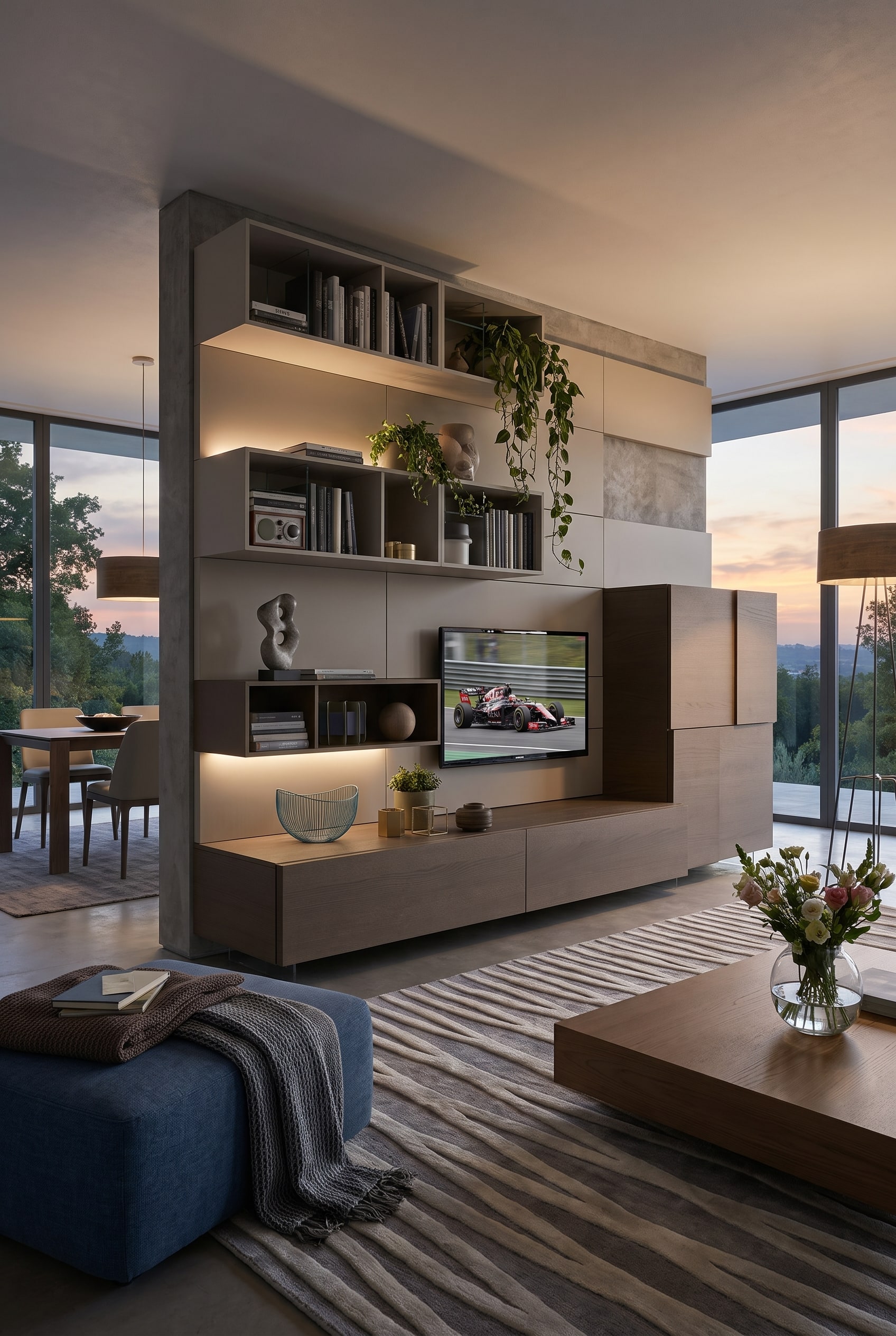
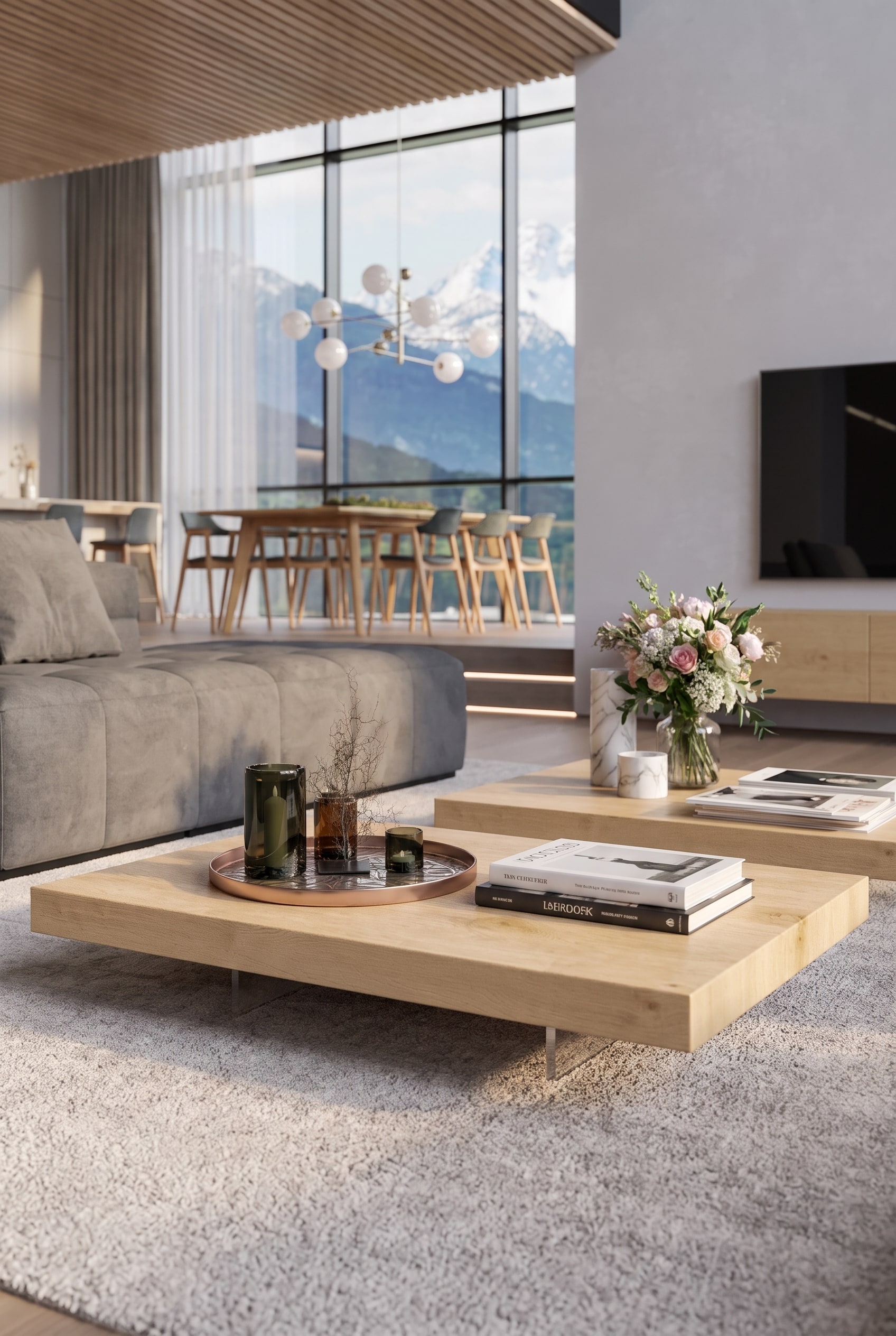
The biggest mistake in spacious rooms is the fear of the center. When the sofa is pushed directly against the wall, a dead corner is created in the center of the room, stifling any cozy impression from the outset. In high-end interior design, therefore, the principle of the living island applies. The sofa is used as an architectural element that stands freely in the room and defines an independent zone.
To achieve this effect, clear pathways are needed. As a practical rule of thumb, we recommend maintaining a minimum distance of 80 to 100 centimeters between the back of the sofa and the next wall or piece of furniture. This so-called circulation space allows the furniture to breathe and gives the floor plan a flowing, generous dynamic without the room falling apart.
Livarea Expert Tip:Use a large, structured rug as a visual foundation for your living island. It should be dimensioned so that at least the front legs of all seating furniture can generously fit on it – this visually holds the arrangement together.
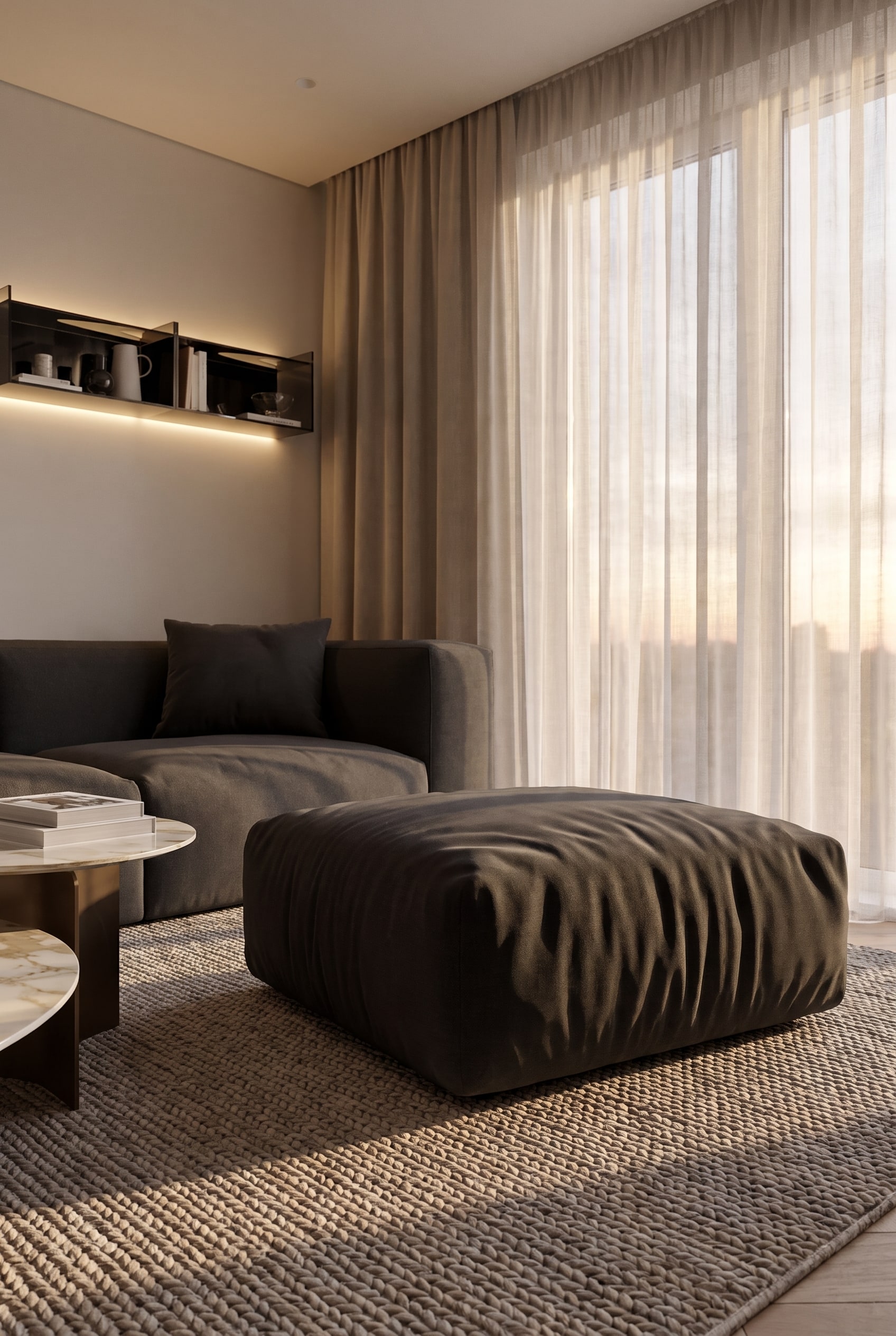
A deep, low-to-the-ground design is crucial here, as it brings visual weight and grounds the room. It acts as a heavy anchor in the vastness of the room, immediately creating calm and structure.
Furniture Tip for Seamless Design: A perfect example of this approach is the Marelli Lounge Sofa Andy, which, with its voluminous, low-to-the-ground design and modular structure, functions ideally as a freestanding island and immediately lends the room a luxurious, calming character.