










2. Glass Tabletops and the Constant Fear of Scratches: Why Ceramic Offers More Peace of Mind
Glass tables bring an incomparable lightness to a room, but they demand strong nerves from their owners in everyday life. Even sliding an unglazed ceramic plate is often enough to leave fine micro-scratches on the glass surface. Over time, these marks visibly dull the formerly brilliant surface at the main points of use.
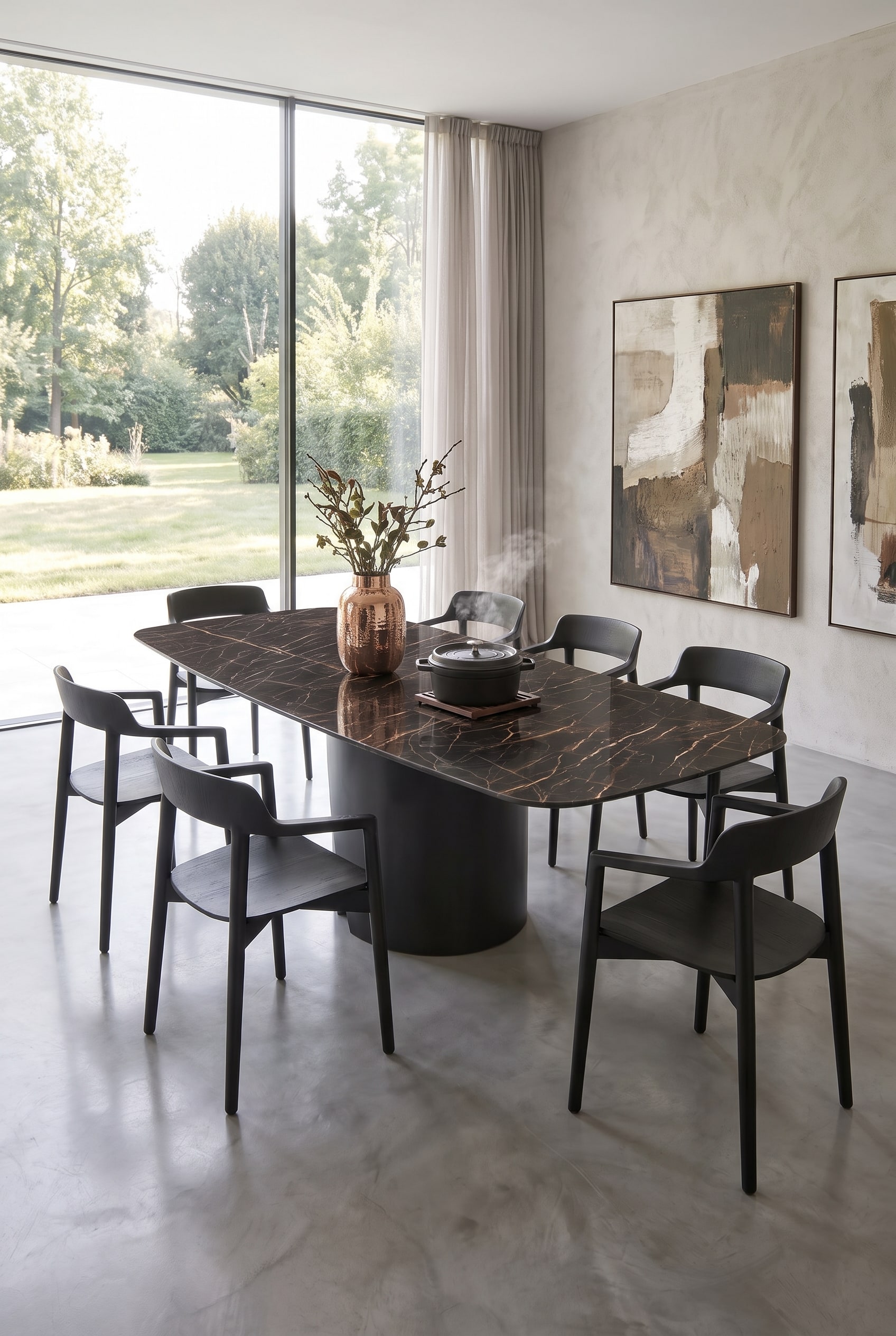
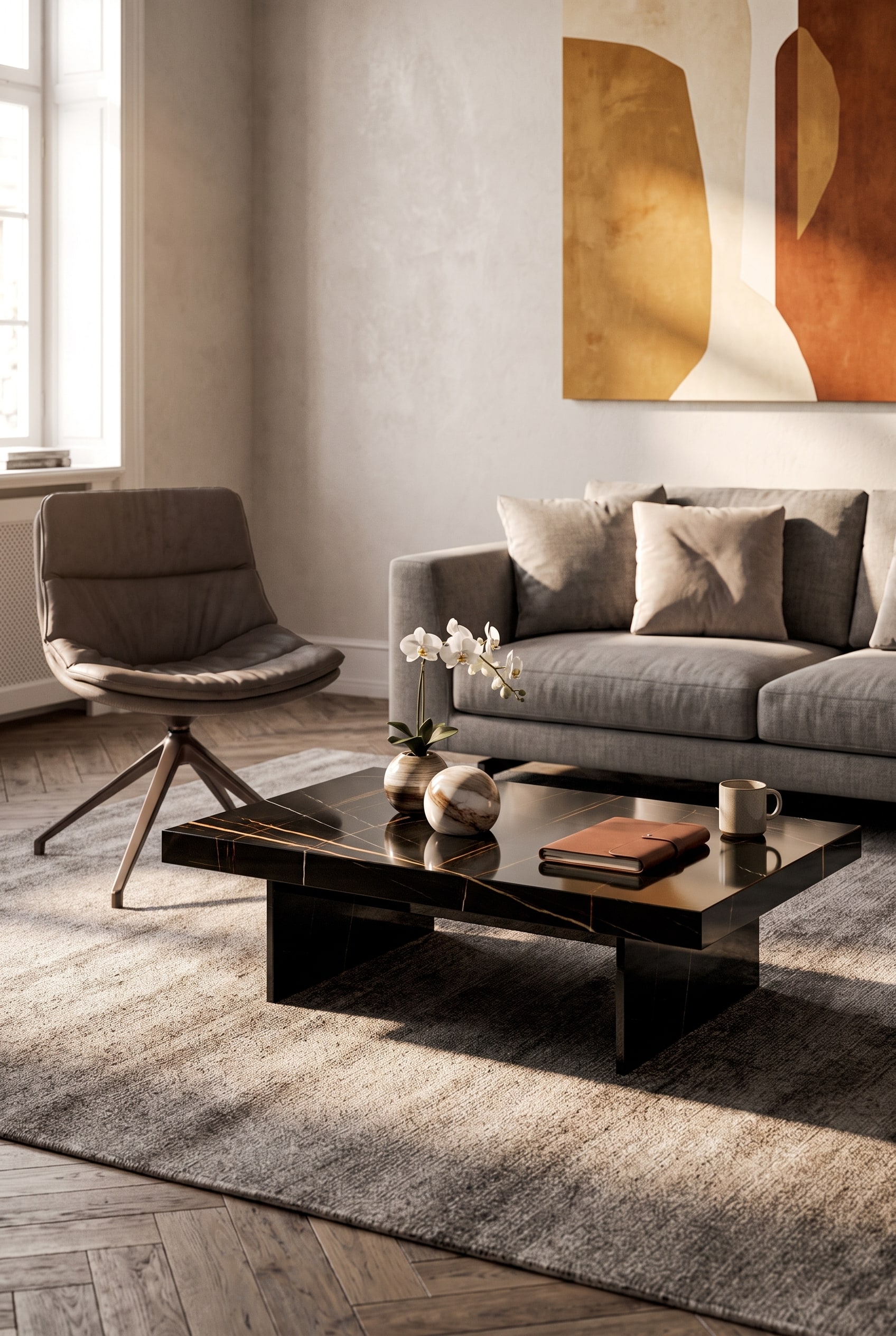
High-tech ceramic resolves this conflict of objectives. With a hardness often ranging from 7 to 8 on the Mohs scale of hardness (for comparison: diamond has 10, window glass about 5.5), the material resists mechanical stress extremely confidently. Keys, rough stoneware, or zippers from bags simply do not cause scratches on these surfaces.
How Professionals Test Everyday Suitability:
- Perform the glide test with a raw clay pot.
- Check the furniture piece for micro-lines against the light.
- Check the edge stability by lightly tapping with a metal object.
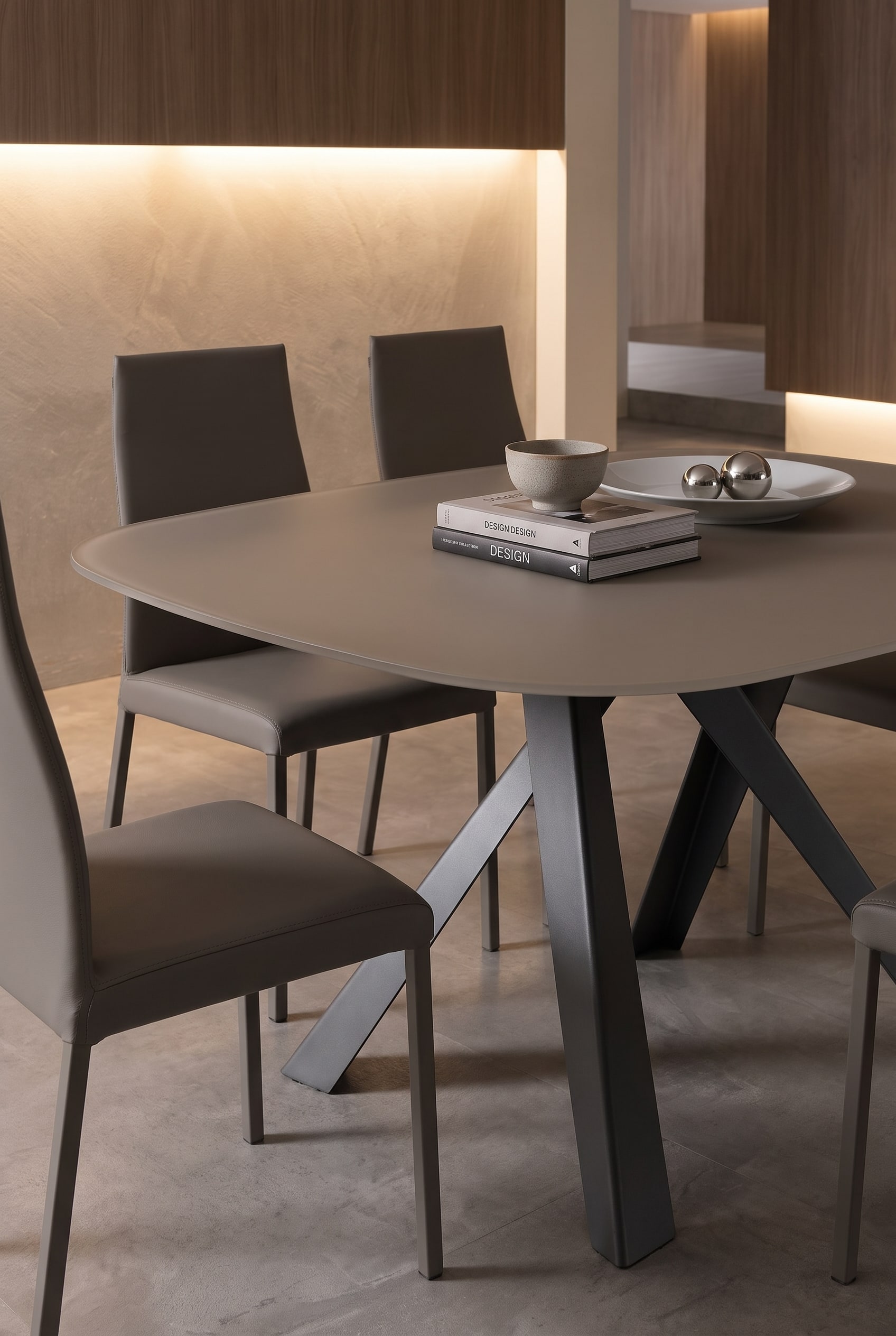
Despite this massive hardness, modern production methods can produce ceramic plates so thin that they visually possess the same floating lightness as glass. You thus get the delicate silhouette of a designer table without having to exercise the permanent caution that a real glass plate demands.
Furniture Tip for Relaxed Hospitality: The Ozzio Dining Table Bombo T246 perfectly illustrates this principle. Its gently rounded, ultra-thin tabletop visually floats above the crossed base, providing a scratch-resistant alternative that makes no compromises on elegance in daily use.