













- Round Bedside Tables: The Design Trick Against Cramped Spaces
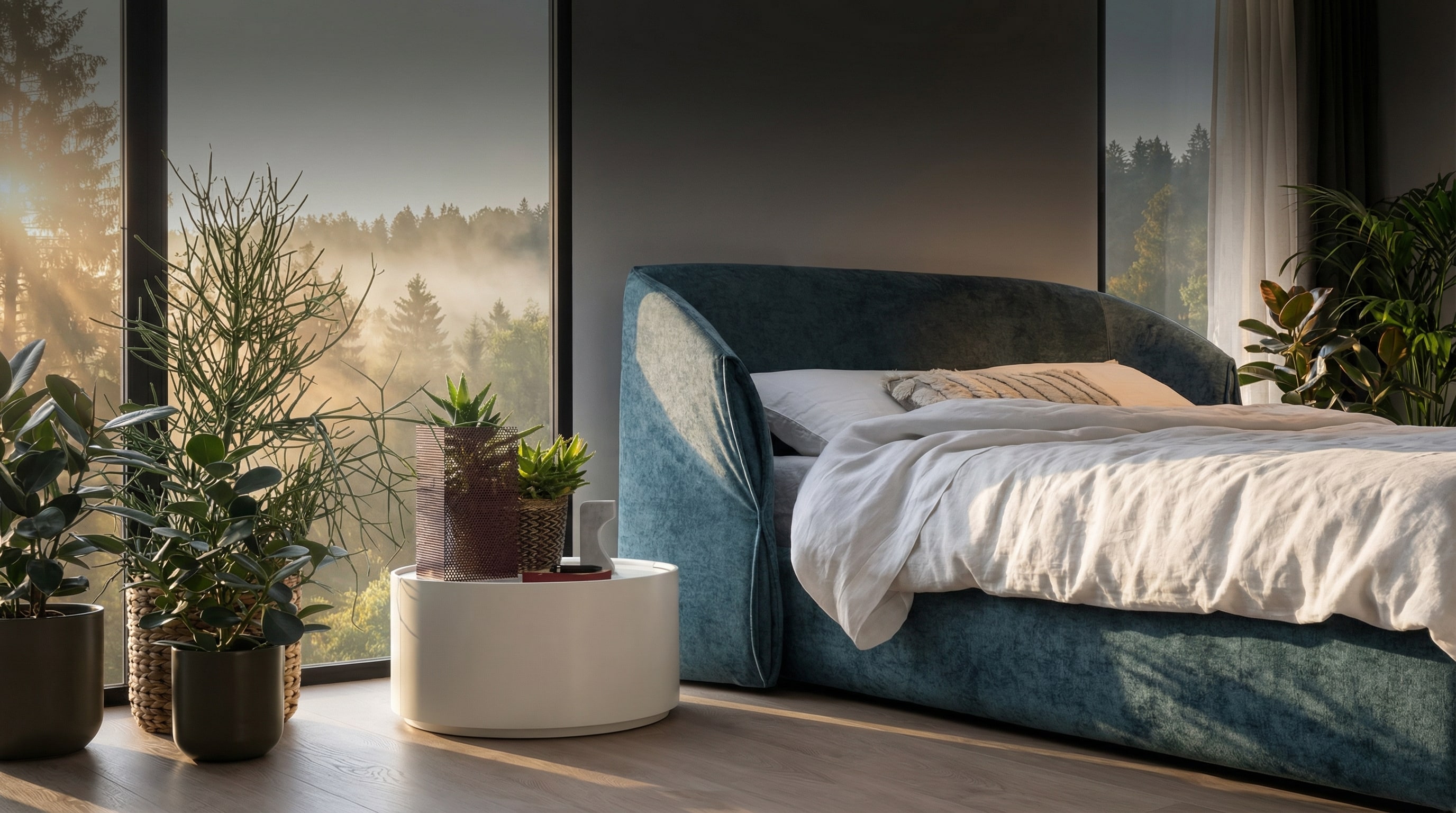 Round Bedside Tables: The Design Trick Against Cramped SpacesDoes your bedroom feel cramped despite ample space? Often, it's due to hard edges and angular furniture. Discover the secret of interior designers: Round bedside tables break room rigidity and instantly create visual spaciousness.
 - Experience Your Foosball Table: 5 Hidden Material Secrets
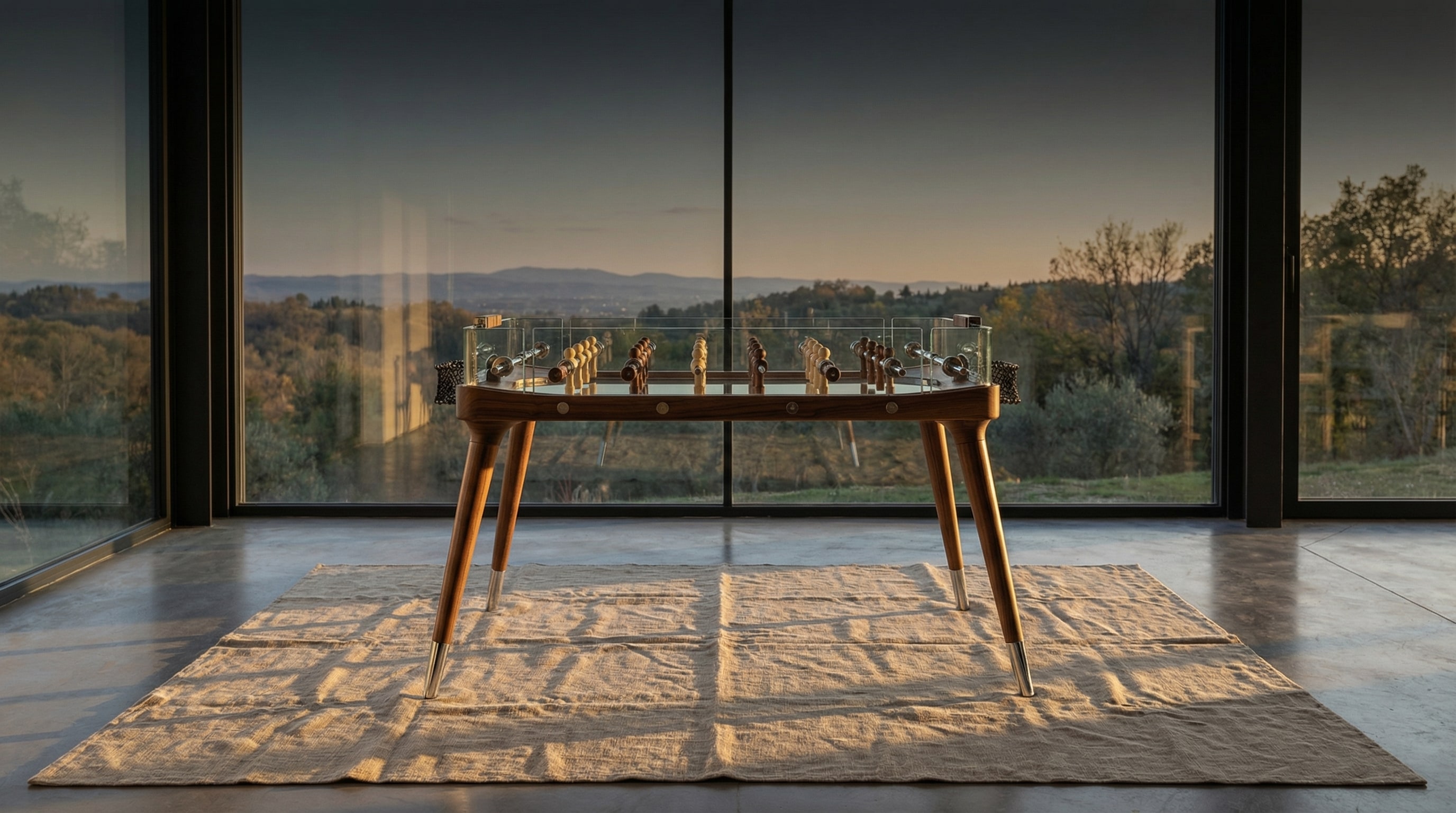 Experience Your Foosball Table: 5 Hidden Material SecretsDiscover how exclusive materials like crystal glass and solid wood transform the classic foosball table into a coveted design statement. We reveal 5 secrets on how to elegantly combine sociable evenings and uncompromising room aesthetics in your living room.
 - Order in the Bedroom 2026: The 3-Second Rule
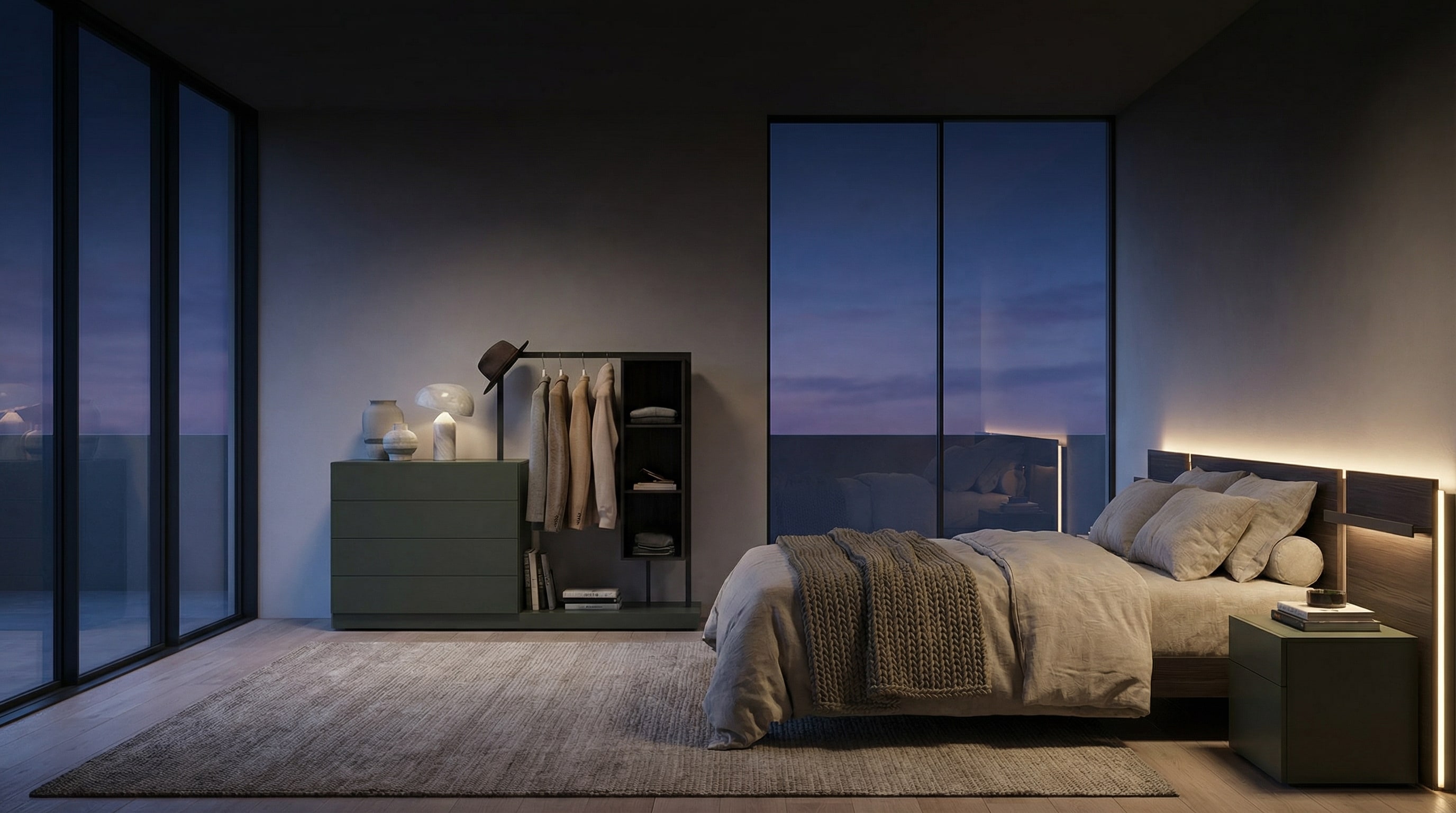 Order in the Bedroom 2026: The 3-Second RuleDiscover why interior therapists are advocating for radical visual stillness in bedroom trends 2026. Uncover the magical 3-second rule that instantly transforms your bedroom into a serene oasis. We reveal the 8 most important premium chests of drawers for a perfect digital detox.
 - Walk In Wardrobe Design: The #3 Mistake That Steals Your Space
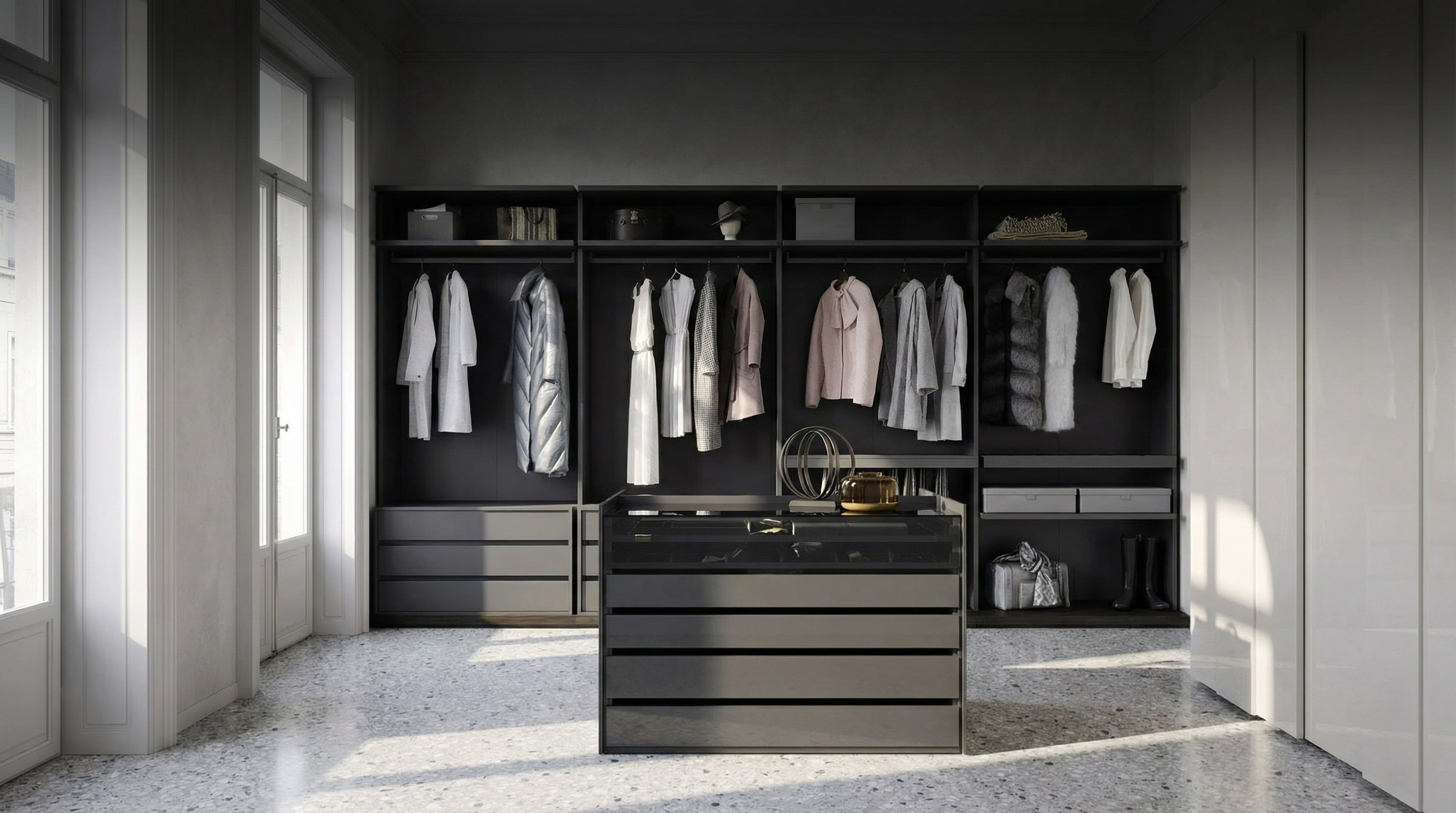 Walk In Wardrobe Design: The #3 Mistake That Steals Your SpaceA bulky wardrobe quickly overwhelms the entire room. Discover 6 interior design system decisions that visually expand any walk-in closet and bring true luxury home.
 - Floating TV Units 2026: The Rule Designers Don't Tell You
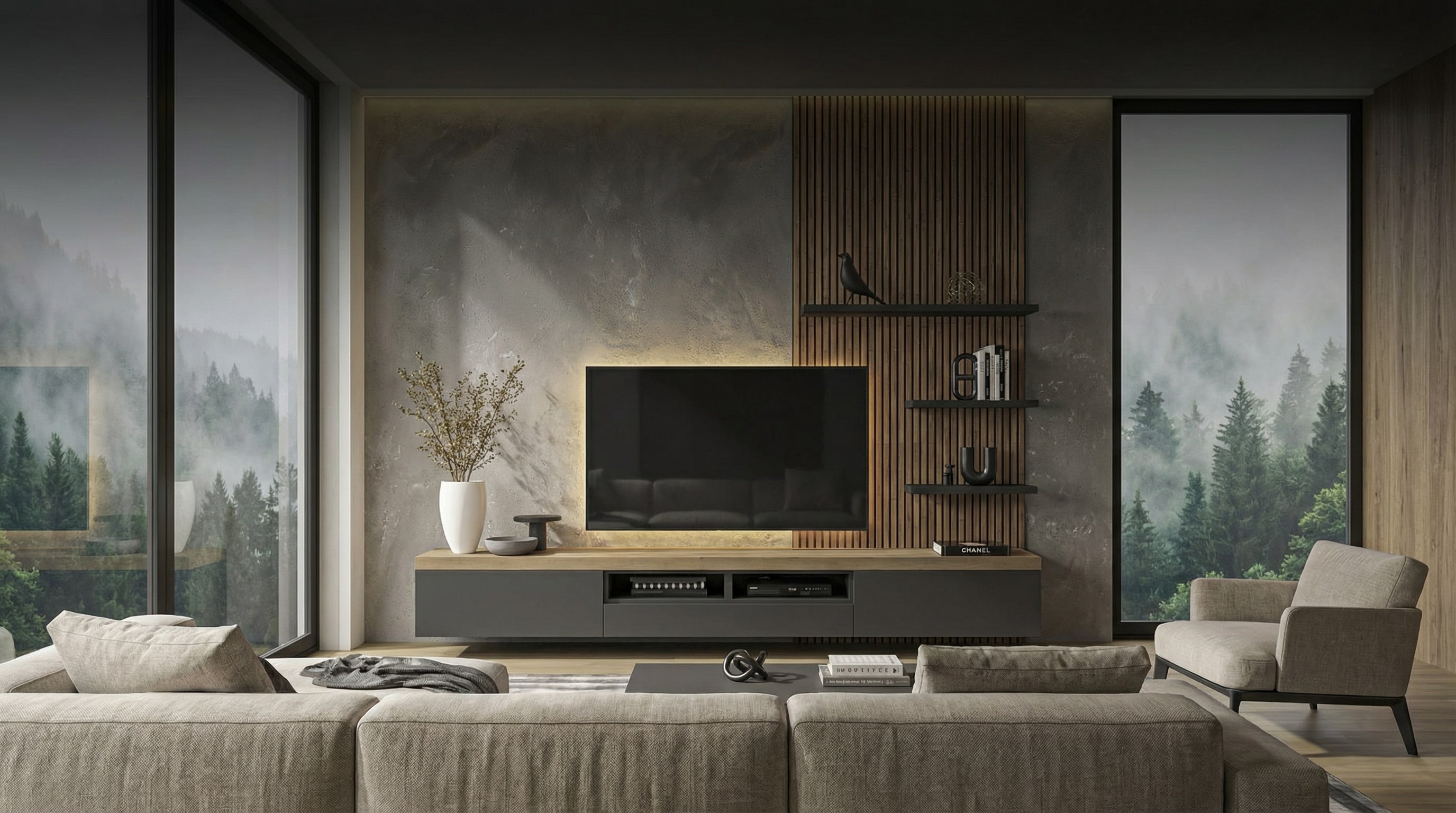 Floating TV Units 2026: The Rule Designers Don't Tell YouDiscover the 5 key architectural principles for perfect living room symmetry. We show you how the right media wall unit planning can banish chaos and bring profound harmony to your home.


Designer Furniture Manufacturing
Even in the information age, the manufacturing of designer furniture still leads to misunderstandings. Mass production and designer furniture are not mutually exclusive; instead, they complement each other perfectly. Using the example of the traditional Italian manufacturer San Giacomo, we take you on a short journey from ordering to shipping a custom-made piece of furniture. We aim to shed light on the matter and provide clarification. We will also, where appropriate, discuss furniture construction by a joiner or cabinetmaker and draw comparisons.
1. Step
The materials delivered are mostly chipboard. These are already veneered or melamine-coated (for example, Light Oak or Light Elm). Pre-assembled drawers also arrive in the goods inwards department. From here, the panels proceed to the production line.
A joiner buys only a few materials and thus cannot secure discounts or bonuses like a furniture manufacturer. In most cases, they have to veneer the chipboard themselves (ironing on or gluing). Here, material costs and the effort for veneering fully apply. The time required to assemble drawers also takes a lot of time.
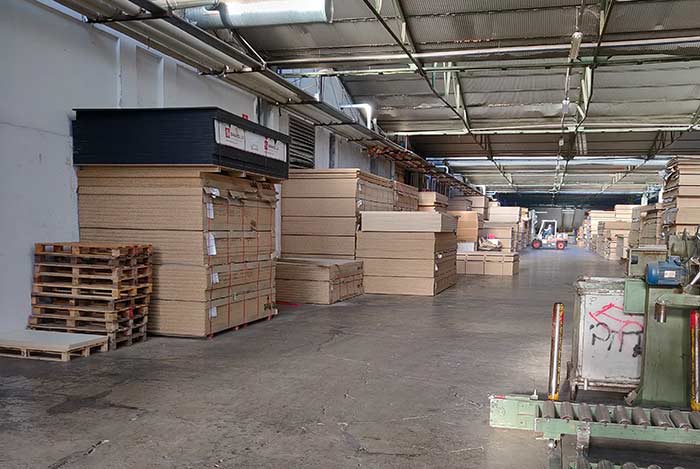
Material Warehouse
2. Step
The panels pass through a machine that automatically applies labels to them. These are simply barcodes that can be read by the scanners of subsequent machines. Each label contains information about which order and which piece of furniture the chipboard belongs to.
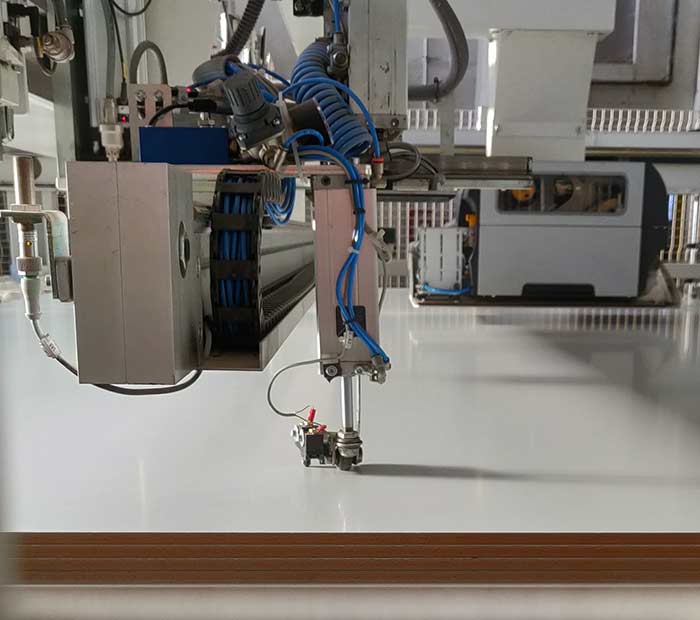
Labelling Machine
3. Step
Afterwards, the wooden panels enter a so-called 'sawmill', where they are cut into the correct formats. These formats can be influenced by customer wishes – within the parameters set by the designers for the respective piece of furniture.
4. Step
Before the next station, the boards undergo initial manual post-processing (e.g., sanding the edges). This is followed by the application of edge banding to the furniture piece. The machine, guided by the scanned label, distributes each piece to the correct edge bander. After this, the chipboard panels have glued edges. Next, the parts arrive as finished stacks in the paint shop.
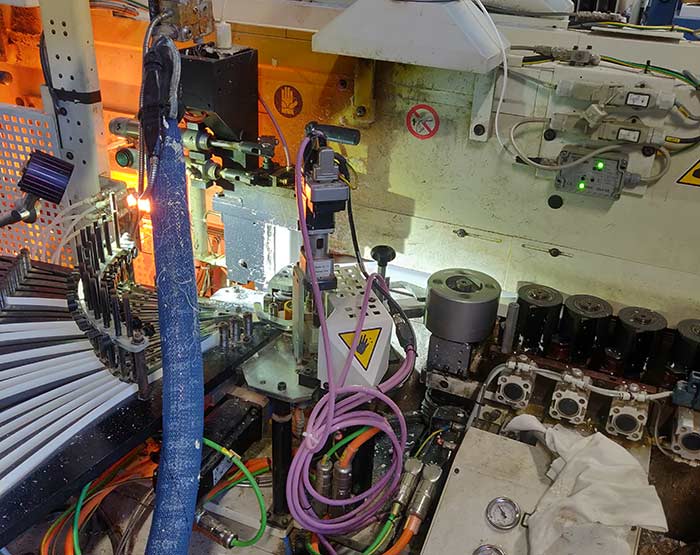
Edge Banding Machine
5. Step
In the fully automated robotic painting system, the base coat is first applied in white. Subsequently, the colours desired by the customers are painted on. Special RAL colours are also possible here.
A joiner cannot match the precision of an automatic painting system. They can only compensate for this with a lot of experience.
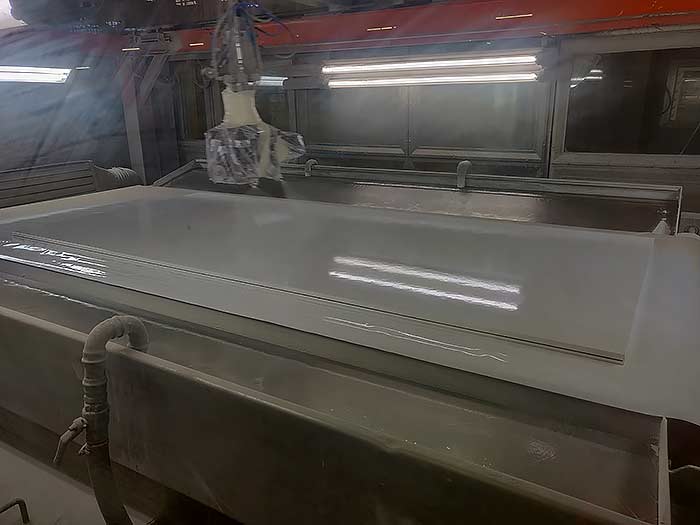
Automatic Painting Line
6. Step
In the drying oven, the painted panels undergo uniform drying.
For a cabinetmaker, drying painted wooden parts, in comparison, means an enormous waiting time.
7. Step:
In the next section, a special machine scans the label and takes care of the
precise drilling and milling of the furniture pieces. This process can be customised if the customer wants a specific cable grommet in a particular spot for their lowboard.
Full automation in the production of individual designer furniture leads to process simplification and higher throughput. A joiner, with their single commission, cannot keep up with the pace of these work steps. Therefore, the customer has to wait much longer for their custom-made item. In contrast to the precision of a machine, a human is always subject to fluctuations in concentration due to fatigue.
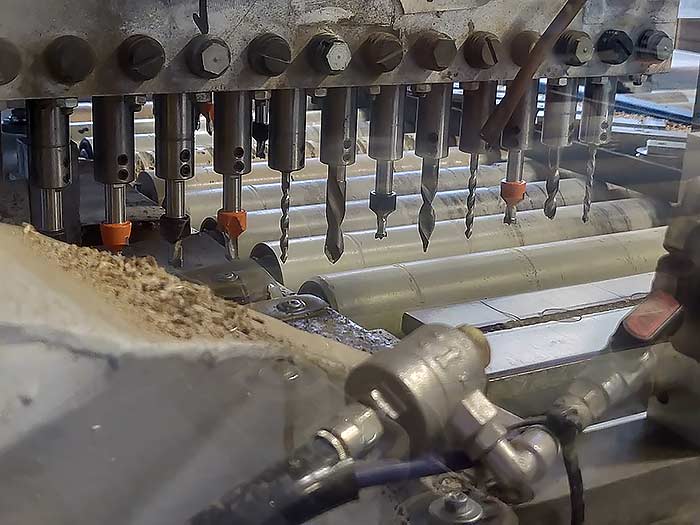
Milling Machine for Automated Drilling
8. Step:
After drilling and milling, we leave the fully automated production lines and move to the manual assembly of the furniture by fitters. The labels are removed, as this is the hour of the specialists. One person screws on hinges, while another takes care of the wooden dowels. All furniture pieces are pre-assembled, i.e., screwed and glued. After assembly, a machine presses the products together to ensure that all parts are processed into a solid unit.
These division-of-labour processes reduce costs and save time, which for understandable reasons could never be achieved by a joiner. Especially since the latter would have to fully assemble the ordered products at the customer's premises.
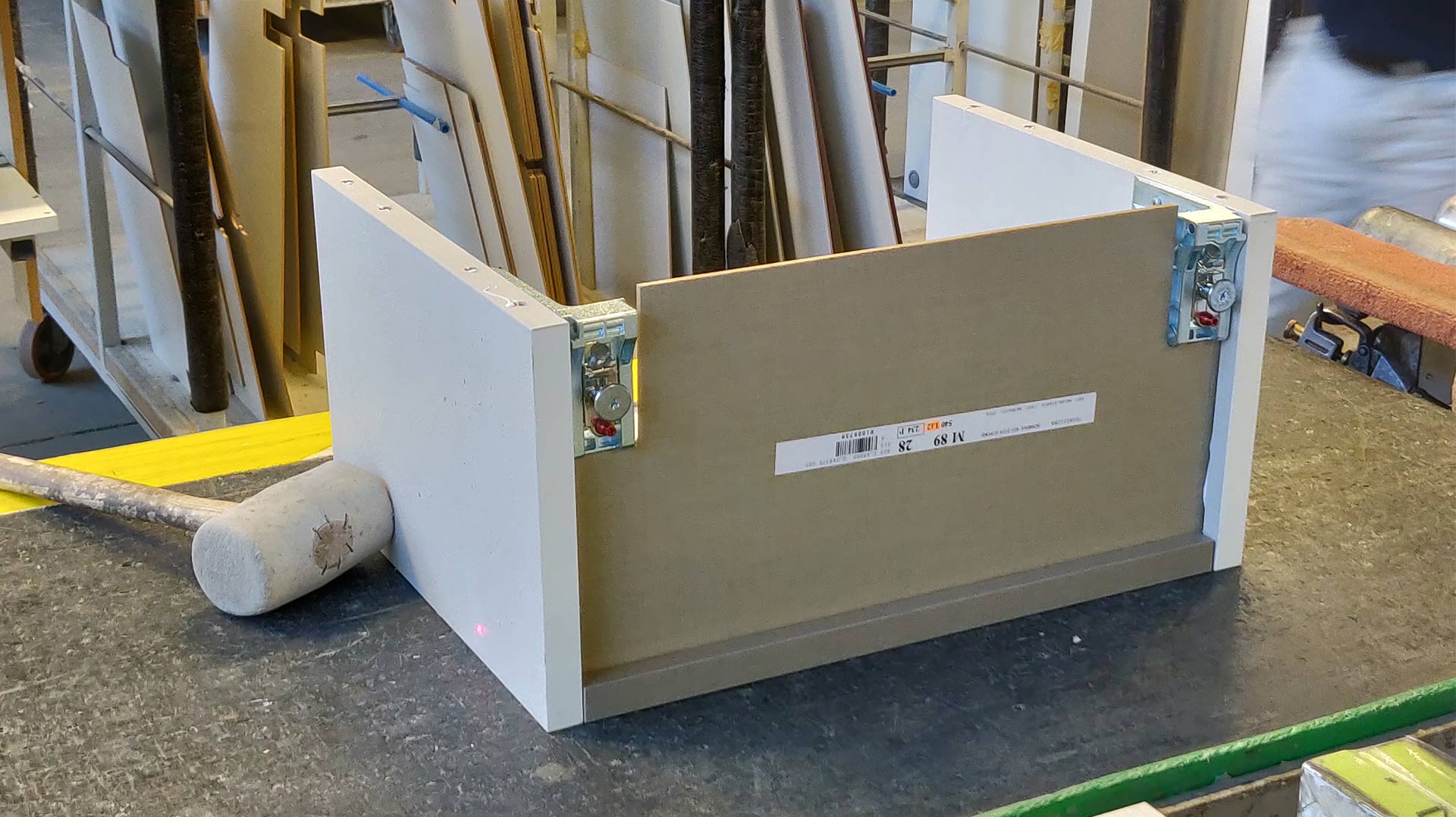
Furniture Pre-assembly on the Line
9. Step:
For the final inspection, the human factor is again needed to ensure the quality of the manufactured products. Here, open edges can be touched up with a paint pen. For living room wall units, for example, an employee checks whether the grain of two vertical fronts matches.
10. Step:
Packaging is done either by hand or automatically. Large parts are manually packed to ensure transport safety. For small parts, machines take over.
For a joiner, packaging is omitted, as the individual parts are simply transported in a van
to the client.
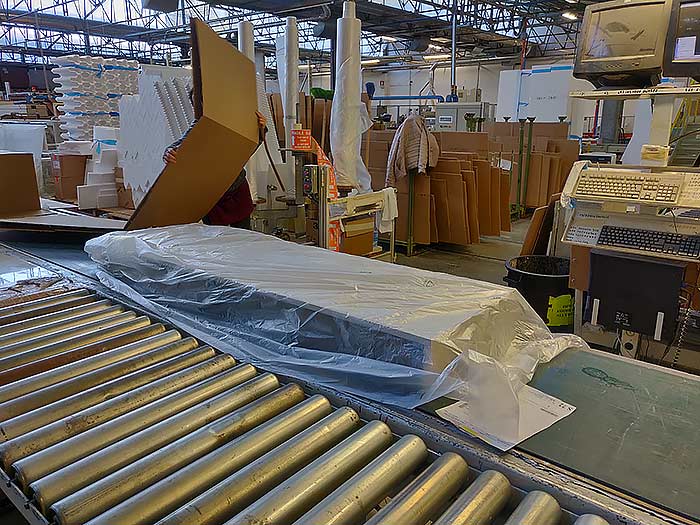
Furniture being packed
11. Step:
All fully packed furniture and furniture parts arrive in a central warehouse. There,
a 40-tonne lorry then pulls up and loads the individual orders. These are transported to a forwarding agent in Germany, from where customer orders are distributed.
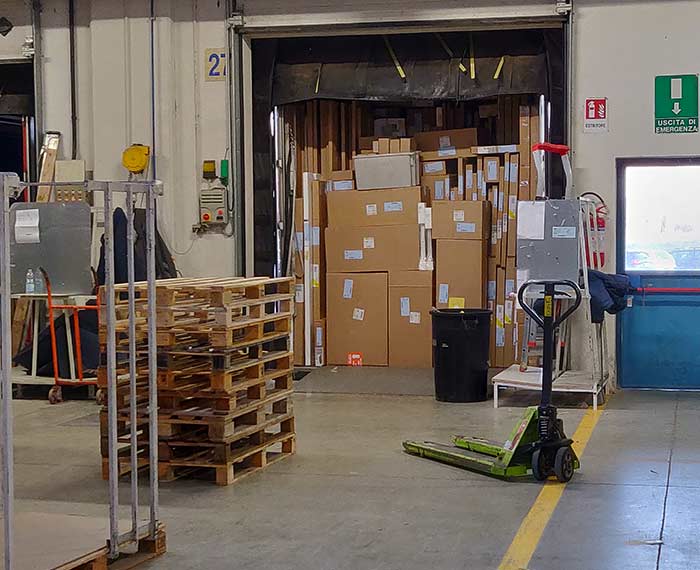
Furniture loading in Italy
Summary:
– machines assemble the parts, while fitters screw together the finished end product
– despite automation, the customer can greatly influence the customisation or modification of the final product through their order, provided the adjustment does not alter the basic design
– this combination of manufacturing means time savings for the producer, ensures high quality, and results in a short waiting time for the customer
– a joiner also delivers quality with the unique piece they create for you, but not with the same consistency and speed. The individual steps consequently take much more time.
– a manufacturer like San Giacomo employs specialists who are experts in their field. This drives up overall quality. A cabinetmaker, on the other hand, is an all-rounder who usually has to go through all steps themselves, leading to a mix of strengths and weaknesses.
– unlike the identical products from typical furniture discount shops, which are stored in stock, designer furniture like that from San Giacomo is actually only manufactured after an order is placed
Conclusion:
When ordering individually configurable designer furniture, customers have an influence on colour and size. Designers have already considered how furniture must look in terms of form and functionality to achieve the best possible effect in a home. Joiners are not designers. They create products to customer order and offer individual solutions. However, they cannot (yet) achieve the appearance and aesthetics of a designer piece.

Mira Celini
Interior Designer at LivareaAs an interior designer at Livarea – since 2012 one of Germany's leading online shops for designer furniture – I help customers create their dream homes. My tips come straight from practice: honest, inspiring, and always with an eye for the extraordinary.
→ View all Trendblog articles