













- Order in the Bedroom 2026: The 3-Second Rule
 Order in the Bedroom 2026: The 3-Second RuleDiscover why interior therapists are advocating for radical visual stillness in bedroom trends 2026. Uncover the magical 3-second rule that instantly ...
 - Walk In Wardrobe Design: The #3 Mistake That Steals Your Space
 Walk In Wardrobe Design: The #3 Mistake That Steals Your SpaceA bulky wardrobe quickly overwhelms the entire room. Discover 6 interior design system decisions that visually expand any walk-in closet and bring tru...
 - Floating TV Units 2026: The Rule Designers Don't Tell You
 Floating TV Units 2026: The Rule Designers Don't Tell YouDiscover the 5 key architectural principles for perfect living room symmetry. We show you how the right media wall unit planning can banish chaos and ...
 - Family Easter Dinner: 4 Design Secrets to Prevent Arguments
 Family Easter Dinner: 4 Design Secrets to Prevent Arguments80% of family conflicts at the dinner table stem from incorrect room geometry. Discover why sharp edges cause stress, which shapes foster genuine conv...
 - Making Your Patio Cozy: 6 Mistakes Designers Avoid
 Making Your Patio Cozy: 6 Mistakes Designers AvoidA perfect Easter breakfast hinges on the atmosphere. Discover the most common outdoor styling mistakes and how to transform your patio into a true oas...


The 10 Most Common Mistakes When Organising a Wardrobe
⏳ Reading time: approx. 8 minutes
Tidying your wardrobe can be truly enjoyable – both the decluttering and organising process itself, and later: when you get to quickly and easily put together your outfits, you'll thank yourself for the small extra effort.
But what if, even after a long tidy-up, there's still pure chaos instead of clear order? Then something has probably gone wrong, and that's not uncommon. Here are the 10 most common mistakes when organising a wardrobe. Do you recognise yourself?
1. Too Much Clutter
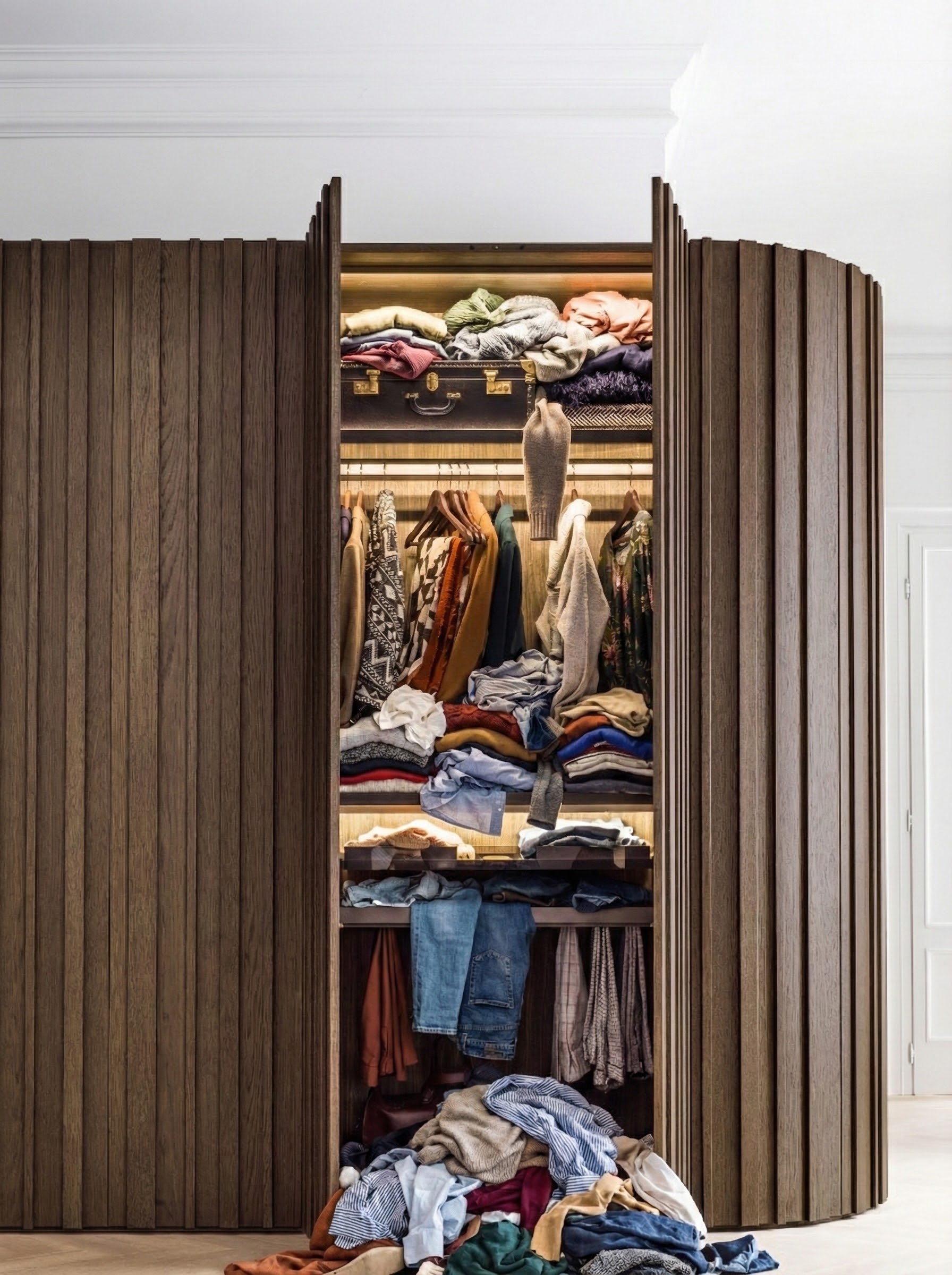
Clearly, accumulating too many clothes behind the doors is one of the cardinal sins in wardrobes worldwide. Usually, this is due to a lack of clear decisions: the jumper might still be worn again (even though it's completely worn out), the dress might fit again in a few years (and in the meantime makes you feel bad), or perhaps the right occasion will still arise (and until then, the item clogs up your wardrobe and makes the truly great pieces disappear).
Sentimental keepsakes are also a classic. These are items of clothing that you no longer wear but associate with valuable memories. That one jacket that was with you on that unforgettable Paris holiday! Tip for these difficult cases: simply take a nice photo of it and then let the garment go with a clear conscience.
2. A Lack of Structure
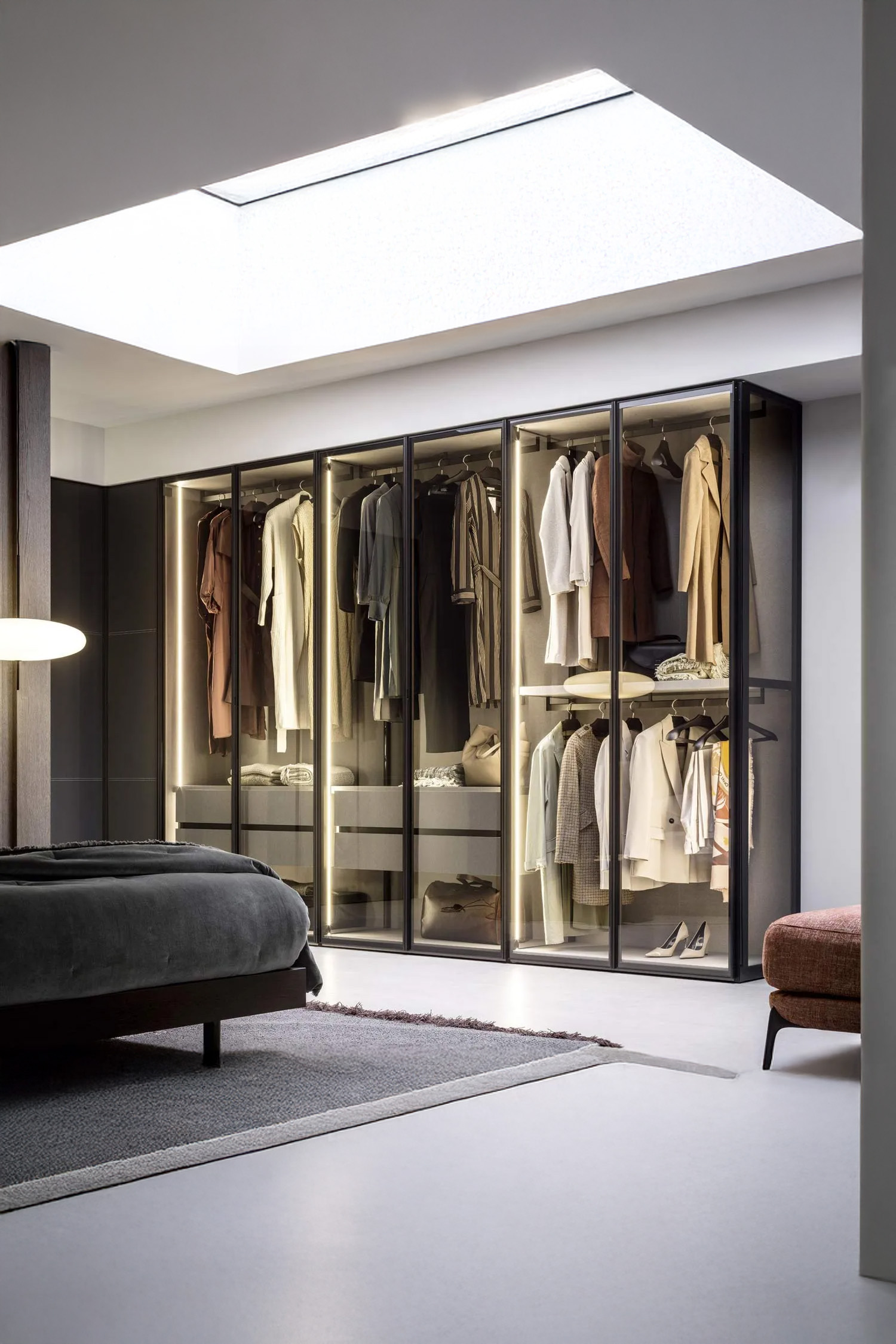
Anyone who haphazardly places their clothes anywhere in the wardrobe after washing or buying new ones makes life harder for themselves. Every item should have its designated place. Then you won't have to think long when tidying up or getting dressed. After some time, the system will become second nature, and you'll be able to almost blindly help yourself from the perfectly arranged buffet of your clothes.
Storage helpers are a good choice here. However, decide which methods you really want to use. Hangers, open baskets, lidded boxes, or sophisticated drawer organisers: what suits you and your wardrobe?
Using everything in a wild jumble can restrict rather than expand storage space and make the wardrobe appear more cluttered than before.
3. Colour Chaos
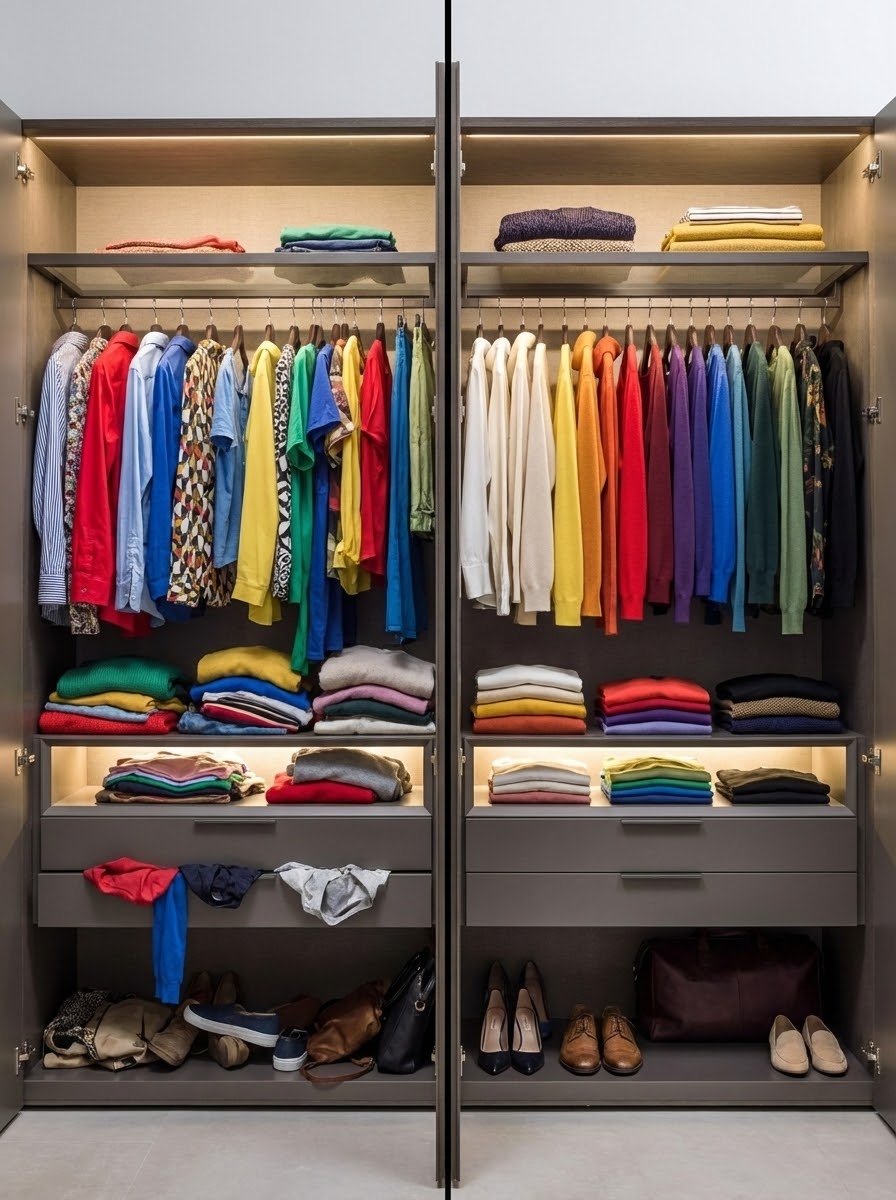
It's a good idea to organise your clothes by both category and colour. So, for example, in the tops section, you separate sleeveless items from T-shirts, and these in turn from shirts. Jumpers and cardigans also stay together. This alone makes it much easier to combine outfits from the individual pieces.
If each category is also arranged by colour, you immediately see what you own and what might suit the day's look. A practical side effect: it becomes clear which colour palettes you tend towards.
When shopping, the visual colour scheme can help you directly select matching colours and think in terms of entire outfits. This is much more advisable than haphazardly hoarding individual items that are difficult to combine later – and thus, in turn, become clutter in the wardrobe.
4. Lack of Clarity Due to Poor Lighting
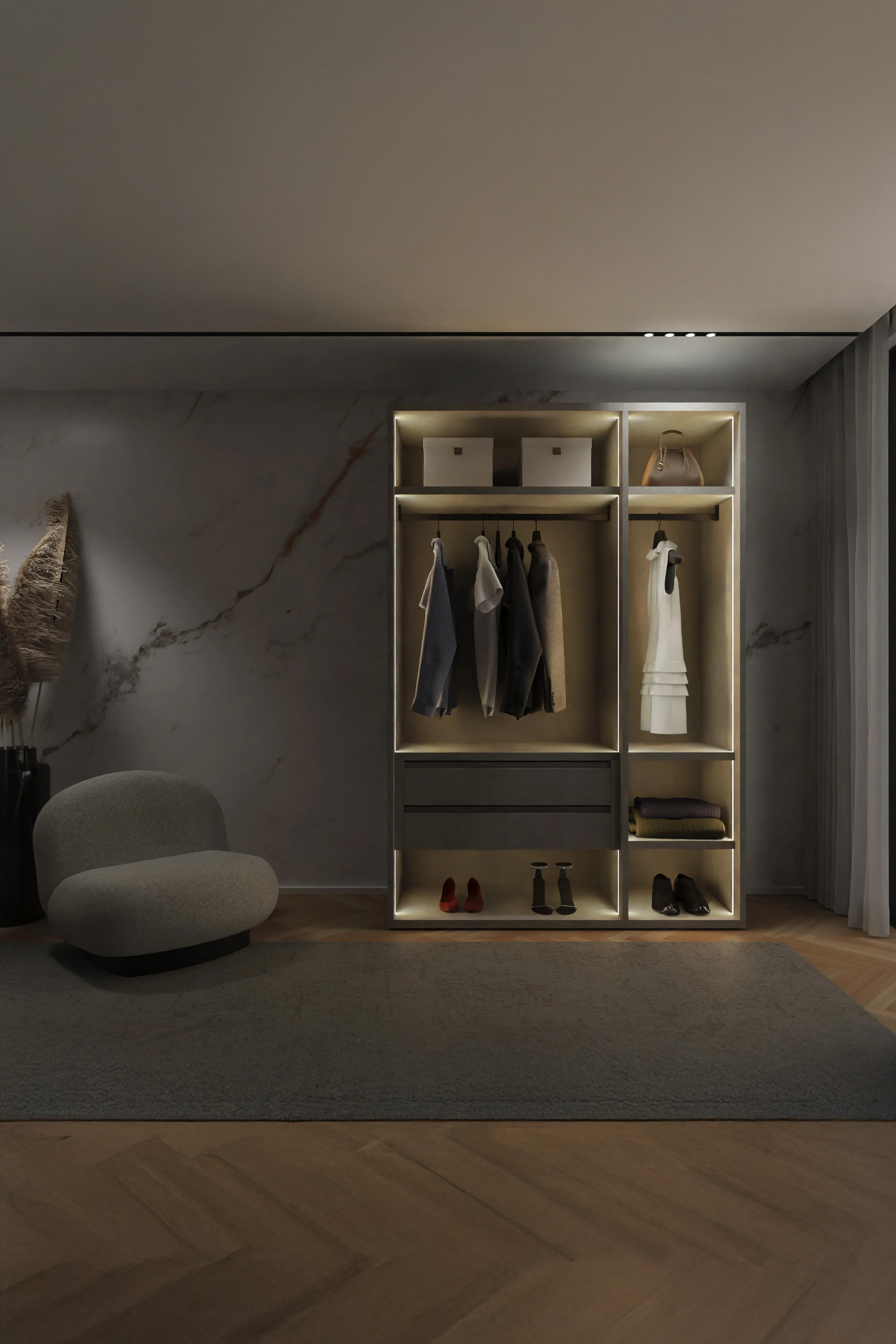
Is your wardrobe in complete darkness? This, of course, significantly limits visibility. Several methods can help here:
- Reposition the wardrobe so that window light and lamps better illuminate the interior.
- Install indirect lighting between the compartments or along the clothes rail, for example, using simple LED strips.
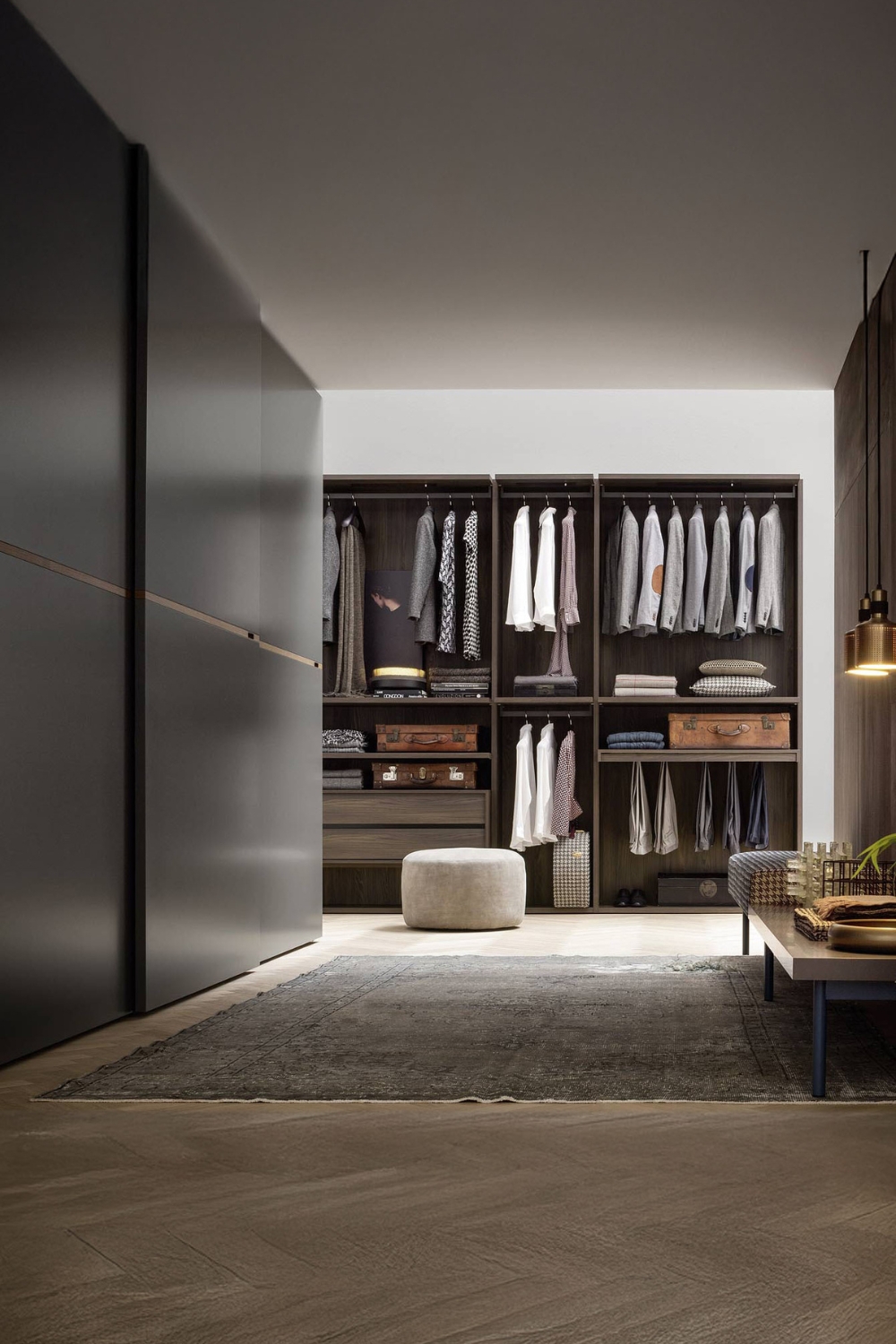
- Directly choose a model like the Livitalia open wardrobe, without doors. This simply means there are no doors in the way that could cast shadows when open or conceal the light source. Additionally, open wardrobes create absolutely stylish focal points in the room.
5. Spring to Winter in One Wardrobe
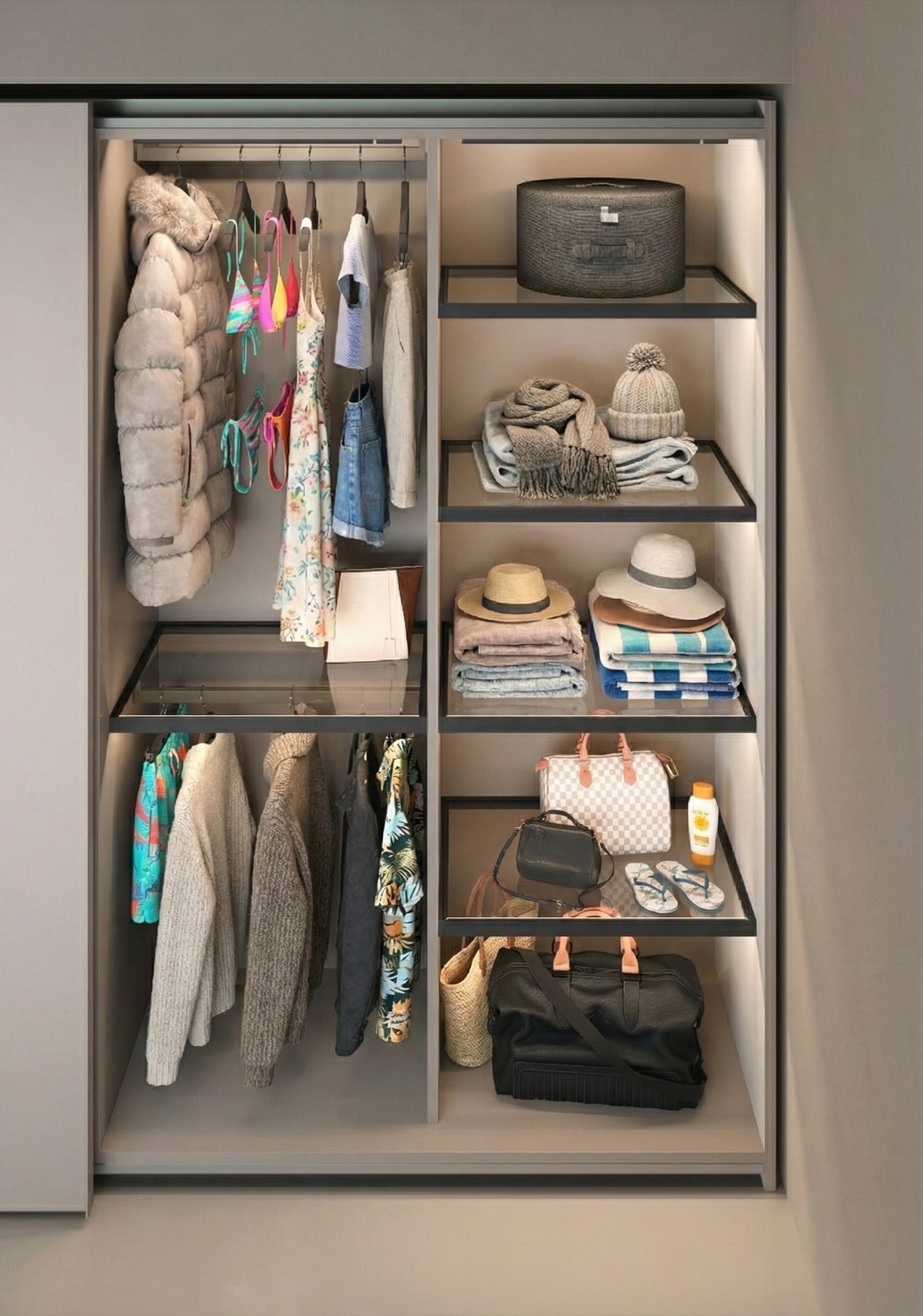
Every year, the moment comes when you should say goodbye to the season that's just ending. Because if winter jumpers hang in the wardrobe next to delicate summer shorts, it not only looks incongruous but also unnecessarily reduces clear visibility. The wardrobe appears overcrowded.
It's better to make a seasonal separation twice a year during the transitional periods. Items that are not currently suitable can be stored in boxes and overwinter in the attic or take a summer break in higher, less-used wardrobe compartments.
Another advantage of the seasonal check is that it encourages you to go through everything, sort it out, and organise it. Because one of the 10 most common mistakes when organising a wardrobe is doing it once and then never again.
6. Wasting the Depth of the Wardrobe
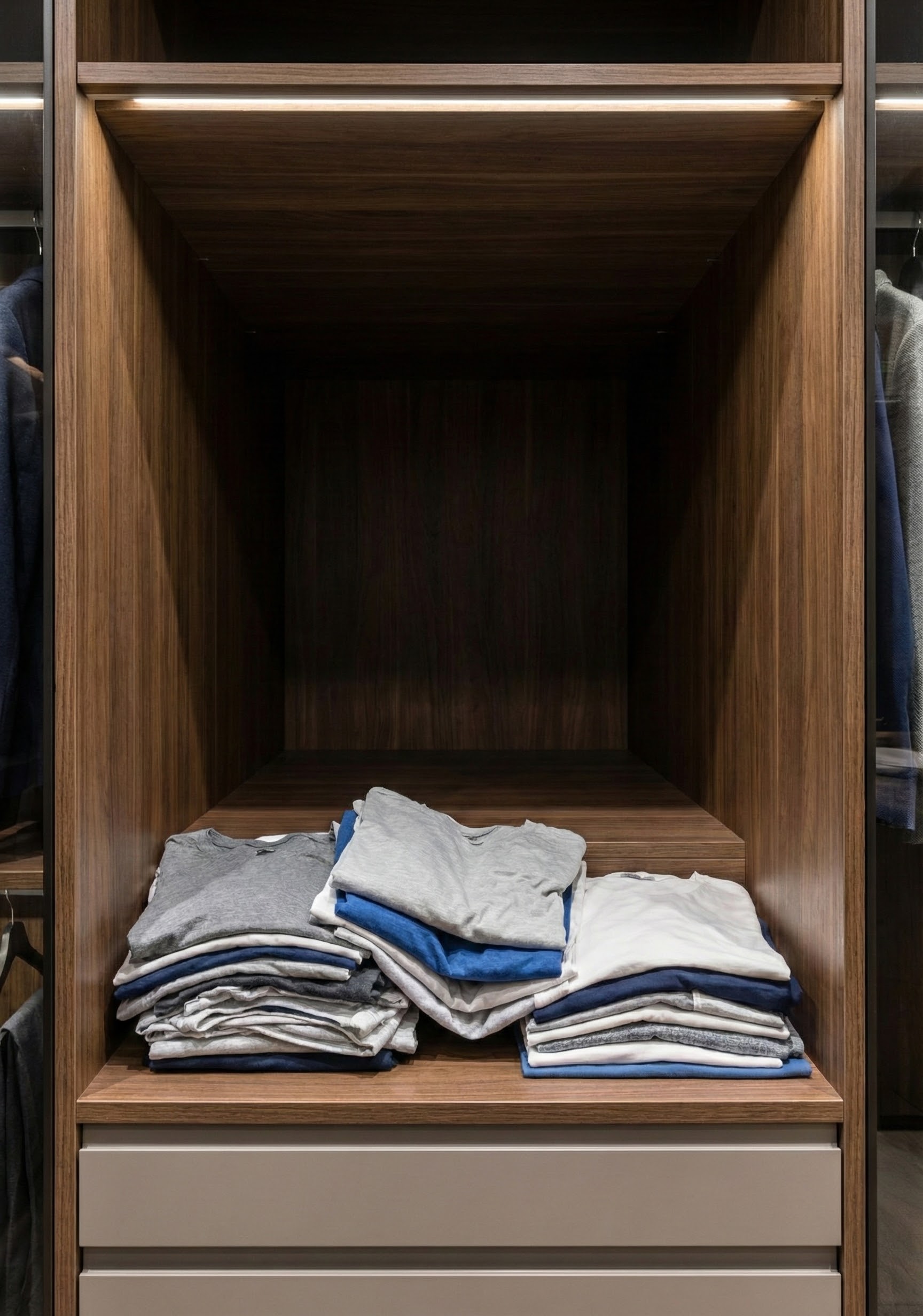
Often, only the front areas of the wardrobe are truly filled. The back levels in the depth of the compartments and drawers often remain empty. However, this is an absolute waste of space, especially in very deep wardrobes.
You can use pull-out boxes to sensibly integrate these areas into your system. This is an excellent place for items that are used less frequently or simply changed less often, such as a second dressing gown or similar.
Well-thought-out folding systems also allow you to fill your wardrobe to its full depth. Rolled and horizontally arranged items of clothing, placed one behind the other, are better than cluttered vertical stacks where the items at the bottom remain unseen.
7. Homeless Accessories
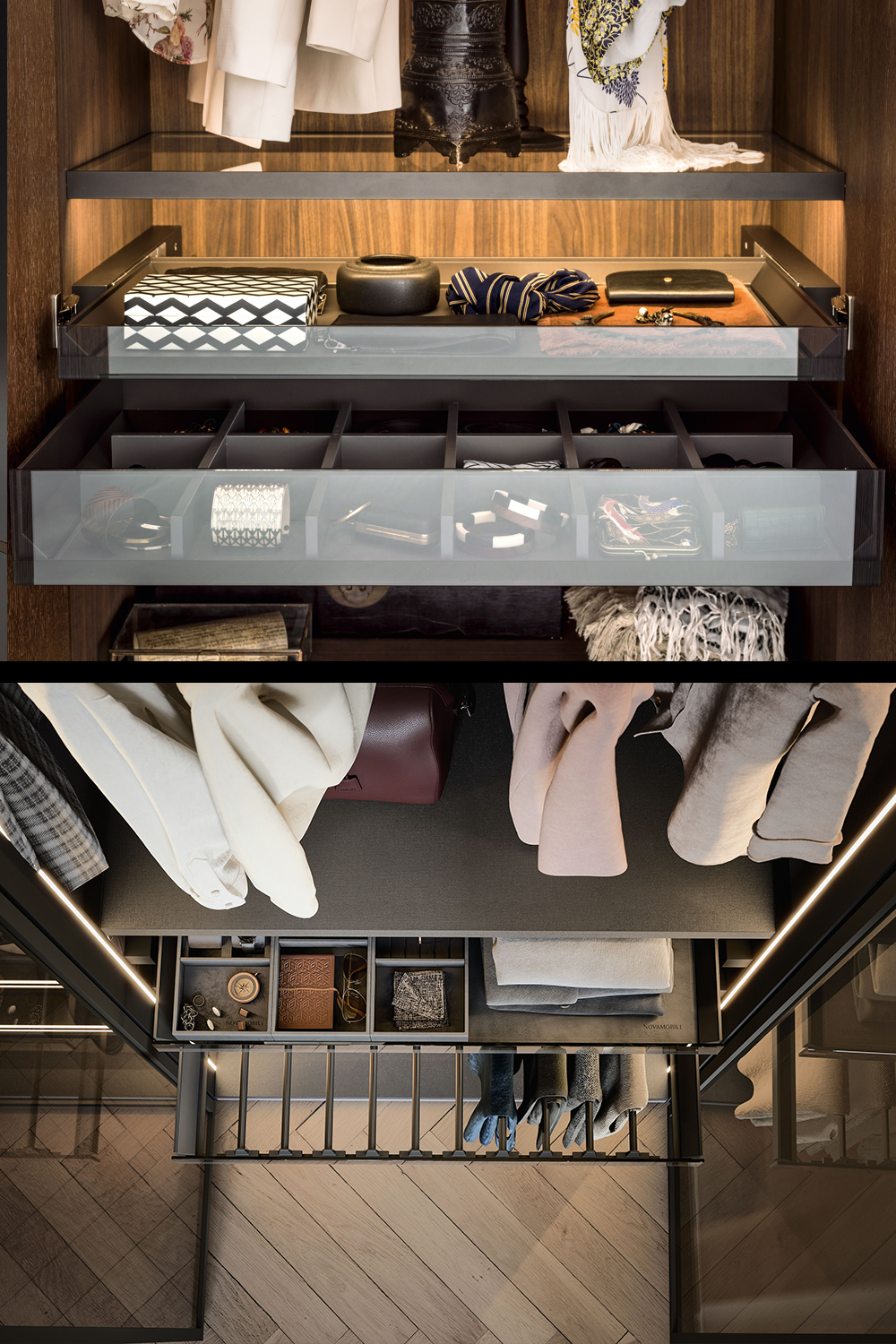
Belts, scarves, socks, or tights often end up loosely as gap-fillers somewhere in the wardrobe where there's space. This naturally leads to visual chaos and makes it harder to find accessories.
Give these items their designated place too. With boxes, this is no problem at all. Hangings on the doors or walls of the wardrobe are also excellent for neatly draping belts or tights, for example.
8. The Tendency to Fold
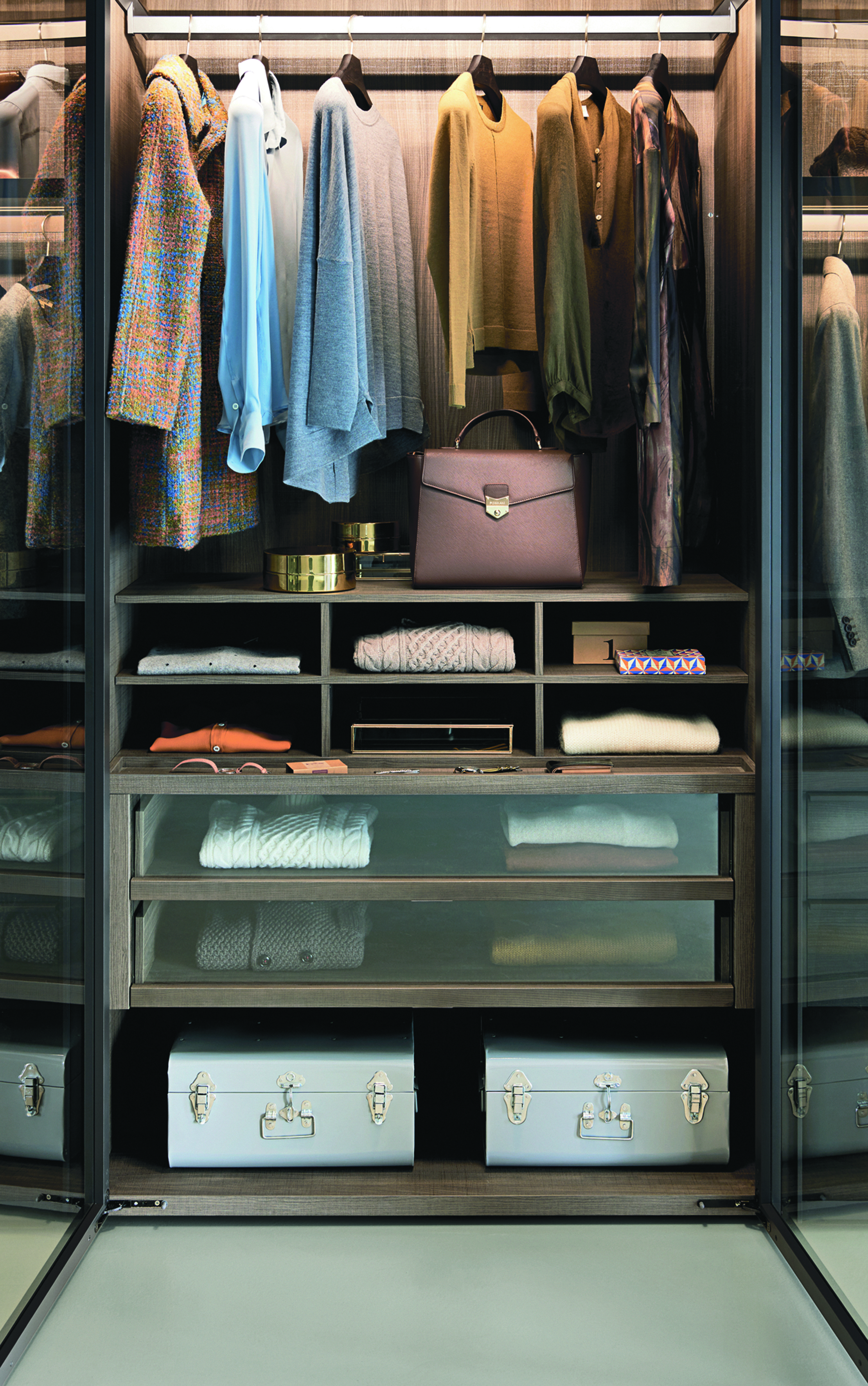
In fact, there isn't one better storage method for all garments. Depending on the material and cut, some items prefer to hang loosely. Others are perfectly fine neatly folded or rolled.
Dresses, blazers, or blouses and shirts tend to crease if they spend too much time folded. Clothes rails are intended for these items. Simple T-shirts, tops, and long-sleeved shirts or similar items are a pure waste of space on a hanger. They can be neatly folded.
Tip:
Heavy knitwear should even be stored flat, as hanging them could stretch them out.
9. Space for More
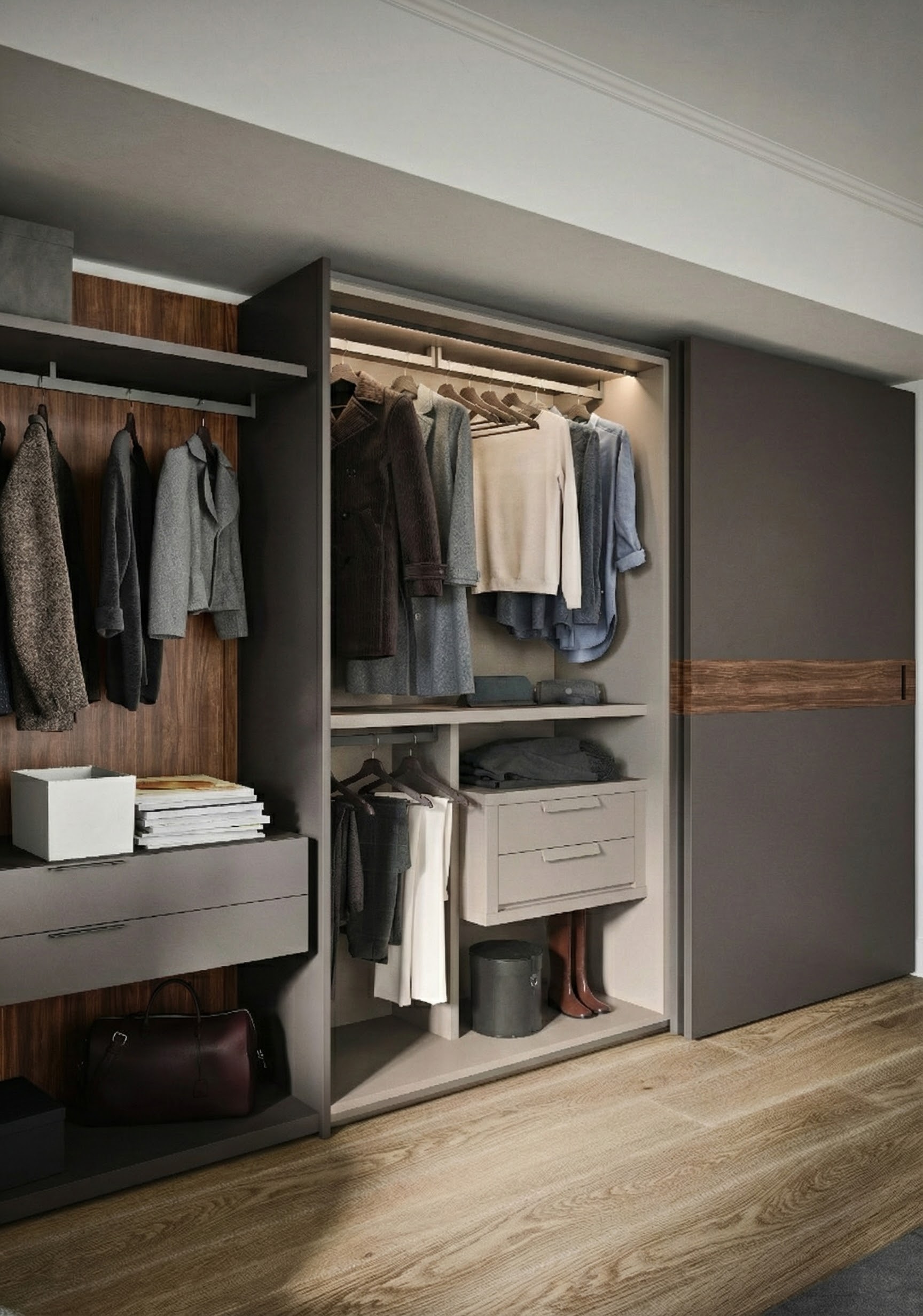
The wardrobe looks really good after organising. But does chaos return after a very short time? This is often due to a lack of foresight. Perhaps there are still clothes in the laundry at the time of the wardrobe reset. They also need their space when they return.
Similarly, it's important to plan for new items if you shop regularly. It's best to keep some hangers or some flat storage space free. For a minimalist approach, the “Come & Go principle” works well here: for a new item coming in, another must go out.
It's also important to meticulously stick to the new order until it has become a firm habit.
10. Wanting Everything at Once
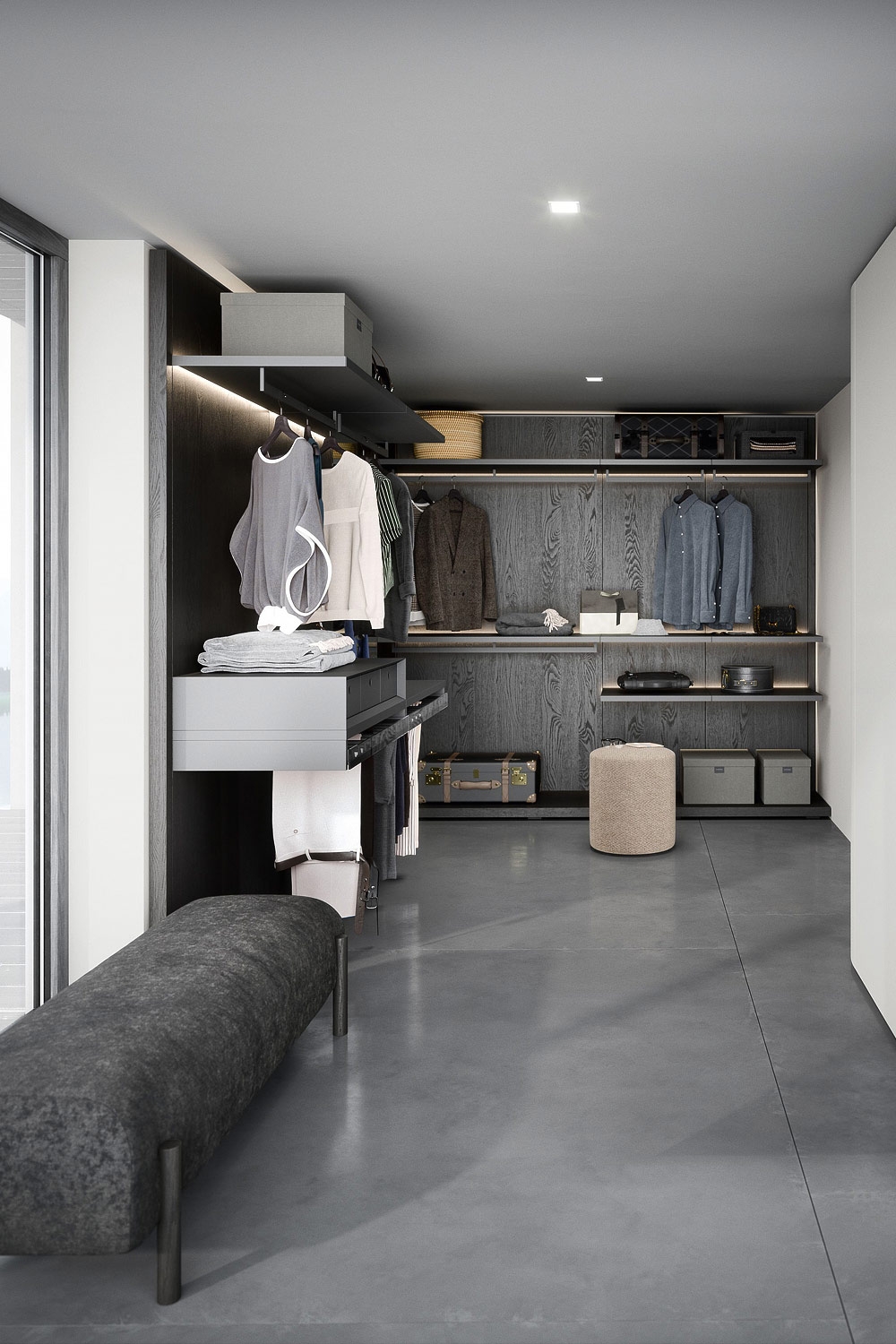
Especially if you own a lot of clothes or a large wardrobe system, you should take your time to rearrange. One of the typical mistakes is wanting to do everything at once in an afternoon. This quickly results in half-finished compromises.
It's better to tackle the wardrobe calmly, section by section or by individual clothing categories. Because the important thing is a direct engagement with each individual textile according to these three points:
- Can it stay?
- Otherwise, can it be given away or repurposed?
- Is there complete indecision?
In the third case, you should temporarily store the item in a separate container outside the wardrobe. Set yourself a deadline: if you haven't worn or at least missed the item by then, it's gone.
Conclusion
The 10 most common mistakes when organising a wardrobe are generally due to inconsistency and indecisiveness. However, with a few simple tricks, you can outsmart yourself. This prevents blindly stuffing compartments and thus maintains clear visibility. Simply seeing what you want to wear directly in the morning, instead of long searching and pondering: what a beautiful prospect!

Mira Celini
Interior Designer at LivareaAs an interior designer at Livarea – since 2012 one of Germany's leading online shops for designer furniture – I help customers create their dream homes. My tips come straight from practice: honest, inspiring, and always with an eye for the extraordinary.
→ View all Trendblog articles